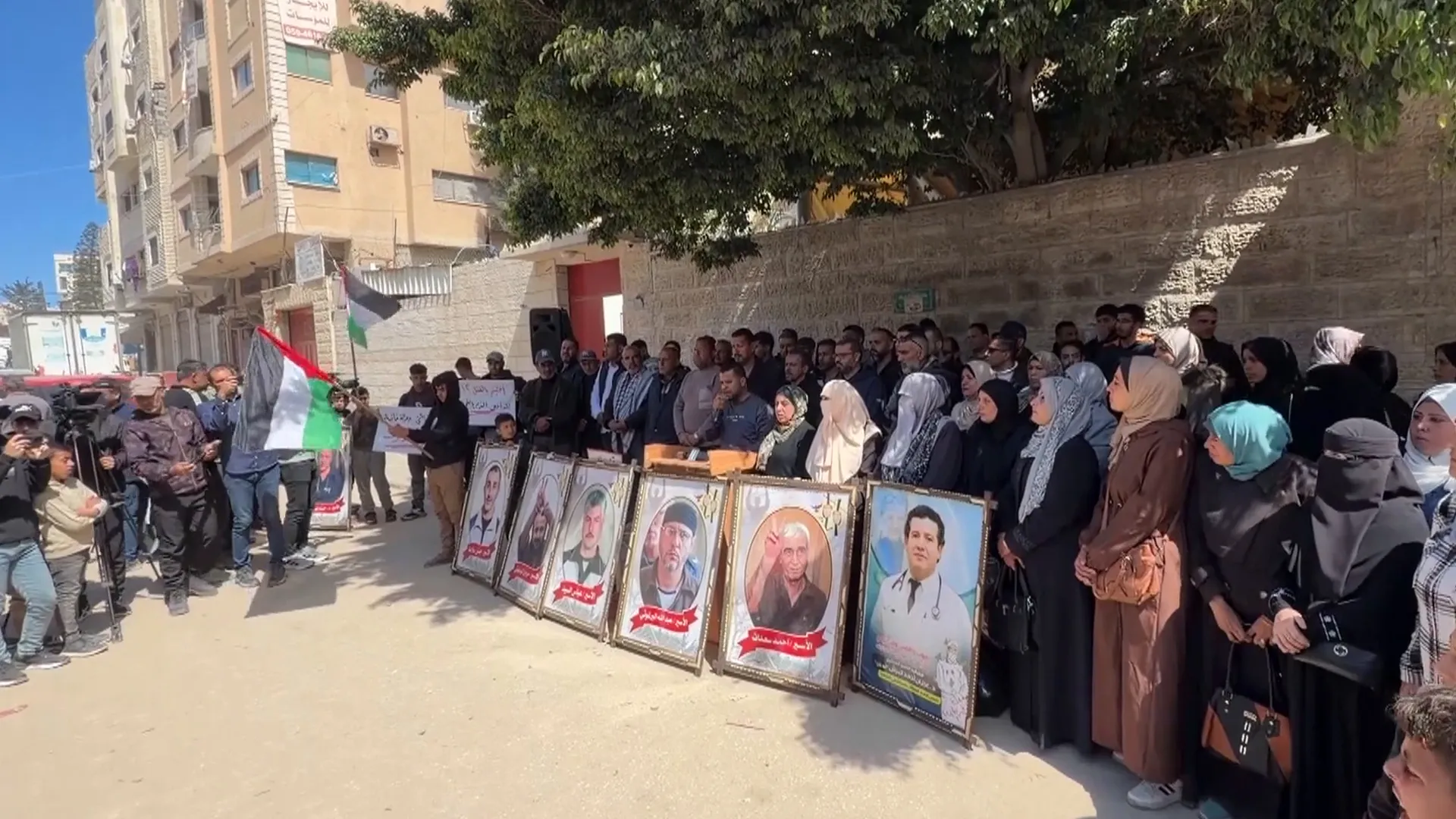
Families of Palestinian prisoners organized a protest in front of the International Committee of the Red Cross in Gaza, opposing the Israeli law that allows for the execution of prisoners. Participants in the protest affirmed that this decision represents a blatant violation of international law.
The protesters raised banners expressing their rejection of this law, calling for immediate international intervention to protect prisoners inside the occupation's jails. Speakers at the protest noted that this law comes amid escalating Israeli occupation against Palestinians, reflecting the policy of repression and abuse faced by prisoners.
Event Details
Dozens of family members of prisoners gathered outside the International Committee of the Red Cross, chanting slogans demanding the repeal of the Israeli law that threatens the lives of prisoners. Speakers indicated that this law reflects the occupation's policy in dealing with prisoners, as it seeks to undermine their human rights.
Participants also emphasized that this law contradicts international treaties that protect the rights of prisoners, urging international organizations to intervene to protect prisoners from these violations. They stressed the need to pressure the Israeli government to repeal this law, which threatens the lives of prisoners and exacerbates their suffering.
Background & Context
This protest comes at a time when the situation in the Palestinian territories is witnessing a noticeable escalation, with increased arrests and repressive measures against Palestinians. Recently, the Israeli government issued a law allowing for the execution of prisoners, provoking angry reactions in Palestinian and international circles.
This law is part of the Israeli occupation's policy aimed at intimidating Palestinians and weakening their resistance. Many human rights advocates consider this law a blatant violation of international law, and the international community must act to stop these violations.
Impact & Consequences
The enactment of this law could lead to an escalation of tensions in the Palestinian territories, potentially increasing friction between Palestinians and the occupation. Additionally, this law may provoke violent reactions from Palestinian factions, which could result in an escalation of military operations against the occupation.
This law may also affect relations between Israel and the international community, as the Israeli government is expected to face international pressure to halt these violations. This situation may reflect a deterioration in Israel's image on the international stage, especially amid growing calls to boycott the occupation.
Regional Significance
This law poses a threat to security and stability in the Arab region, as it may lead to an escalation of the Israeli-Palestinian conflict. Furthermore, this situation could impact relations between Arab countries and Israel, with increasing calls to support the Palestinian cause and reject the occupation.
The continued Israeli violations against Palestinians may exacerbate the humanitarian situation in the occupied territories, necessitating urgent international intervention to protect Palestinian rights and ensure their safety.
In conclusion, hope remains pinned on the international community to fulfill its role in protecting Palestinian prisoners and working towards ending the Israeli occupation that threatens security and stability in the region.