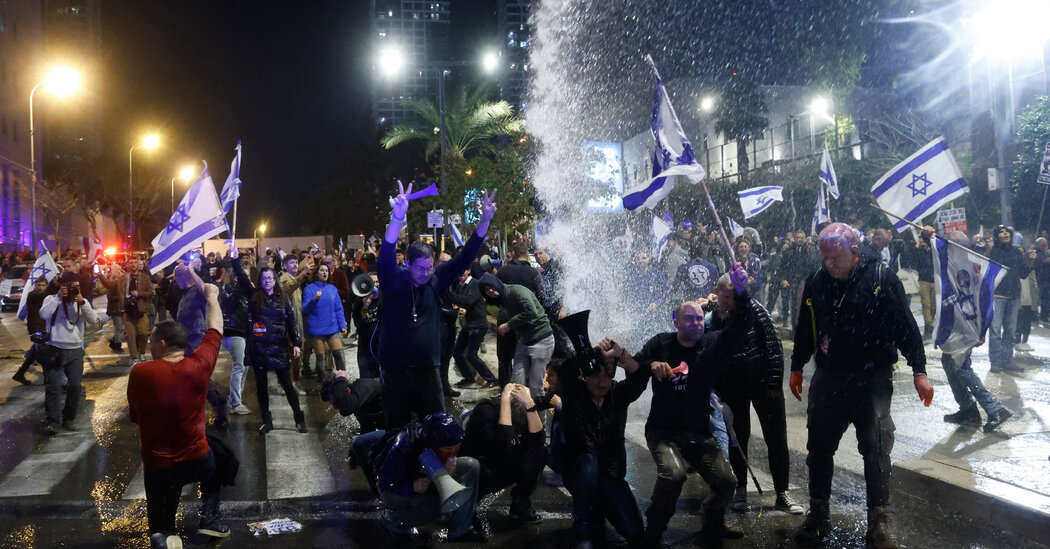
Hundreds of demonstrators gathered in Tel Aviv last Saturday to protest against the war, leading to at least ten arrests. The protests in the city were part of increasing calls from human rights activists and ordinary citizens to express their opposition to the ongoing military operations.
These protests come at a time when the region is experiencing heightened tensions, with demonstrators expressing concern over the humanitarian impact of the war, demanding a halt to military operations and the initiation of peaceful dialogue. The protests saw diverse participation from various age groups, with participants holding placards calling for peace and rejecting violence.
Details of the Protests
In the heart of Tel Aviv, protesters gathered in a main square, where musical events and short seminars were held to raise awareness about the negative impact of the war on civilians. As the number of participants increased, security forces intervened to disperse the crowds, resulting in the arrest of at least ten individuals. Some of these arrests were documented on social media, with videos showing demonstrators being detained.
The protests were not surprising, as Tel Aviv has witnessed an increase in anti-war activities in recent months, with growing voices calling for peace. Some demonstrators pointed out that these protests reflect a general feeling of discontent with the current government policies.
Background & Context
Historically, Israel has seen numerous anti-war protests, especially during times of conflict. Since the establishment of the state, wars have been part of daily reality, leading to a division within society on how to deal with these conflicts. The current protests come at a sensitive time, as international pressure on the Israeli government to cease military operations increases.
These protests are part of a broader movement calling for peace in the region, with activists seeking to change government policies through public pressure. In recent years, there has been a growing awareness of human rights and the importance of peaceful dialogue.
Impact & Consequences
The protests in Tel Aviv are an indicator of increasing public discontent with government policies, and these movements may influence future political decisions. Amid internal and external pressures, the government may find itself compelled to reassess its military strategies.
Moreover, these protests could foster dialogue among various segments of Israeli society, potentially contributing to building bridges of understanding between different camps. As public awareness increases, new alliances advocating for peace may emerge.
Regional Significance
The protests in Tel Aviv hold particular significance for the Arab region, reflecting the ongoing tensions between Israel and the Palestinians. These movements may also impact relations between Arab countries and Israel, especially amid ongoing peace efforts.
While some Arab nations seek to normalize relations with Israel, anti-war voices remain strong, reflecting a division in Arab public opinion on this issue. The protests may lead to a reevaluation of Arab positions towards Israel, opening the door for further dialogue on peace in the region.
In conclusion, the protests in Tel Aviv stand as a sign of the social and political changes occurring in the region, as citizens strive to express their opinions and demand their rights amid challenging circumstances.