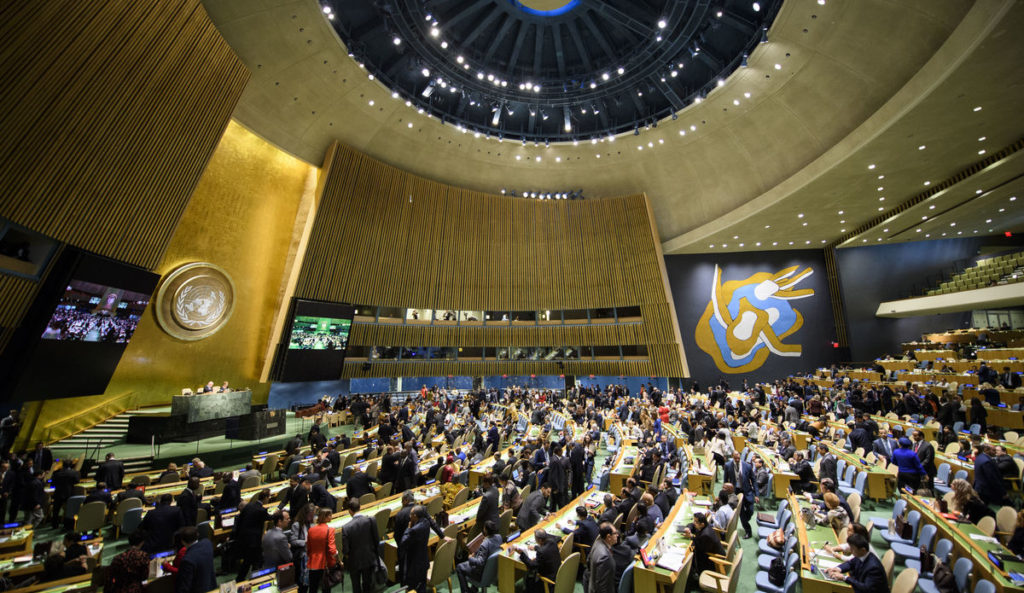
Questions are rising regarding the relevance of the United Nations, as scrutiny of its performance has evolved into concerns about its ability to influence a global system that often surpasses its charter. In light of the multiple crises facing the world, it has become essential to reconsider the role of this organization and its operational mechanisms.
Founded in 1945 with the aim of promoting international peace and security, the current challenges raise serious questions about its effectiveness. From humanitarian crises to armed conflicts, the organization seems to struggle in achieving its fundamental goals.
Details of the Current Situation
In recent years, we have witnessed a surge in global crises, ranging from conflicts in the Middle East to tensions among major powers. These crises have exposed the limitations of the United Nations' ability to intervene effectively, leading to a decline in confidence in its role as an international mediator. For instance, the organization has failed to resolve the Syria conflict, which has resulted in hundreds of thousands of deaths and refugees.
Moreover, criticisms directed at the Security Council have increased, as the permanent members possess veto power, hindering decisive decision-making. This has led many countries to feel that the organization does not reflect current political balances but instead reinforces the dominance of certain powers over international decisions.
Background & Context
The United Nations was established after World War II in response to the need for a more stable international system. However, the geopolitical changes the world has experienced since then, including the rise of new powers and the decline of others, have made it difficult for the United Nations to adapt to these dynamics. Ongoing crises in regions such as the Middle East and Africa, along with new challenges like climate change, require a more flexible and effective response.
Additionally, the economic and social crises faced by many countries present a real test for the United Nations regarding its ability to provide support and assistance. Instead of being a unified force, the United Nations sometimes appears to suffer from internal divisions, affecting its capacity to make effective decisions.
Impact & Consequences
The repercussions of the United Nations' weaknesses extend beyond its borders, impacting global stability. The lack of effectiveness in addressing crises can exacerbate conflicts, increase the number of refugees, and deteriorate humanitarian conditions. Furthermore, the declining trust in the organization may encourage some countries to take unilateral actions, increasing chaos in the international system.
Moreover, the weakness of the United Nations can affect international cooperation in various fields, such as combating terrorism and climate change. Under these circumstances, it becomes crucial to reassess the organization's role and update its operational mechanisms to meet contemporary challenges.
Regional Significance
In the Arab region, the importance of the United Nations in addressing ongoing conflicts, such as the Palestinian issue and the Syrian crisis, is highlighted. However, the failure to achieve tangible progress on these issues increases frustration among Arab populations. Many feel that the United Nations has not fulfilled its commitments, leading to a loss of confidence in its ability to achieve peace and stability.
Arab countries must reconsider their role within the United Nations and strive to amplify their voice in decision-making. They should also work towards supporting the necessary reforms to ensure the organization's effectiveness in the future.
In conclusion, the questions surrounding the effectiveness of the United Nations are not merely critiques of performance but a call to reassess how this organization operates in a rapidly changing world. It is essential for the United Nations to adapt to new challenges and work towards restoring confidence in its role as an international mediator.