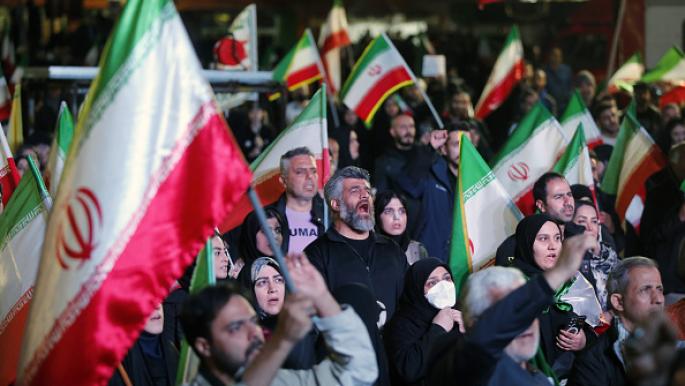
Doubts are increasing within the Trump administration regarding who holds the final authority in Iran to approve any potential peace agreement. These issues raise questions about the effectiveness of nuclear negotiations and their impact on regional security.
As the United States seeks to reach an agreement with Iran regarding its nuclear program, the lack of clarity about who holds the final decision in Tehran could complicate the chances of reaching a lasting agreement. Reports indicate that there are divisions within the Iranian leadership, further complicating the situation.
Details of the Situation
The American network "CNN" reported that the Trump administration is carefully examining who the actual decision-makers are in Iran. While Iranian President Ebrahim Raisi is believed to be the public face of power, some indicate that Supreme Leader Ali Khamenei holds the final say on sensitive issues, including nuclear negotiations.
This situation raises concerns among American officials, who question Raisi's ability to make radical decisions amid internal and external pressures. There are also fears that any agreement reached may not be sustainable if there is no internal consensus in Iran.
Background & Context
Historically, U.S.-Iranian relations have seen increasing tensions since the Islamic Revolution in 1979. Economic and political sanctions imposed on Iran have exacerbated the situation, making nuclear negotiations one of the most prominent issues on the international stage. In 2015, a nuclear agreement was reached between Iran and major powers, but the U.S. withdrawal from the agreement in 2018 brought matters back to square one.
In recent years, the Trump administration has attempted to reimpose sanctions on Iran, leading to heightened tensions. In this context, understanding who holds the decision-making power in Iran becomes crucial, as it could significantly impact the course of future negotiations.
Impact & Consequences
If doubts about who holds power in Iran persist, it could exacerbate the situation in the region. Instability in Iran may negatively affect neighboring countries and increase the likelihood of military escalation. Additionally, any unsustainable agreement could lead to a resurgence of tensions more quickly than observers anticipate.
Moreover, the lack of clarity in Iranian leadership may affect U.S. allies in the region, such as Saudi Arabia and Israel, who are closely monitoring the situation. These countries may be concerned that any agreement reached with Iran will not be sufficient to ensure their security.
Regional Significance
Arab countries are significantly affected by developments in Iran, as any escalation or agreement could impact the balance of power in the region. For instance, Saudi Arabia views Iran as a major adversary, and any improvement in U.S.-Iranian relations may raise its concerns.
The situation in Iraq, Syria, and Lebanon is directly influenced by Iran's orientations. Therefore, understanding who holds the decision-making power in Tehran is vital for Arab countries striving to maintain their stability and security.
In conclusion, questions about who holds power in Iran remain open, complicating the political landscape in the region. The Trump administration needs a clear strategy to address this situation to ensure it achieves its objectives in nuclear negotiations.