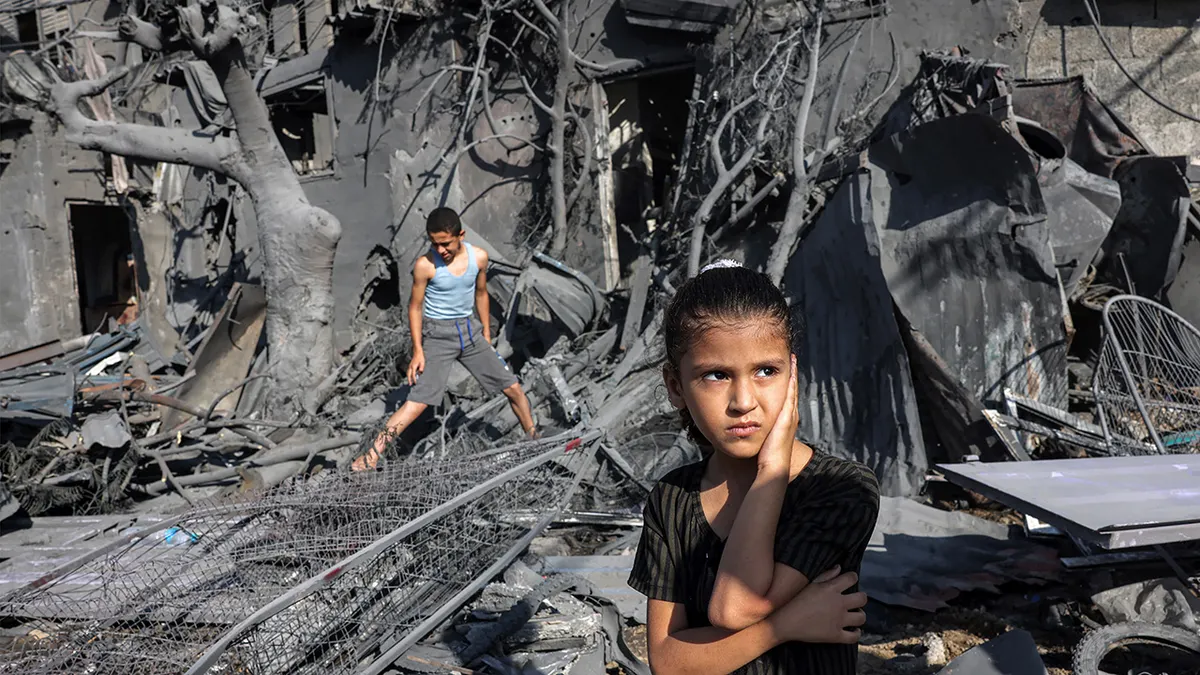
Residents of the Gaza Strip live under an escalating threat due to the presence of over 20,000 unexploded ordnance, posing a real danger to their lives, particularly for children. These munitions are a byproduct of the Israeli war that lasted for two years, turning their homes and neighborhoods into minefields.
In a tragic incident, 15-year-old Mohammed Abu Maala suffered amputations of his hand and leg after finding an unexploded object in a field near his home. This incident is not unique but reflects the painful reality many children in Gaza face.
Details of the Event
Every year on April 4th, the world celebrates the International Day for Mine Awareness, established by the United Nations General Assembly in 2005. However, in Gaza, fields are no longer the only places filled with mines; homes and neighborhoods have also become hazardous areas. Since the onset of the war in October 2023, extensive areas of the strip have been bombed, leading to an increase in unexploded ordnance.
Reports indicate that explosions from these munitions leave deep physical and psychological scars on victims. Mohammed, once an excellent student, now suffers from isolation and depression following his injury. His father, Atef Abu Maala, expresses deep concern for his son's future, who lost his mother in an Israeli airstrike.
Background & Context
Estimates from the Gaza Government Media Office indicate that the number of unexploded ordnance in the strip is among the highest in conflict zones, with Gaza covering only 365 square kilometers. Statistics from the Gaza Ministry of Health report that 7 people, including 5 children, have been killed due to explosions from these munitions, while 49 others have been injured.
The problem is exacerbated by the lack of resources to deal with these remnants. Mohammed Emad, spokesperson for the Rapid Response Unit, confirms that the volume of war remnants is significant, but the available resources to handle them are extremely limited.
Impact & Consequences
The implications of unexploded ordnance go beyond physical harm, deeply affecting the psychological state of children. Noor Al-Jayar (15 years old) is another example, having sustained multiple injuries from a bomb explosion while playing. His mental health has significantly deteriorated, necessitating intervention from psychological specialists.
The risks also increase for rescue teams and paramedics who work in dangerous conditions without prior knowledge of the types of munitions present in targeted areas. Mahmoud Basal, spokesperson for the Civil Defense, notes that Gaza has become akin to a minefield, heightening the risk of fatal accidents.
Regional Significance
The issue of landmines and unexploded ordnance in Gaza exemplifies the humanitarian challenges faced by conflict zones in the Arab world. This problem is not confined to Gaza alone but extends to other areas suffering from armed conflicts, necessitating greater international efforts to address these risks.
Under these circumstances, organizations like the International Committee of the Red Cross are working to raise awareness among residents about the dangers of unexploded objects and provide psychological support and treatment for victims. There remains hope for improving the humanitarian situation in Gaza, but this requires concerted local and international efforts.