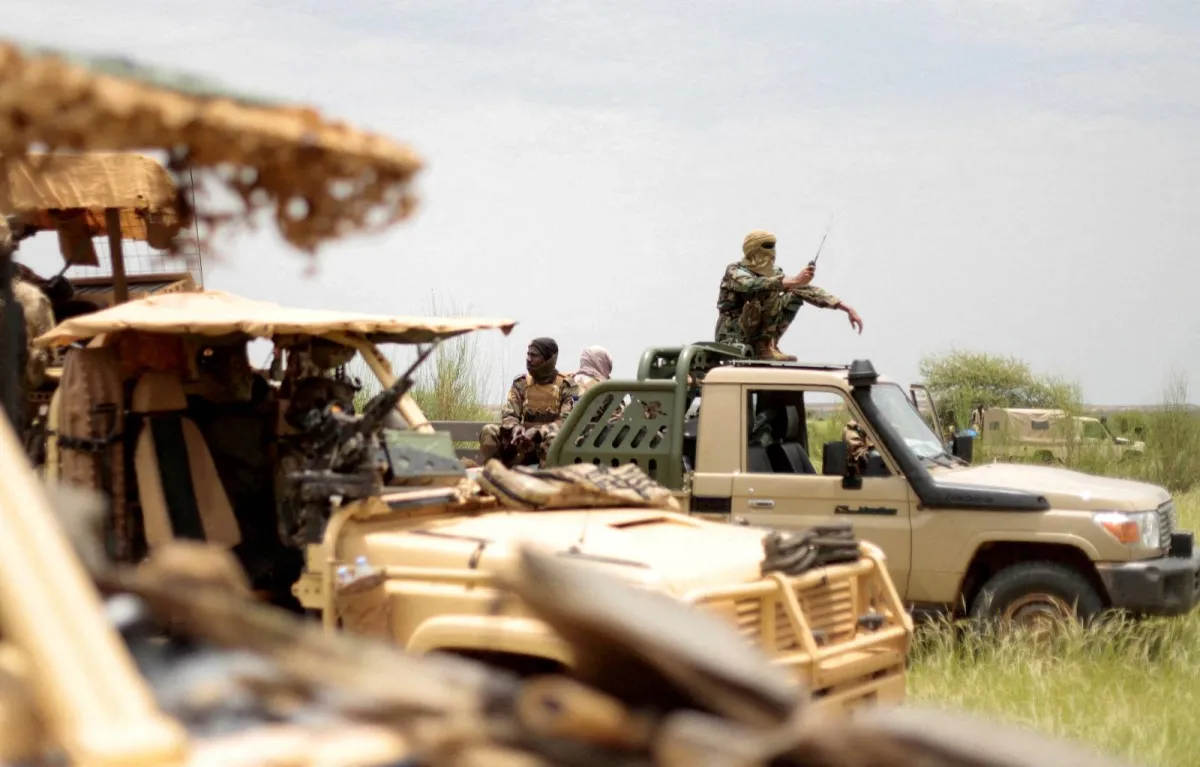
The spokesperson for the Tuareg rebels, Mohamed Al-Mouloud, has called for Russia to withdraw from Mali, indicating that the ruling military regime will not withstand the increasing attacks from the Azaouad Liberation Front and the Group for the Support of Islam and Muslims. This statement was made during his visit to Paris, where he emphasized that the military regime will eventually collapse.
Al-Mouloud pointed out that the primary goal of the rebels is to regain control over the territories of Azaouad in northern Mali, adding that Russian forces have not achieved any victories in their confrontations with the rebels. These remarks come at a time when the country is witnessing a significant security escalation, with Bamako experiencing several coordinated attacks.
Details of the Recent Attacks
Earlier this week, Mali experienced coordinated attacks that resulted in the deaths of at least 23 individuals, including both civilians and military personnel, during an assault on a military base in the city of Kati, which is considered a stronghold of the ruling military council. The area surrounding Bamako's airport was also targeted, with loud explosions reported in recent hours.
In the aftermath of these events, the French Ministry of Foreign Affairs urged its citizens to leave the country as soon as possible, noting that the security situation remains volatile. The ministry also advised against traveling to Mali, reflecting growing concerns over the escalating violence in the country.
Background & Context
Mali has been in a state of instability since the military coup in 2020, which led to a deterioration of the security situation in the country. The entry of Russian forces has further complicated the situation, as fighters from the Wagner Group were brought in to support the military government in its fight against armed groups.
Historically, Mali has witnessed ongoing conflicts between the government and the Tuareg rebels, who seek independence for their regions in the north. This conflict has led to a surge in violence and increased activity from extremist groups, making the country one of the most troubled areas in West Africa.
Impact & Consequences
Reports indicate that the recent attacks may bolster the position of armed groups in northern Mali, increasing the likelihood of further escalation in the region. The continuation of violence could negatively impact stability in neighboring countries, posing a threat to regional security.
On the other hand, these developments may prompt international powers to reassess their stance in Mali, especially as criticism of the presence of Russian forces grows. These events could also strengthen calls from the international community for peaceful solutions to the conflict.
Regional Significance
The situation in Mali is of particular importance to the Arab region, as it could affect regional security and enhance the activity of extremist groups. The escalation of violence in Mali may have repercussions for neighboring countries, necessitating urgent action from Arab nations to address these challenges.
In conclusion, the situation in Mali remains volatile, with rising tensions between the rebels and the military government. The current circumstances require a response from the international community to ensure regional stability and prevent worsening humanitarian crises.