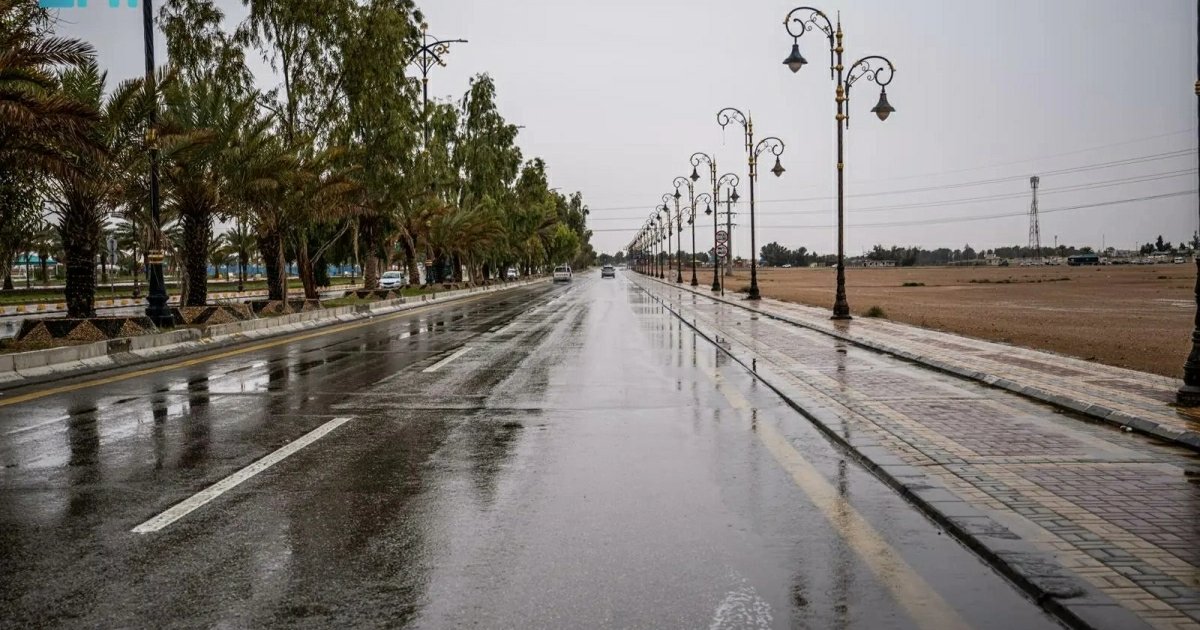
Saudi Arabia has witnessed heavy rainfall in recent hours, with the National Center of Meteorology (NCM) reporting significant weather activity. Among the affected areas, the Northern Borders region experienced the highest rainfall, with Tref Airport recording 15.2 mm from 9 AM on Wednesday, April 1, 2026, to 9 AM on Thursday, April 2.
Rainfall amounts were distributed across several monitoring stations, with Arar Airport recording 9.3 mm, while the Tref - Al-Khalidiya station noted 9.6 mm. Other stations in the region reported varying amounts, such as Arar - Hazm Al-Jalamid station with 6.8 mm, and Arar - Um Khunsar station with 2.4 mm. In the Al-Jawf region, Al-Qurayyat Airport recorded 3.7 mm, while Tref station noted 0.2 mm.
Details of the Event
The National Center of Meteorology issued multiple warnings regarding the weather conditions, indicating forecasts of rainfall ranging from light to heavy in some areas. Records showed that the Northern Borders region was the most affected, with rainfall concentrated at several monitoring stations, reflecting unusual weather activity for this time of year.
This rainfall comes at a time when many regions need to enhance their water reserves, as some areas are suffering from water shortages. The rain has contributed to improving soil conditions and increasing moisture, which could positively impact agriculture in the region.
Background & Context
Historically, Saudi Arabia has experienced fluctuations in weather conditions, with the country affected by a rainy season that typically extends from autumn to spring. However, the heavy rains witnessed in some areas in recent years have raised questions about climate changes and their impact on traditional rainfall patterns.
The Northern Borders region is known for its weather variability, characterized by diverse topography. Recent rains have improved environmental conditions, highlighting the importance of continuous weather monitoring by the National Center of Meteorology.
Impact & Consequences
This rainfall is seen as an opportunity to enhance groundwater levels and boost agriculture, potentially leading to increased agricultural production in the region. Additionally, the rain may help improve air quality and reduce temperatures, contributing to better living conditions for residents.
However, preparations must be in place to address any negative effects that may arise from heavy rainfall, such as flooding or landslides, especially in mountainous areas. Therefore, it is essential for relevant authorities to take necessary measures to protect residents and property.
Regional Significance
Many Arab countries are affected by climate changes, with some regions experiencing severe drought while others suffer from heavy rains. The rainfall observed in Saudi Arabia may serve as a model for a changing climate future, requiring Arab countries to intensify their efforts in managing water resources.
In light of these changes, Arab countries should collaborate in sharing information and expertise on water and agricultural management, contributing to enhancing food security and environmental sustainability.