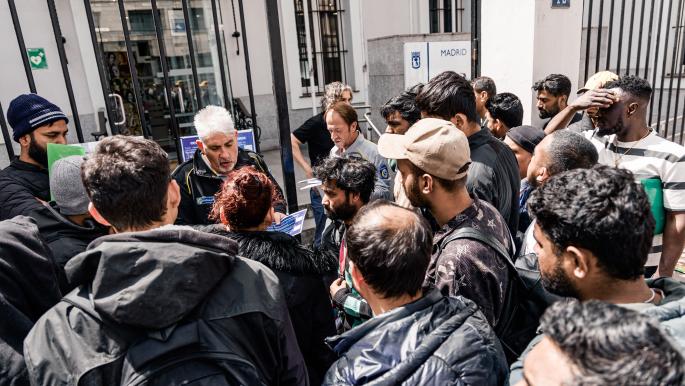
Spain is experiencing a significant increase in the number of migrants, with thousands gathering in front of municipalities, post offices, and social service centers to submit their applications as part of the extraordinary regularization process. This initiative comes at a critical time, as many migrants seek to improve their legal status in the country.
The extraordinary regularization process launched by the Spanish government offers migrants the opportunity to apply for residency permits, enabling them to work and access social services. Reports indicate that this measure has alleviated pressures on many migrant families facing difficult living conditions.
Details of the Event
The extraordinary regularization process is taking place in several regions across Spain, where specialized offices are set up to receive applications. These offices have seen a heavy influx of applicants, resulting in long queues of migrants waiting for their turn to submit their requests. Local authorities have increased the number of staff in these offices to facilitate and expedite the procedures.
The required conditions for application include providing proof of identity, along with documents verifying residence in Spain for a specified period. Applicants must also provide evidence of no criminal record. These conditions aim to ensure that beneficiaries of this process are individuals seeking to integrate positively into Spanish society.
Background & Context
Spain is considered one of the main destinations for migrants from various parts of the world, particularly from Latin America and Africa. In recent years, there has been a noticeable increase in the number of migrants arriving in the country, prompting the Spanish government to take steps to regularize their legal status. These measures are part of a migration policy aimed at enhancing the rights of migrants and improving their living conditions.
In past years, Spain has faced significant challenges in managing migration flows, especially amid economic and political crises in certain countries. This has led to the emergence of various government initiatives aimed at facilitating the integration of migrants, including language education programs and vocational training.
Impact & Consequences
This process is expected to have a positive impact on Spanish society, as it will contribute to improving the conditions of migrants and enhancing their integration into the labor market. Additionally, regularizing the status of migrants will help reduce social tensions arising from legal instability.
Moreover, improving the conditions of migrants may contribute to boosting the local economy, as they will be able to participate more actively in economic activities and increase their consumption, benefiting local businesses.
Regional Significance
The issue of migration is a sensitive topic in the Arab region, where many young people face difficult economic conditions that drive them to seek better opportunities abroad. Spain's experience in regularizing migrants could serve as a model for other countries, potentially improving the conditions and rights of migrants.
Given the challenges facing the region, it is crucial for governments to adopt effective policies that support the rights of migrants and assist them in integrating into the communities they live in. Such policies could help reduce irregular migration and promote social stability.