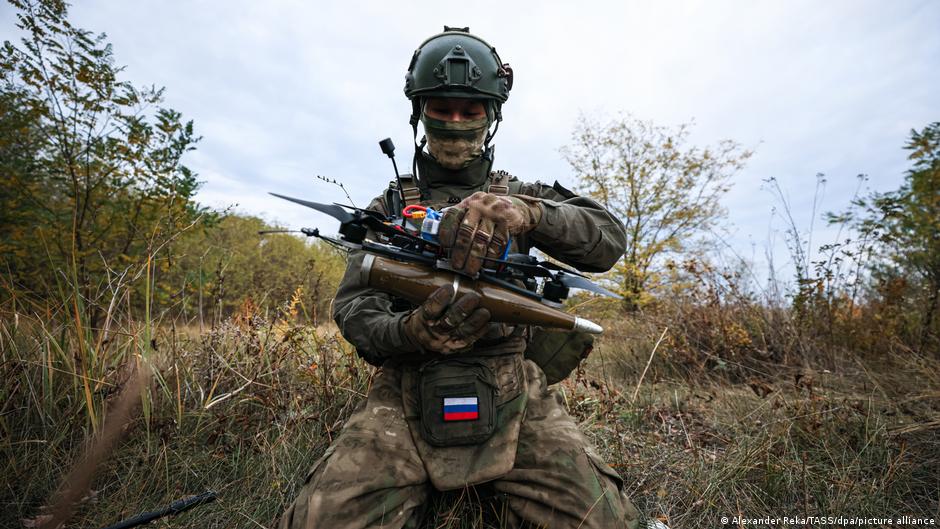
Reports indicate that university students in Russia are facing intensive recruitment efforts by the Russian Ministry of Defense to join drone units, where they are offered enticing contracts worth around 5 million rubles (approximately $58,000), along with promises to cover their educational costs after their military service. However, many of these students find themselves facing a bitter reality as they are sent to combat fronts in Ukraine, putting their lives at risk.
The recruitment process involves organizing meetings at universities with representatives from recruitment offices and military training centers, where the benefits of joining drone units are presented. Reports have indicated that over 70 educational institutions across 23 regions of Russia, including the Crimea Peninsula, are participating in this process, raising concerns about the exploitation of youth in military conflict.
Details of the Recruitment Event
Yuri, who works at a university in Moscow, states that university heads were summoned to meet with Dmitry Chernyshenko, the Russian Deputy Prime Minister, where they were directed to organize recruitment efforts. Yuri notes that each university follows its own approach to recruitment, with group discussions organized for students by representatives from recruitment offices and those experienced in military operations.
In some regions, local education ministries have issued guidelines on how to organize recruitment efforts, reflecting the increasing pressure on universities to meet specific recruitment targets. Independent reports have shown that universities have begun sending emails to students offering contracts with the Ministry of Defense, heightening concerns among students and their families.
Background & Context
These developments come amid the ongoing war between Russia and Ukraine, which began in 2014 with Russia's annexation of Crimea. Since then, military tensions have escalated, prompting the Russian government to take measures to recruit more youth into the military. The war has been classified as a special military operation, reflecting the government's attempt to mitigate negative public perceptions.
Historically, Russian universities have been seen as places for education and personal development, but the current situation threatens to transform them into military recruitment centers, raising concerns within the academic community about the future of education in the country.
Impact & Consequences
The implications of this student recruitment extend beyond military dimensions, affecting the academic and social lives of students. Many find themselves in a difficult position, forced to choose between continuing their studies or joining the military. Reports indicate that some students facing expulsion from universities have been lured by contracts with the Ministry of Defense, increasing their psychological pressures.
Moreover, these policies may lead to increased discontent among youth, which could negatively impact the stability of Russian society. Some analysts suggest that this strategy could exacerbate social and economic crises in the country.
Regional Significance
These developments are particularly significant for the Arab region, as Arab countries closely monitor the developments of the conflict in Ukraine and its impact on regional security. Increased military tensions in Russia may have repercussions on Arab-Russian relations, especially in areas of military and commercial cooperation.
In conclusion, the international community must closely monitor these developments, as the recruitment of youth in military conflicts reflects larger challenges faced by nations in maintaining stability and security in their regions.