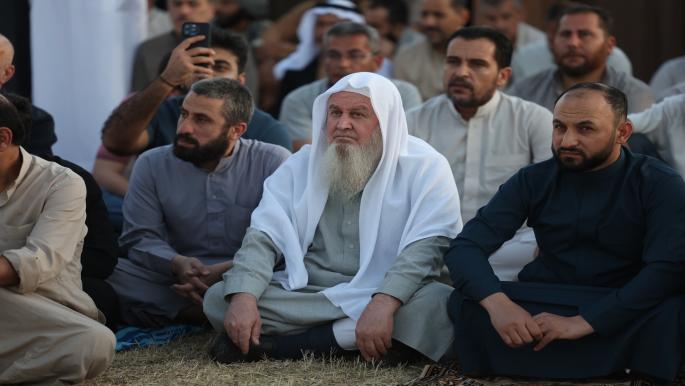
President Ahmad al-Shara faces significant challenges in redefining the relationship between the state and religion in Syria. These efforts come at a time when the country is undergoing profound transformations after years of conflict, as al-Shara seeks to achieve a balance between the legacy of the previous regime and that of Hay'at Tahrir al-Sham.
This step is essential to ensure the country's stability, as the relationship between religion and the state has always been a contentious issue in Syrian society. Al-Shara aims to establish new foundations that enhance the role of the state without excluding religious actors, which could contribute to strengthening national unity.
Details of the Initiative
President Ahmad al-Shara announced new plans aimed at restructuring the relationship between religious institutions and the state. These plans are part of the government's efforts to enhance social and political stability in Syria. Al-Shara emphasized the importance of dialogue among various religious and political parties, stressing the need for consensus-based solutions.
The plans also include strengthening the role of official religious institutions, such as the Awqaf, in guiding religious discourse in line with national values. Additionally, al-Shara aims to reduce the influence of extremist groups that have exploited the chaos of recent years.
Background & Context
Historically, the relationship between religion and the state in Syria has been complex. The previous regime used religion as a tool for controlling society, leading to the marginalization of many groups. After the revolution, groups like Hay'at Tahrir al-Sham emerged, attempting to impose their own vision on the community.
Now, with the diminishing control of these groups in certain areas, al-Shara seeks to restore the state's role in directing religious discourse. This move could be crucial in rebuilding trust between the state and citizens, especially in regions heavily affected by the conflict.
Impact & Consequences
If al-Shara's efforts succeed, they could lead to greater stability in Syria, contributing to the rebuilding of society. However, these plans may face resistance from some groups unwilling to lose their influence.
It is important that these efforts are accompanied by political and economic reforms to ensure tangible results. The economic and social challenges are just as significant as the political and religious ones.
Regional Significance
Syria's experience in redefining the relationship between religion and the state could serve as a model that influences other countries in the region. Amid the multiple crises facing many Arab nations, there may be an urgent need to rethink how to manage the relationship between religion and the state.
If Syria can achieve a balance among these forces, it may become a role model in the region, potentially contributing to stability in other countries facing similar conflicts.
In conclusion, it remains to be seen how these efforts will evolve in Syria and whether they will succeed in achieving the desired stability. The challenges are significant, but the hope for building a better future remains strong.