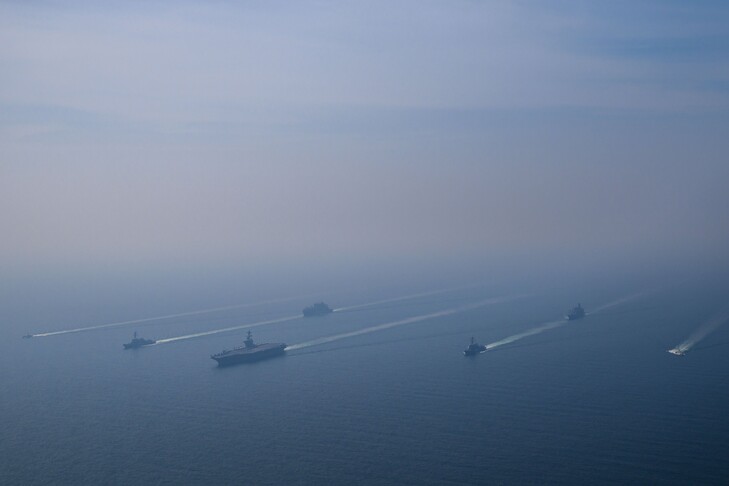
The U.S. Central Command (CENTCOM) announced that 58 commercial vessels have been redirected away from Iranian waters since the maritime blockade imposed by the United States on Iran began in April. This action is part of Washington's efforts to curb Iranian maritime activities that it views as a threat to regional and international security.
Reports indicate that the blockade has resulted in the disruption of four ships, reflecting the impact of U.S. military actions on trade movement in the region. The maritime blockade signifies an escalation of tensions between the United States and Iran, as Washington seeks to pressure Tehran to limit its nuclear program and regional behavior.
Details of the Maritime Blockade
The maritime blockade imposed by the United States on Iran is part of a broader strategy to confront what it perceives as threats from Tehran. Since April, commercial ships have been redirected away from Iranian waters, affecting maritime trade in the region. This measure reflects U.S. concerns over Iranian activities in the Strait of Hormuz, one of the world's most vital maritime passages.
The blockade is not limited to redirecting vessels; it also includes additional military measures, with U.S. naval forces deployed in the area to enhance security and ensure freedom of navigation. These steps come at a sensitive time, as tensions between Iran and the United States have escalated, particularly following Washington's withdrawal from the Iranian nuclear deal in 2018.
Background & Context
Historically, U.S.-Iran relations have seen increasing tensions since the Islamic Revolution in 1979. The current maritime blockade is part of a series of measures taken by the United States against Iran, which include economic sanctions and diplomatic pressure. In recent years, Iran has intensified its military activities in the region, prompting the United States to adopt more stringent actions.
The maritime blockade also reflects the challenges faced by the United States in maintaining regional stability. As Iranian activities increase, concerns grow that these tensions could lead to open military conflict, which would have serious implications for regional and international security.
Impact & Consequences
The potential consequences of this maritime blockade could be far-reaching. Economically, the blockade may affect global trade flows, particularly in the oil sector, where a significant percentage of oil exports pass through the Strait of Hormuz. Any disruption in shipping could lead to an increase in global oil prices, impacting the world economy.
Furthermore, military escalation could provoke reactions from Iran, increasing the likelihood of military conflict. This situation could draw other countries in the region into the dispute, complicating the security landscape in the Middle East.
Regional Significance
For Arab countries, the U.S. maritime blockade on Iran represents a significant challenge. Many Arab nations rely on regional stability to ensure the safety of their trade and security. Any escalation in tensions could affect regional security, placing additional pressure on Arab governments to address the ramifications of this situation.
Moreover, Gulf states, which depend on oil exports, may face additional challenges under this blockade. It is crucial for these countries to remain vigilant regarding developments in the region and to collaborate with international partners to ensure the stability of oil markets and trade flows.
The maritime blockade imposed by the United States on Iran represents an escalatory step in relations between the two countries. While each side seeks to achieve its objectives, the ramifications of this blockade could be long-lasting, necessitating proactive measures from Arab nations to ensure their security and stability.