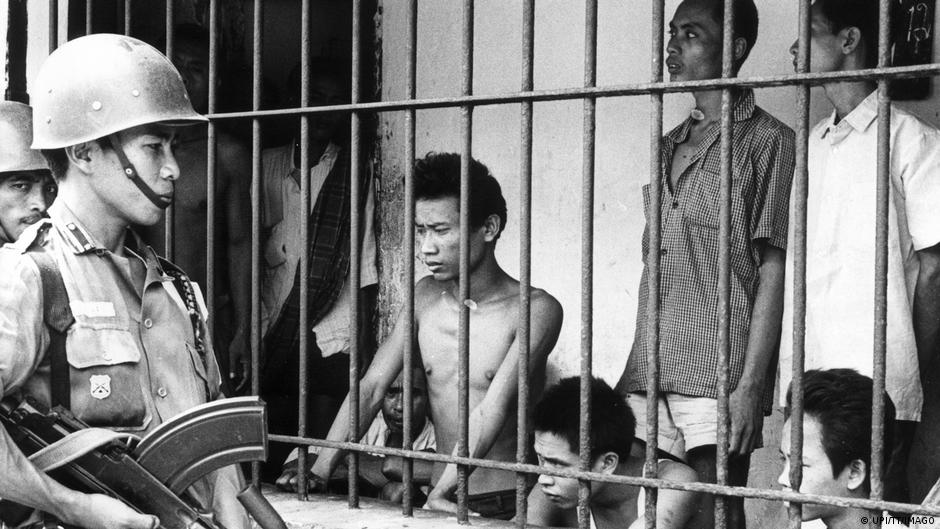
In October 1965, Indonesia witnessed one of the largest massacres in its modern history, where hundreds of thousands of individuals accused of being part of the Indonesian Communist Party were killed. These events followed a failed coup attempt, which the Indonesian military exploited to justify a broad crackdown on communists, involving torture and arrests.
Prior to this, in December 1964, the British Foreign Office noted in an internal memo that an early coup by the Communist Party could be the optimal solution for the West, provided the coup failed. This document illustrates how Western powers were planning to intervene in Indonesian affairs, reflecting a broader strategy during the Cold War.
Details of the Event
On the night of September 30, 1965, six senior Indonesian generals were kidnapped and killed by a group known as the “September 30th Movement.” The Indonesian Communist Party was accused of orchestrating this incident, allowing the military, led by General Suharto, to use it as a pretext for launching a bloody crackdown against communists. However, historical research suggests that the idea of kidnapping the generals originated outside the Communist Party, raising questions about the official narrative.
Following these events, a coordinated campaign against the Communist Party began, supported by the United States and its allies, including the United Kingdom and Australia, who provided military and intelligence assistance. Numerous documents have emerged revealing Western involvement in the massacres, with Washington supplying lists of Communist Party members and expressing a willingness to assist.
Background & Context
Historically, Indonesia has experienced multiple external interventions, being part of the broader conflict between major powers during the Cold War. Many countries, such as Guatemala, Cuba, and Vietnam, suffered from American interventions that led to decades of dictatorial rule. These interventions did not result in stability but rather exacerbated social and political conflicts.
Sixty years after the massacres, the collective memory in Indonesia remains distorted. The state has not officially apologized for these events, nor have there been criminal trials for those responsible. Former Indonesian President Joko Widodo acknowledged that the events were “serious human rights violations,” yet he did not offer an official apology.
Impact & Consequences
Current events indicate that the United States and its allies continue to intervene in the affairs of countries they perceive as threats. Recently, former President Donald Trump threatened military intervention in countries like Mexico and Colombia, reminiscent of Cold War strategies. Such interventions could exacerbate humanitarian crises and lead to the destruction of nations.
Historian Jeffrey B. Robinson argues that Western interventions do not yield positive outcomes but rather accelerate conflicts and lead to state failures. He points out that the repercussions of these interventions are still evident today, as seen in Iran.
Regional Significance
In the Arab world, the effects of foreign interventions can be seen in numerous countries, resulting in ongoing conflicts and political chaos. The Arab experiences mirror what occurred in Indonesia, as nations grapple with external interventions affecting their stability and security. These events raise questions about national sovereignty and the rights of peoples to self-determination.
In conclusion, the historical memory of the Indonesian massacres remains alive, as civil society strives to preserve the memory of the victims through digital archives and memorials. However, the question remains: when will the state officially acknowledge these violations?