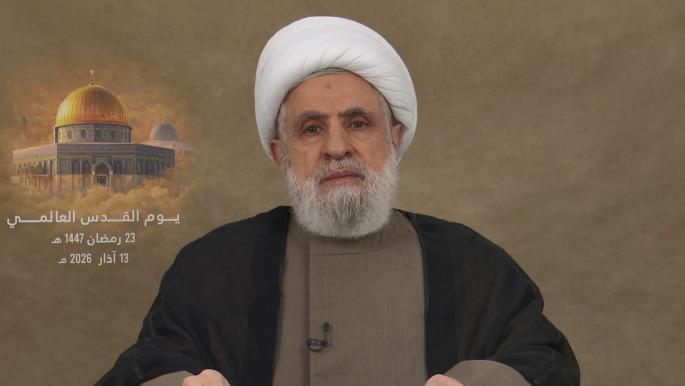
Hezbollah's Secretary-General, Naeem Qassem, has firmly rejected negotiations with Israel, emphasizing the group's commitment to resistance against occupation. He stated that negotiating with Israel equates to surrender, asserting that the only option is to resist the occupation.
In a press statement, Qassem reiterated that Hezbollah will not participate in any talks with Israel, asserting that the only option is to confront the occupation by all available means.
Details of the Statement
Qassem mentioned that Israel seeks Hezbollah's participation in peace talks; however, Hezbollah will not engage in any discussions with Israel. He reiterated that the group views negotiations with Israel as an act of surrender, and the only viable option is to resist the occupation.
Furthermore, Qassem stated that Hezbollah considers itself part of the popular resistance in the region, and the only option is to confront the occupation using all available means.
Background & Context
Qassem emphasized that Hezbollah sees itself as a part of the popular resistance in the region, asserting that the only option is to confront the occupation through all available means. He highlighted that Hezbollah considers itself part of the historical narrative of the people in the region, reinforcing that resistance is the only path forward.
He also pointed out that Hezbollah's identity is intertwined with the historical struggle against occupation, and the group will continue to uphold this stance as a fundamental aspect of its mission.
Impact & Consequences
Qassem's statements underscore Hezbollah's position within the broader context of resistance movements in the region. By rejecting negotiations, Hezbollah aims to galvanize support among its base and reinforce its narrative of resistance against perceived aggression.
Moreover, Qassem's remarks may influence regional dynamics, as they signal to both allies and adversaries that Hezbollah remains steadfast in its commitment to resistance, potentially affecting future diplomatic efforts in the region.
Regional Significance
Hezbollah's stance is significant for the Arab region, as it positions the group as a key player in the ongoing struggle against occupation. Qassem's assertions resonate with many who view resistance as a legitimate response to occupation, reinforcing Hezbollah's role in the broader narrative of resistance movements.
Additionally, Qassem's comments may have implications for regional stability, as they could embolden other factions that share similar views on negotiations and resistance, potentially leading to increased tensions in the area.
Conclusion
In conclusion, Qassem reiterated that Hezbollah will not participate in any negotiations with Israel, emphasizing that the only option is to confront the occupation through all available means. This firm stance reflects Hezbollah's commitment to its principles and its role in the ongoing resistance in the region.