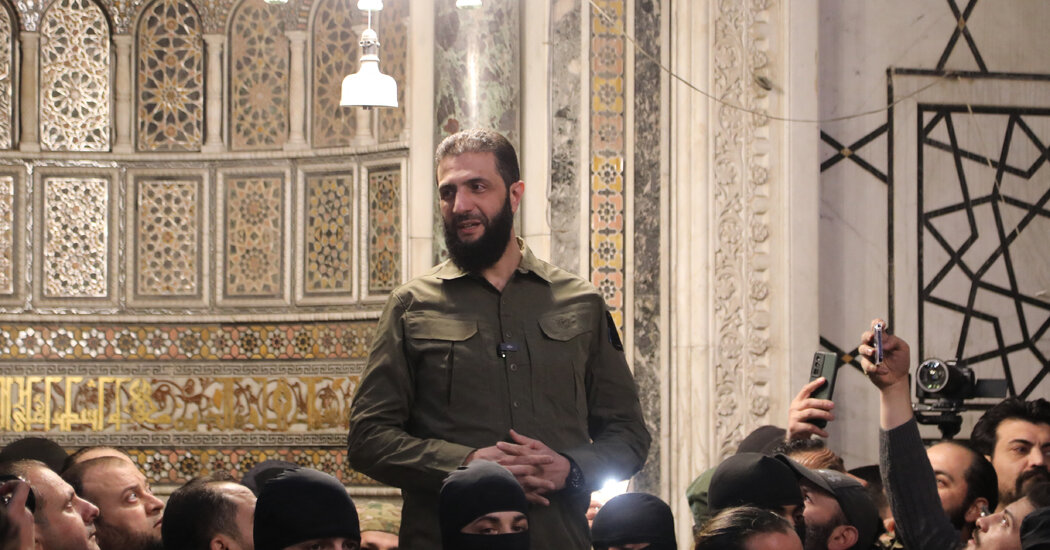
Thousands of residents in the city of Douma, located near Damascus, gathered on Thursday to welcome Syrian President Ahmad al-Shara and the former leader of the 'Army of Islam', Issam al-Buwaidani, known by the nickname Abu Hamam. This grand reception followed the release of al-Buwaidani by the United Arab Emirates after nearly a year of detention.
The celebrations were organized in Freedom Square, where reception tents were set up, and included revolutionary songs and chants, showcasing the great enthusiasm among the residents to welcome their leaders. This event comes at a sensitive time for the region, as many Syrian factions seek to reorganize themselves after years of conflict.
Details of the Event
Thousands gathered in Douma, a city that has suffered greatly during the Syrian conflict, to express their joy at al-Buwaidani's release. Al-Shara delivered a speech to the attendees, emphasizing the importance of rebuilding Ghouta and stressing the need to approach this task differently than the 'thugs', referring to factions that have failed to achieve stability.
This release is part of the UAE's efforts to expand its influence in the region, as it seeks to improve its relations with various Syrian factions. The UAE had detained al-Buwaidani as part of security campaigns against prominent opposition figures.
Background & Context
Historically, Douma has been a center of Syrian opposition and has witnessed many significant events during the conflict. The city was under the control of opposition factions for a long time before being retaken by government forces. The release of al-Buwaidani reflects the ongoing changes in the political and military landscape in Syria.
The UAE, which had previously reduced its support for armed factions, has begun to reassess its strategy, reflecting its desire to play a larger role in the reconstruction and stabilization of Syria. This step may indicate a shift in regional policy towards Syria.
Impact & Consequences
The release of al-Buwaidani could strengthen the position of the 'Army of Islam', which is seeking to regain its influence in the region. Additionally, this event may encourage other factions to rethink their strategies, especially in light of the political changes in the region.
This release may also enhance relations between the UAE and Syrian factions, potentially opening the door for further cooperation in the future. At the same time, these developments must be approached with caution, as the situation in Syria remains fragile.
Regional Significance
This event highlights the ongoing changes in regional politics, as Arab countries seek to reassess their relations with Syria. The release of al-Buwaidani could be a step towards improving relations between Arab nations and Syrian factions, contributing to stability in the region.
Moreover, this event reflects the UAE's desire to strengthen its role as a mediator in regional conflicts, which could impact the balance of power in the area. Ultimately, the situation in Syria remains complex and requires ongoing efforts to achieve peace and stability.