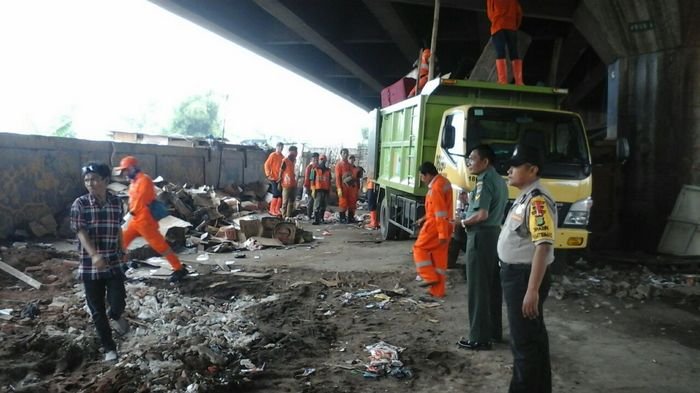
In a move aimed at enhancing infrastructure in Indonesia's capital, Jakarta, local authorities have removed 16 illegal buildings that were constructed over a waterway in the Kuningan Barat area. This operation took place on Thursday, with officials confirming that these buildings were obstructing traffic and causing drainage issues.
Esnodo Usnudo, the mayor of Kuningan Barat, stated that these structures primarily consisted of semi-permanent constructions and were being used for commercial purposes. Tenants were issued warnings prior to the removal operation, with a one-month grace period granted for compliance.
Details of the Operation
The removal process began after a series of meetings with local residents, during which the damages caused by these buildings to the local environment were clarified. The operation involved 75 individuals from various government units, including local police and environmental management staff, reflecting cooperation among different governmental entities.
Following the removal of the buildings, the area will be restored to serve as a main waterway, in addition to providing pedestrian pathways, contributing to an improved quality of life for local residents.
Background & Context
The issue of illegal buildings is one of the major challenges facing large cities in Indonesia, with this phenomenon increasing in recent years due to rapid population growth. These buildings are often constructed without permits, leading to urban planning and environmental issues.
The Indonesian government is seeking to address this issue by implementing stricter policies regarding illegal construction, as these steps are part of broader efforts to improve urban planning and provide a better living environment for citizens.
Impact & Consequences
This operation is seen as a positive step towards improving infrastructure in Jakarta, as it is expected to help reduce flooding and improve traffic flow. Additionally, the removal of illegal buildings may encourage residents to adhere to local laws and regulations.
Moreover, this step reflects the government's commitment to enhancing the quality of life in major cities, which could have a positive impact on the local economy by attracting more investments.
Regional Significance
Jakarta's experience in removing illegal buildings serves as a model that many Arab cities facing similar challenges can benefit from. With urban growth increasing in many Arab countries, there is a pressing need for effective urban planning policies and resource management.
Ultimately, improving infrastructure and removing illegal buildings can contribute to creating a more sustainable and comfortable environment for residents, which should be a shared goal among all nations.