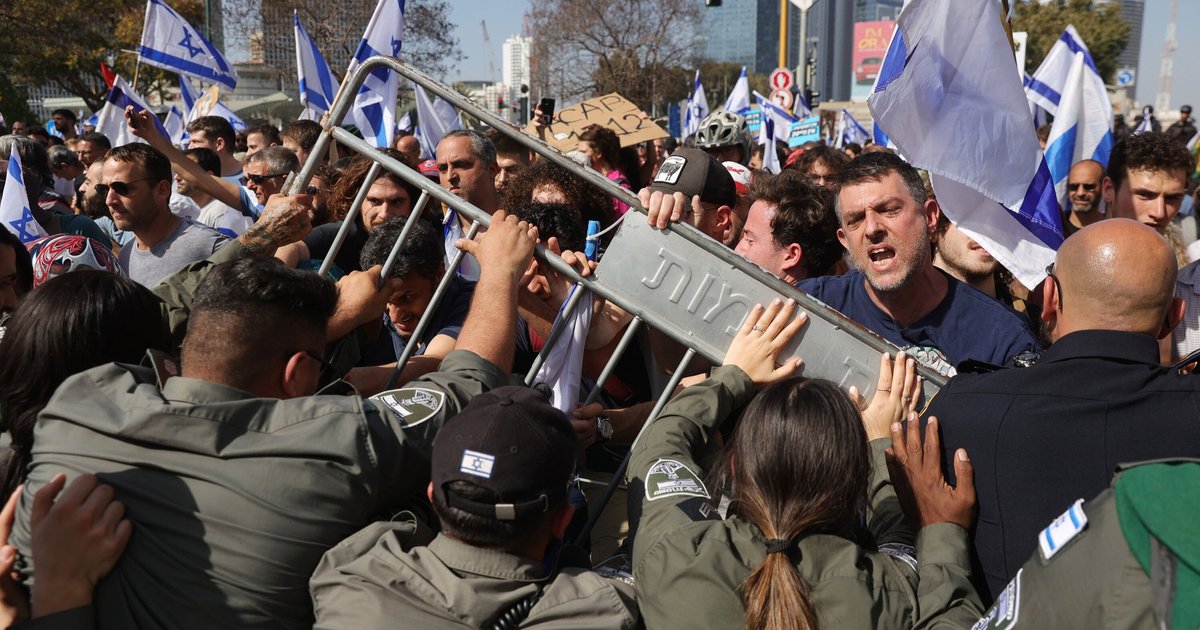
Protests have reignited in Israel, with thousands of citizens gathering in the streets of Tel Aviv and other cities, expressing their dissatisfaction with current government policies. These demonstrations occur during a critical period, as fears increase regarding the government's impact on democracy and human rights in the country.
The protests, which began on Saturday evening, saw widespread participation from various segments of Israeli society, including youth, women, and the elderly. Protesters raised slogans demanding the government retract some controversial decisions, which they view as threats to democratic principles.
Details of the Protests
The protests coincided with calls from opposition leaders, who warned that the current government seeks to undermine the democratic system through new legislation. Demonstrators pointed out that these policies could lead to the erosion of minority rights and the spread of corruption.
Notably, the protests saw significant attendance from opposition political figures, who emphasized the necessity of preserving democratic values in Israel. The demonstrations were organized peacefully, despite some incidents involving clashes with security forces.
Background & Context
Historically, Israel has experienced numerous popular protests reflecting social and political tensions. In recent years, protests against the government have escalated, particularly in light of the economic and social crises plaguing the country. These crises have significantly impacted citizens' lives, intensifying public discontent.
These protests are part of a series of events occurring in Israel, where calls for political and social reforms have increased. Polls have shown that a large percentage of citizens feel dissatisfied with the performance of the current government.
Impact & Consequences
These protests could lead to significant changes in the Israeli political landscape, as the government may be compelled to reconsider some of its policies. Additionally, the continuation of protests could affect Israel's international relations, particularly with countries closely monitoring the situation.
If this wave of protests persists, it may result in the formation of new alliances within the political arena, potentially altering the balance of power within the Knesset. Furthermore, these events could open the door for new political forces seeking to provide alternatives to voters.
Regional Significance
The protests in Israel serve as an indicator of the political and social tensions that may affect the entire region. Political changes in Israel could impact relations with Arab countries, especially given the shared challenges facing the region.
Moreover, these protests could contribute to enhancing dialogue between Arab nations and Israel, as they may open avenues for discussing common issues such as human rights and social development. Ultimately, developments in Israel remain of great interest to Arab countries, reflecting the challenges faced by the region.