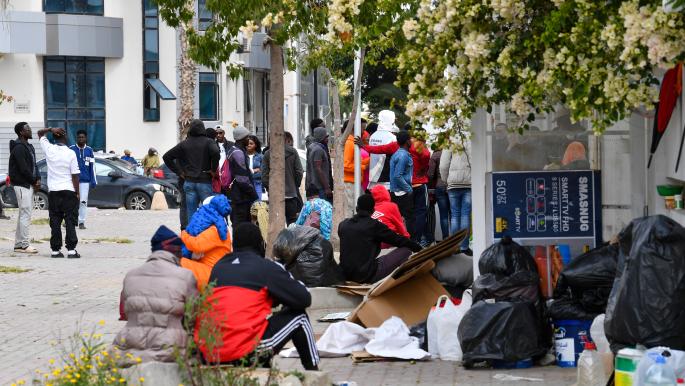
Last Saturday, widespread protests erupted in Tunis organized by civil activists, expressing their rejection of policies regarding the settlement of irregular migrants. Demonstrators called for a legal framework to regulate the residency of these migrants, emphasizing the importance of respecting their human rights.
These protests come at a time when the number of irregular migrants arriving from sub-Saharan African countries is increasing, as they seek to reach Europe via Tunisia. Concerns have grown that government policies may exacerbate the humanitarian conditions for migrants, prompting activists to organize this event to express their discontent.
Details of the Event
Protesters gathered in the Government Square in Kasbah, where they raised banners calling for migrant rights and denouncing government policies towards them. The event was organized at the invitation of a group of non-governmental organizations working in the field of human rights, which underscored the necessity of providing a safe environment for migrants.
The protests saw significant participation from youth and women, who expressed solidarity with migrants, demanding the government to open a comprehensive dialogue on this issue. The event included speeches from several activists who spoke about the suffering of migrants in Tunisia, pointing out the need for legal solutions that guarantee their rights.
Background & Context
Tunisia is a major departure point for irregular migrants seeking to reach Europe, as the country suffers from a severe economic crisis. The difficult economic and social conditions have led to an increase in the number of migrants, posing significant challenges for the government in managing this phenomenon.
In recent years, the Tunisian government has taken several steps to address the influx of migrants, but these policies have faced widespread criticism from human rights organizations. These organizations argue that government policies lack humanity and lead to violations of migrant rights.
Impact & Consequences
There are growing concerns that the protests may escalate tensions between the government and civil society, especially amid difficult economic conditions. Additionally, these protests could affect Tunisia's image in the international community, which is closely monitoring how the government handles human rights issues.
These protests may compel the government to reconsider its policies towards migrants, as it may have to take more humane steps to ensure the rights of these individuals. Furthermore, the continuation of protests could contribute to raising public awareness about migration and asylum issues in Tunisia.
Regional Significance
The issue of irregular migrants is one of the pressing challenges in the Arab region, where many countries face similar issues. The protests in Tunisia could stimulate similar movements in other countries, potentially contributing to a new public opinion regarding migrant rights in the region.
Addressing migrant issues in a humane and legal manner could have a positive impact on social stability in Arab countries, as it may foster understanding and tolerance among different communities.
The protests witnessed in Tunisia reflect the civil society's concern regarding migrant issues, highlighting the urgent need for legal and humanitarian solutions to this matter. Amid difficult economic conditions, hope remains that the government will commit to enhancing the rights of migrants and improving their conditions.