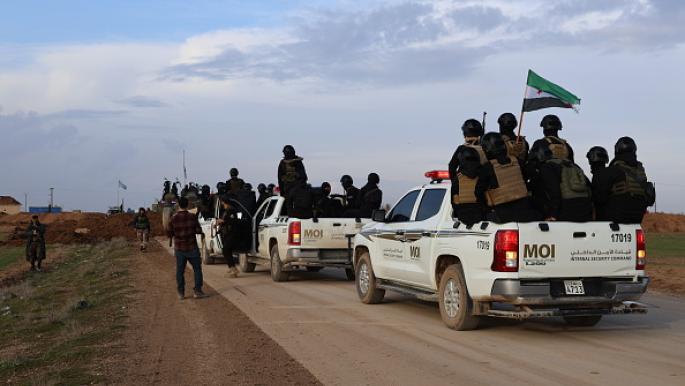
Tensions have resurfaced between the self-administration in northeastern Syria and the Syrian government, as crises escalated following recent events in the city of Kobani and its countryside. These developments reflect the depth of the existing disagreements between the two parties, which have their roots in years of political and military conflict in the region.
These tensions come at a sensitive time, as the Syrian government seeks to regain control over areas held by the self-administration, while the latter rejects any attempt by Damascus to dominate its affairs. The recent events in Kobani, which witnessed clashes between local forces and government troops, have heightened tensions and returned relations between the two sides to the starting point.
Details of the Incident
The city of Kobani and its countryside witnessed violent confrontations, with local sources reporting clashes between forces affiliated with the self-administration and Syrian government troops. These clashes occurred in the context of escalating political and military tensions, as both the self-administration and Damascus seek to strengthen their positions in the region.
These events coincide with statements from officials in the self-administration, who emphasized the need to preserve their gains under the current circumstances. In contrast, the Syrian government is attempting to regain control over areas it lost in recent years, complicating the situation further.
Background & Context
The roots of the disagreements between the self-administration and the Syrian government date back to the beginning of the conflict in Syria in 2011, when Kurdish forces managed to seize control of vast areas in the northeastern part of the country. Since then, the Syrian government has attempted to regain control over these areas, but the self-administration has largely succeeded in maintaining its autonomy.
The city of Kobani is considered a symbol of the Kurdish struggle against ISIS, having witnessed fierce battles in past years. As ISIS has retreated, relations between the self-administration and Damascus have become more complicated, with each party seeking to bolster its position in the region.
Impact & Consequences
The repercussions of these events extend beyond local borders, potentially affecting regional stability in northern Syria. The escalation of tensions between the self-administration and Damascus could exacerbate humanitarian conditions and increase the suffering of civilians living in these areas.
Moreover, these events may open the door to new external interventions, as some regional and international powers seek to enhance their influence in the region. Under these circumstances, the situation in northeastern Syria remains fragile and requires comprehensive political solutions.
Regional Significance
The relationship between the self-administration and Damascus serves as a model for the complex conflicts in the region, where local and international interests intersect. These events could affect relations between Arab countries, especially those with interests in Syria, further complicating the regional landscape.
Additionally, the rising tensions in northern Syria may impact national reconciliation efforts and complicate the political solutions sought by various parties. Under these circumstances, the hope for achieving peace and stability in the region remains elusive.
In the midst of these events, the situation in Syria remains complex, with local and international interests intertwined. The parties need dialogue and understanding to avoid further escalation and achieve stability in the region.