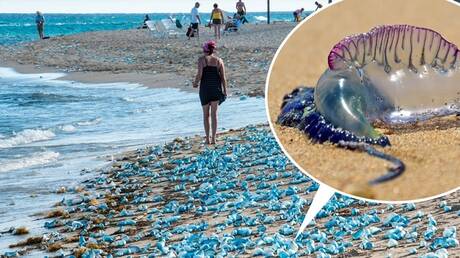
The Tunisian Association of Civil Sciences, TunSea, has announced a new sighting of the Physalia physalis, commonly known as the Portuguese man o' war, which is regarded as one of the most dangerous marine organisms in the world. This sighting comes at a sensitive time, as the scientific community's interest in the dangers these creatures pose to marine life and tourism in the region is increasing.
The Physalia is noted for its striking beauty; however, its danger lies in its powerful stings that can lead to serious medical conditions. This organism is one of the peculiar marine creatures that swim in tropical and temperate waters, and it has been spotted in various regions around the world, including the Tunisian coasts.
Details of the Event
According to the Tunisian Association of Civil Sciences, the Physalia was observed near the shores of Tunisia, raising alarm among local residents. Beachgoers are advised to exercise caution and avoid approaching these creatures, as their stings can be painful and may cause severe allergic reactions.
The Physalia is considered a unique marine organism, consisting of a collection of specialized tissues that allow it to float on the water's surface. These creatures are sometimes used as indicators of marine environmental health, as an increase in their sightings can signal changes in the ecosystem.
Background & Context
Historically, the Tunisian coasts have witnessed repeated appearances of the Physalia, making this event part of a larger ecological pattern. These organisms are indicators of climate change and the impacts of pollution on the oceans. With rising ocean temperatures, it is expected that their numbers will increase in the future.
Studies show that the appearance of the Physalia can be linked to changes in ocean currents and weather conditions. This highlights the importance of monitoring the marine environment and understanding the impact of climate change on marine organisms.
Impact & Consequences
The appearance of the Physalia can affect tourism in Tunisia, as the beach is a major destination for tourists. Concerns about the stings of these creatures may lead to a decline in visitor numbers, negatively impacting the local economy. It is crucial for local authorities to educate residents and visitors on how to deal with these organisms.
Moreover, the emergence of the Physalia is considered an indicator of the health of the marine ecosystem. If their numbers continue to rise, it may signal larger issues related to ecological balance in Tunisian waters.
Regional Significance
The sighting of the Physalia in Tunisia serves as a wake-up call for other Arab countries bordering the Mediterranean Sea. Countries must collaborate to monitor these organisms and understand their effects on the marine environment. Scientific research in this area should be enhanced to ensure the safety of beaches and marine ecosystems.
This phenomenon underscores the importance of joint action among Arab nations to address environmental challenges. By sharing information and experiences, countries can strengthen their capacity to deal with such marine phenomena.
The emergence of the Physalia near the shores of Tunisia serves as a reminder of the need to preserve the marine environment. We must all be aware of potential risks and work together to protect our beaches and marine ecosystems.