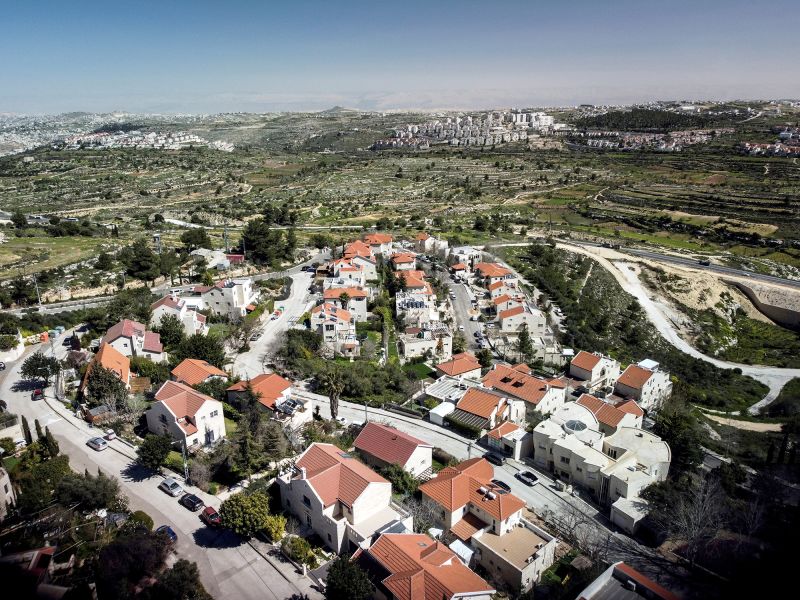
A recent Palestinian government report has revealed that around 542 Israeli settlements and outposts are spread throughout the occupied West Bank, highlighting the serious implications of Israeli settlement activities in the region. The report states that 42% of the West Bank's area is subject to settlement procedures, indicating a rise in settlement activity within Palestinian territories.
The report, issued by the Wall and Settlement Resistance Commission, comes as part of the commemoration of the 50th anniversary of Land Day, which is observed on March 30 each year. This day symbolizes the Palestinian struggle against occupation and settlement, as Palestinians remember the events of 1976 when several citizens were martyred during protests against land confiscation.
Details of the Report
According to the report, Israeli settlements are not merely residential clusters but part of a systematic policy aimed at altering the demographic reality in the West Bank. The report notes that these settlements are distributed across various regions, reflecting the occupation's strategy to control Palestinian lands.
Additionally, the report indicates that Israeli settlement activities are accompanied by repressive measures against Palestinians, including home demolitions, land confiscation, and movement restrictions. These policies directly impact the lives of Palestinians and exacerbate their daily suffering.
Background & Context
The history of Israeli settlement in the West Bank dates back to 1967 following the occupation of Palestinian territories. Since then, the region has witnessed a significant expansion in the number of settlements, making this issue one of the most contentious in the Israeli-Palestinian conflict. Settlement policies have led to a worsening of humanitarian and social conditions in the West Bank, complicating peace efforts.
In recent years, the intensity of settlement activities has escalated, particularly under successive Israeli governments that adopt pro-settlement policies. This has sparked widespread international reactions, as most countries consider Israeli settlements illegal under international law.
Impact & Consequences
The report highlights the negative impacts of settlement activities on the future of Palestinians in the West Bank. As the number of settlements increases, achieving a two-state solution, which is considered the optimal resolution to the Israeli-Palestinian conflict, becomes increasingly difficult. Furthermore, settlement activities contribute to creating an environment of tension and violence, adversely affecting security and stability in the region.
Moreover, settlements impact the Palestinian economy by hindering access to natural resources and limiting development opportunities. This situation exacerbates the suffering of Palestinians and fosters a sense of frustration and despair within the Palestinian community.
Regional Significance
The issue of settlement is one of the central matters affecting relations between Arab countries and Israel. As settlement activities increase, so do feelings of anger and resentment in the Arab world, impacting peace efforts in the region. Additionally, settlement activities strengthen the position of extremist groups and intensify the conflict.
In conclusion, Israeli settlement in the West Bank remains a complex issue that requires genuine international efforts for resolution. The international community must urgently act to pressure Israel to halt these policies that threaten peace and security in the region.