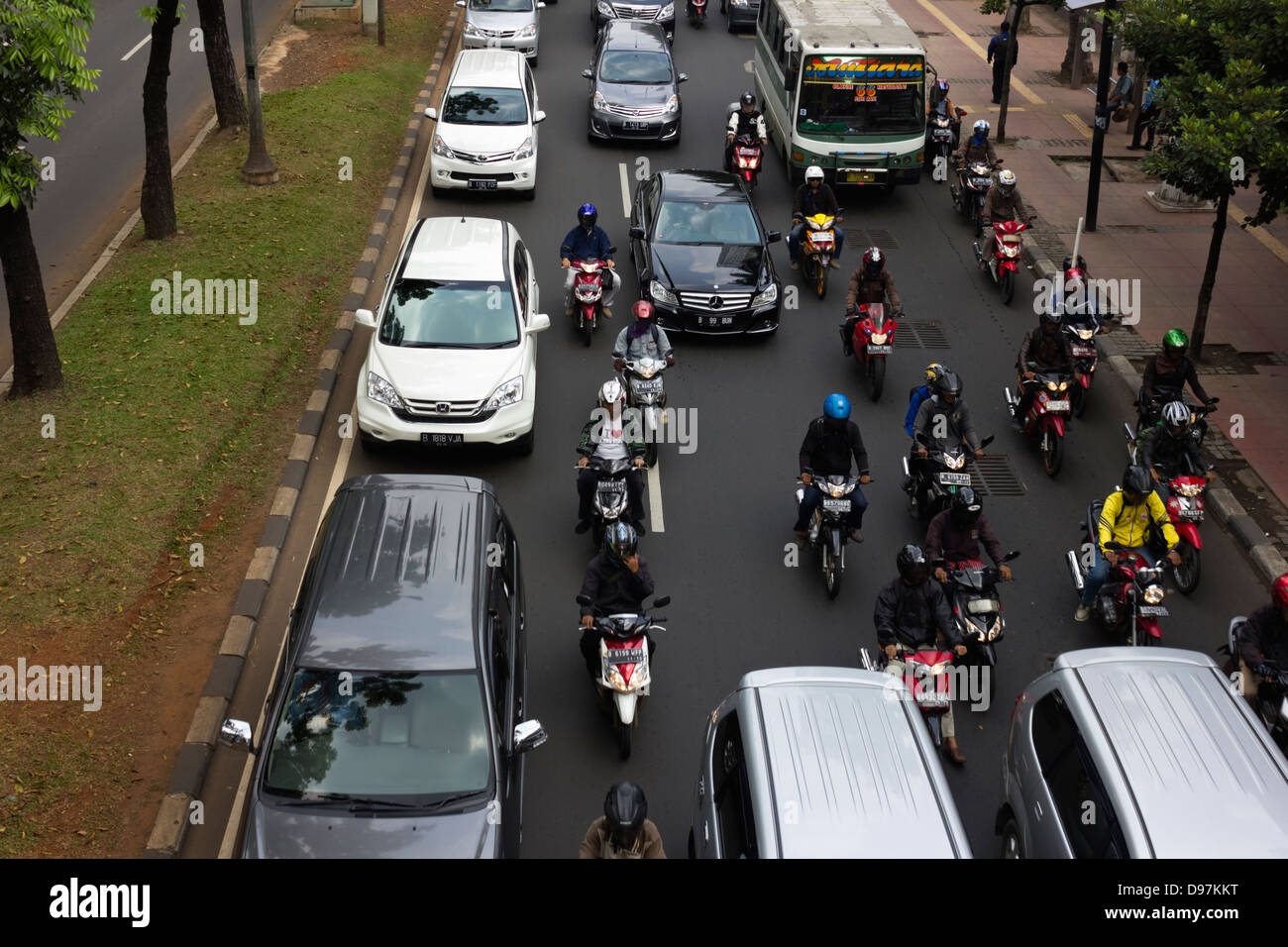
The West Java Police Chief, Irjen Pol Rudy Sitiyaawan, announced that approximately 8% of vehicles, or around 108,000 cars, remain outside the Indonesian capital Jakarta following the weekend. This comes as the city experiences heavy traffic as residents return home after a long holiday in tourist areas.
These figures indicate the scale of traffic congestion in Jakarta, where many residents are trying to return to the city after spending the weekend in surrounding areas. Sitiyaawan noted that the police are working to facilitate traffic flow and alleviate congestion on major roads.
Details of the Situation
These statistics come at a sensitive time, coinciding with the start of the school week after a long holiday. Reports have shown that many major roads in Jakarta have experienced severe congestion, leading to delays in traffic. Sitiyaawan also mentioned that the police have taken additional measures to ensure the safety of drivers and pedestrians during this period.
As part of their efforts to reduce congestion, the police have distributed traffic information to drivers, in addition to deploying patrols in the most congested areas. Modern technology has also been utilized to monitor traffic and analyze data to improve police response.
Background & Context
Jakarta is considered one of the most congested cities in the world, suffering from chronic traffic issues. This is attributed to the increasing population and number of vehicles, coupled with inadequate transportation infrastructure. The Indonesian government has attempted to address these issues by implementing new public transportation projects, but challenges remain.
Historically, Jakarta has faced numerous traffic crises, especially during holidays and public events. Studies have shown that traffic congestion costs the Indonesian economy billions of dollars annually, raising concerns among officials.
Impact & Consequences
Traffic issues in Jakarta significantly affect citizens' lives, leading to delays in reaching work and schools. Additionally, traffic congestion contributes to increased air pollution, negatively impacting public health.
The Indonesian government is striving to improve the situation through investments in public transportation projects, but the results are still insufficient to meet current challenges. Comprehensive strategies are required, including improving infrastructure and enhancing public awareness about alternative transportation methods.
Regional Significance
Traffic problems in Jakarta exemplify the challenges faced by many major cities worldwide, including Arab cities. Cities like Cairo and Baghdad suffer from similar issues, where traffic congestion affects quality of life and daily activities.
The lessons learned from Jakarta's experience can be valuable for Arab cities, where innovative strategies can be adopted to improve traffic flow and reduce congestion. International cooperation in transportation and urban development can also contribute to achieving positive outcomes.
In conclusion, traffic issues remain a significant challenge in Jakarta, necessitating an effective response from the government and the community. As the population continues to grow, it becomes essential for cities to adopt sustainable strategies to improve the quality of life for their citizens.