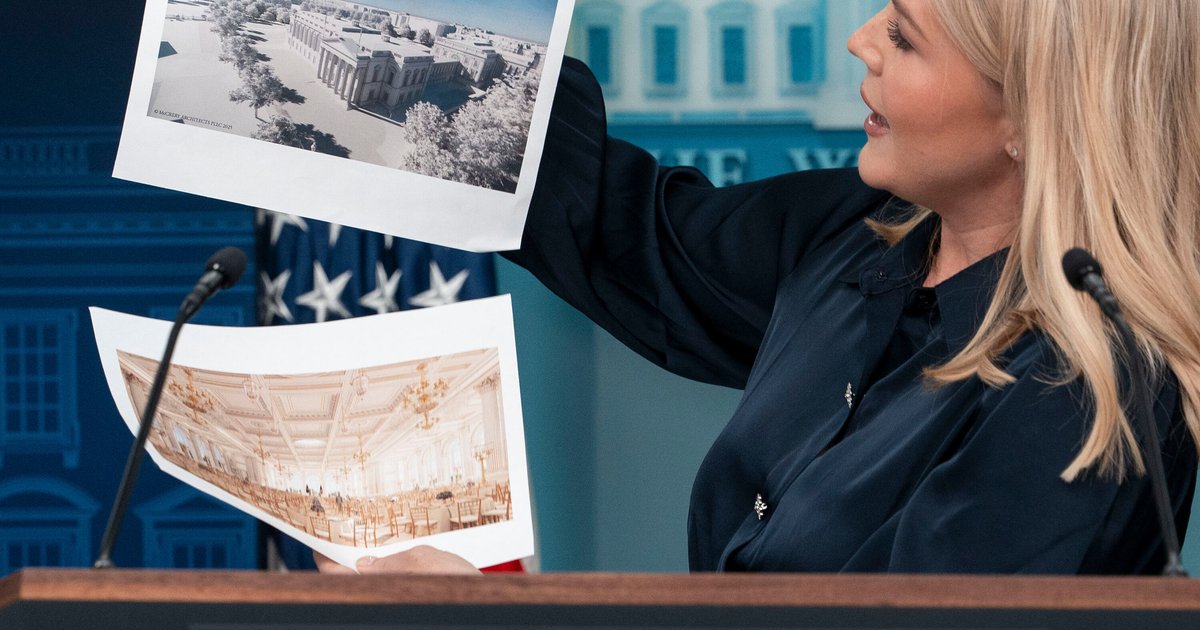
The Republican Party is experiencing a sharp divide over President Donald Trump's proposal to build a new ballroom in the East Wing of the White House. This proposal comes at a sensitive time as the U.S. economy grapples with a national debt reaching $39 trillion, raising questions about the feasibility of using taxpayer money for such projects.
In statements made to the press, Senator Rick Scott remarked, "We have massive debt, perhaps we should stop spending money," reflecting the growing concern among some party members regarding government spending priorities. Meanwhile, Trump faces opposition from Democrats who argue that the proposal exceeds his authority, especially following the demolition of part of the East Wing without congressional approval.
Details of the Proposal
Trump's proposal for a new ballroom follows a shooting incident at the Hilton Washington Hotel, where attendees, including Trump and his wife Melania, were evacuated during a White House Correspondents' Association dinner. One Secret Service agent was injured during the incident, prompting Trump to emphasize the need for the new ballroom as a means to enhance security.
While some Republicans support the idea, Democrats are poised to oppose the bill, arguing that Trump violated laws by not obtaining the necessary approvals before commencing work on the East Wing. This divide highlights the increasing tensions within the Republican Party regarding how to address security and financial issues.
Background & Context
Historically, the White House has undergone numerous changes and updates, but the current proposal comes at a time when financial pressures on the U.S. government are mounting. After years of high government spending, Congress finds itself in a difficult position, needing to balance security needs with the necessity to reduce debt.
The new ballroom is part of Trump's vision to enhance the White House's image as a symbol of security and prosperity, but this vision faces significant challenges given the current economic conditions. Recent security incidents have also heightened public concern regarding the safety of public venues.
Impact & Consequences
If the bill is passed, it could lead to increased government spending at a time when the country is facing a debt crisis. Additionally, this divide within the Republican Party may affect Trump's ability to pass future policies, potentially weakening his position in upcoming elections.
On the other hand, Democrats' rejection of the proposal could escalate political tensions in Congress, adversely affecting bipartisan cooperation on other issues. This situation could create a more divided political environment in the United States.
Regional Significance
U.S. policies have a significant impact on the Arab region, where Arab nations are affected by decisions made in Washington. Amid the current divide, U.S. relations with Arab countries may be influenced, particularly in areas of security and economics.
Moreover, internal crises in the United States could affect regional stability, as some nations might seek to exploit these gaps to enhance their influence. Therefore, monitoring these developments is crucial for Arab countries.