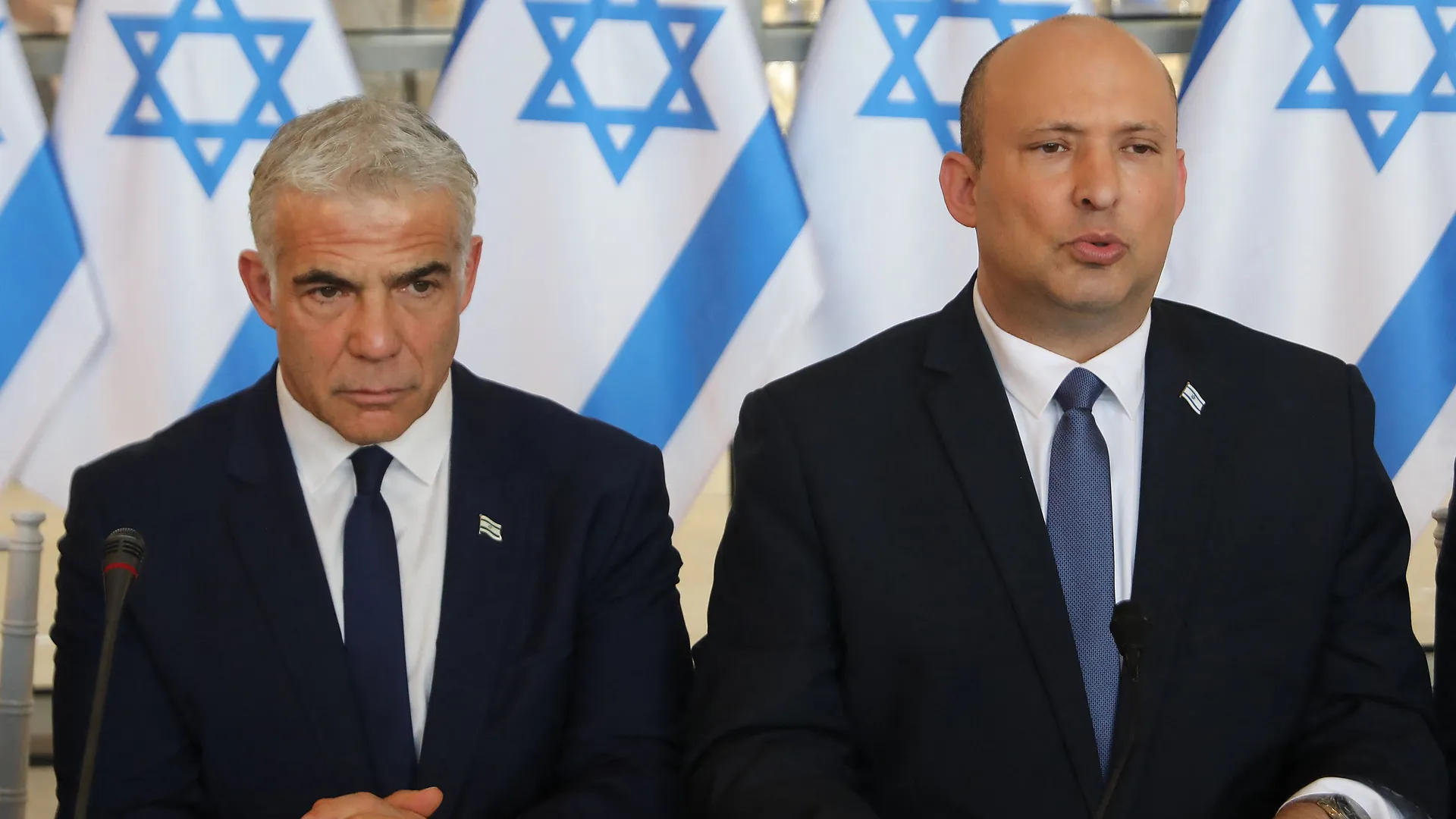
Israeli opinion polls following the announcement of Naftali Bennett and Yair Lapid to run in the elections with a joint list have revealed that this alliance has created a political and media stir, but it has not resulted in a clear electoral upheaval.
The general picture does not reflect Netanyahu's downfall, nor does it indicate that the opposition has settled on an alternative, but rather it shows that Israel has entered a phase of extensive political realignment, titled: Who will lead the "post-Netanyahu" camp?
Details of the Event
The numbers cannot be interpreted in isolation from the channel that publishes them and the polling company that conducts them. Channel 14, which is aligned with the right-wing and Likud audience, published a poll conducted by Shlomo Filber, who is considered close to Netanyahu's circles. The poll showed that Likud would secure 34 seats and the right-wing bloc 64 seats, with Netanyahu leading in the suitability question for the premiership at 51% compared to 32% for Bennett.
On the other hand, i24NEWS, regarded as a conservative channel, indicated that Likud would secure 33 seats, while the Bennett-Lapid alliance would gain 24 seats, reflecting a media environment that supports Likud and the right-wing bloc.
Conversely, Channel 12 and the Kan broadcasting authority presented a less comfortable picture for Netanyahu, with Kan granting the Bennett-Lapid alliance 24 seats and Likud 27 seats, with 52 seats for Netanyahu's bloc compared to 58 seats for his opponents and 10 seats for the Arab parties.
Context and Background
The strength of the "Together" list (BiHad) ranges from 20 seats in Channel 14's poll to 27 seats in Channels 12 and 13. This gap reflects a difference in the sample audience and measurement method, making it difficult to accurately determine trends.
The polls indicate that the new alliance has not yet succeeded in drawing a solid right-wing base from Likud, as Netanyahu remains a central player in the political arena. The numbers show that the image of the "capable leader" still works in Netanyahu's favor, even amid criticisms of his government.
Consequences and Impact
The polls show that Gadi Eisenkot is a crucial figure in the opposition camp, as he provides the alliance with a security and centrist dimension that may reassure hesitant voters. In a scenario of his joining, "Walla" and "Maariv" grant the united list 41 seats, but keep the opposition at 59 seats, indicating no guaranteed majority.
Channel 13's polls reveal that 70% of the public believes the government is not doing enough to protect northern residents, and 76% feel it is not adequately addressing the wave of violence. These figures provide the opposition with strong offensive material, but they do not automatically translate into an electoral majority unless a unified leadership and compelling program are found.
Impact on the Arab Region
The upcoming Israeli elections are viewed as a battle for the identity of the alternative more than a definitive referendum on Netanyahu's end. The alliance between Bennett and Lapid could bring about a change in the political landscape, but it still faces significant challenges in decisively overcoming Netanyahu.
In conclusion, the political scene in Israel remains complex, requiring more time to understand the implications of the new alliances on the political landscape and whether they will lead to radical changes in governance.