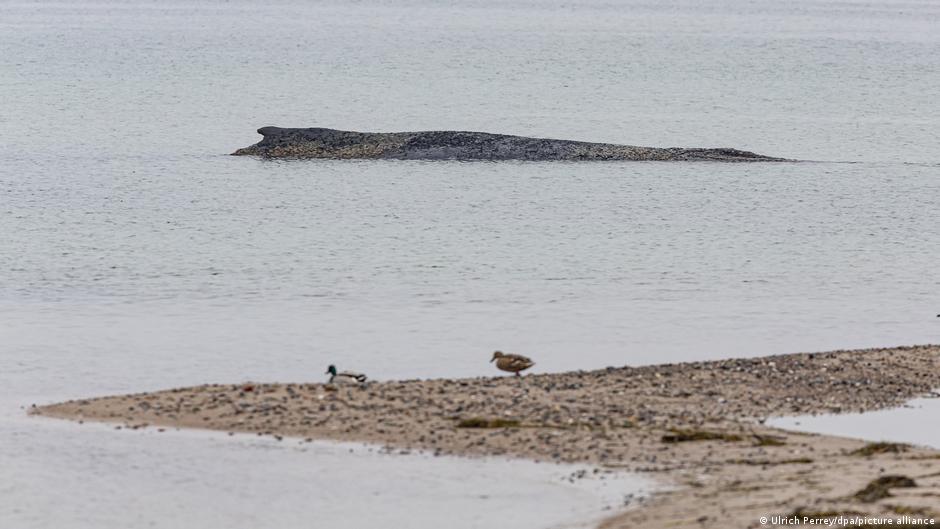
Authorities in Germany are facing a major challenge after a massive whale was found stranded in shallow waters off the Baltic Sea coast. The whale, estimated to be around 10 meters long, has been unable to free itself during the high tide experienced in the area, raising widespread concern about its fate. This whale, believed to be a humpback whale, is considered one of the largest marine creatures on Earth, distinguished by its large pectoral fins.
Rescue efforts began urgently after the whale was first spotted on Monday morning near the Niendorf area in the northern state of Schleswig-Holstein. Since then, specialized teams of experts and volunteers have been summoned to assist. The teams have utilized boats to generate waves, alongside drone technology to closely monitor the situation.
Details of the Incident
Despite the challenges, rescue teams have managed to partially free the whale from the nets that had wrapped around its body, providing hope for its rescue. However, the whale's condition remains concerning, as it can occasionally be heard making sounds indicating its distress.
The rescue operation requires high levels of coordination among various stakeholders, including local authorities, marine life experts, and volunteers. A police spokesperson noted that weather conditions could impact the rescue efforts, as tides play a crucial role in the whale's potential liberation.
Rescue Efforts and Challenges
Concerns are growing regarding the whale's health, as being stranded for an extended period could lead to serious health complications. Additionally, the psychological stress the animal is experiencing may affect its behavior, complicating the rescue process further.
This incident serves as a reminder of the importance of protecting marine life and preserving the environment. Whales, as part of the marine ecosystem, play a vital role in maintaining oceanic balance. The loss of any species can have negative repercussions on the entire ecosystem.
Why This Matters
This incident highlights the significance of international cooperation in marine life protection. Whales are considered symbols of natural heritage, and Arab countries should learn from this experience to enhance their efforts in safeguarding marine environments and preserving biodiversity.
What It Means for the Region
The ongoing rescue efforts reflect not only a local concern but also a broader regional and global issue regarding marine conservation. The plight of the whale resonates with environmentalists and the public alike, emphasizing the need for collective action in protecting our oceans.
As the situation develops, the hope remains that the whale will be successfully rescued and returned to its natural habitat. This event serves as a crucial point for raising awareness about marine conservation efforts and the challenges faced by marine wildlife.