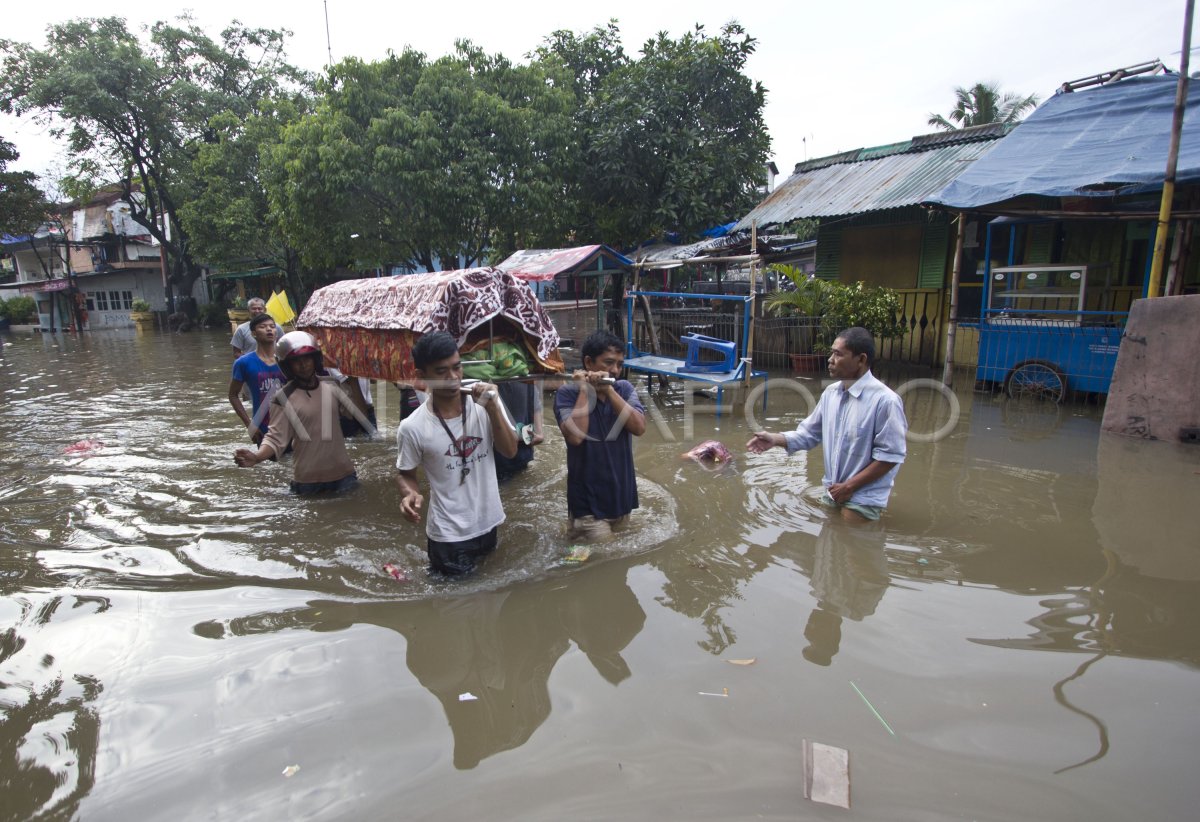
Residents of the Kramat Jati area in East Jakarta have voiced their fears of potential flooding due to the collapse of a protective wall at a waste collection site. The residents have confirmed that cleaning efforts are insufficient, as waste continuously flows into the waterways, threatening to cause flooding in the area.
One resident, named Tibi (35), who works as a porter in the market, stated that river cleaning efforts will not be effective unless the issue of increasing waste is addressed. He explained, "It is pointless to clean the river while waste is flowing abundantly into it, leading to clogged drains and thus flooding."
Details of the Incident
The collapse of the wall at the waste collection site in Kramat Jati occurred about two weeks ago, starting with a small section of the wall that fell, but the situation worsened, leading to waste falling directly into the river. Tibi pointed out that the environmental situation has deteriorated significantly, with waste accumulating in the waterways, increasing the risk of flooding.
For his part, Samidi (42), another resident, mentioned that a section of the wall approximately two meters long collapsed at night about two weeks ago. He confirmed that other parts of the wall may have been damaged prior to that, raising concerns about the stability of the area. He noted that the foul odors resulting from the waste have become noticeable even in nearby homes.
Background & Context
Jakarta is considered one of the largest cities in Southeast Asia and faces significant environmental challenges, including waste management and pollution. In recent years, the city has seen an increase in flooding incidents, which has deteriorated the quality of life for residents. Part of these problems is attributed to a lack of adequate infrastructure and waste management.
The waste issue in Kramat Jati exemplifies the challenges faced by the city. Large amounts of waste are collected in unsuitable locations, leading to environmental degradation and increased health risks. The local government has launched several initiatives to improve waste management, but the results remain insufficient.
Impact & Consequences
This incident underscores the urgent need for improved waste management in Jakarta. If immediate action is not taken, the risk of flooding will continue to rise, potentially causing significant damage to infrastructure and homes. Additionally, environmental degradation negatively impacts public health, as foul odors and accumulated waste can lead to disease outbreaks.
Moreover, the recurrence of flooding incidents may affect the local economy, as business activities could be disrupted and investments in the area may decrease. Therefore, enhancing waste management is essential to ensure the city's sustainability and protect its residents.
Regional Significance
Waste management and pollution issues are common challenges faced by many Arab countries. Numerous Arab cities suffer from similar problems, necessitating the exchange of experiences and cooperation in finding effective solutions. Jakarta's experiences in tackling these challenges could serve as an important lesson for Arab countries seeking to improve their urban environments.
In conclusion, the situation in Kramat Jati requires an urgent response from local authorities to ensure the safety of residents and protect the environment. Improving waste management and developing infrastructure are priorities for the next phase to ensure a better future for the city and its inhabitants.