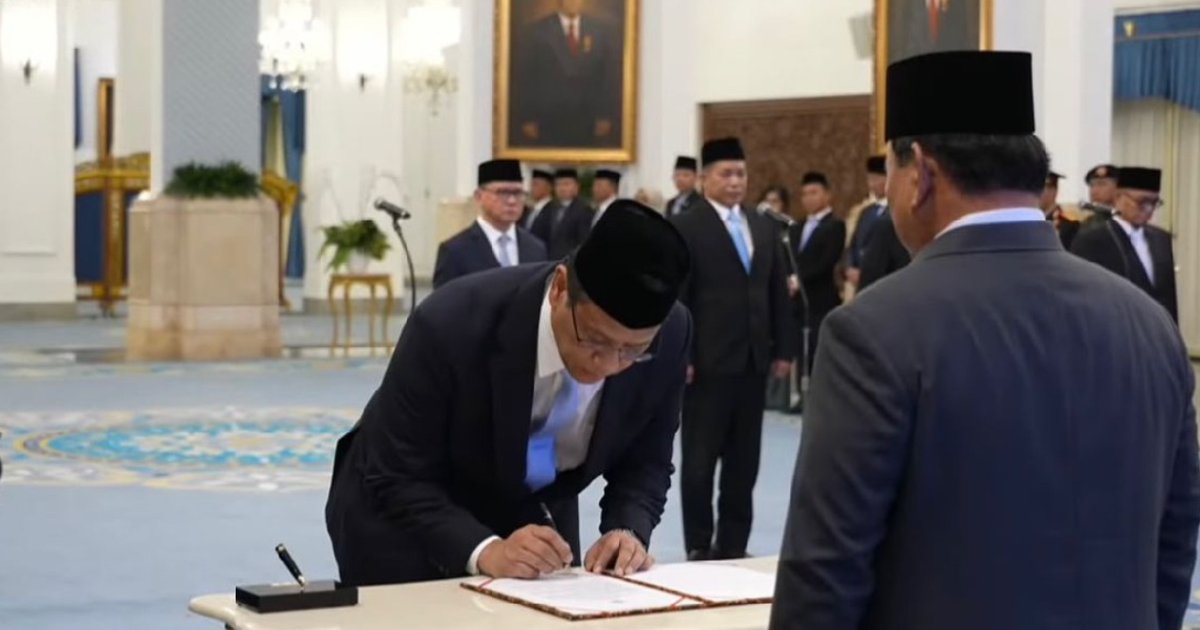
Indonesian Chief of Staff Muhammad Qudari confirmed that President Prabowo Subianto holds the exclusive right to make changes to the government formation, amidst circulating news about a possible ministerial reshuffle today. Qudari clarified that the public should await further details from the president himself.
Qudari, who has been mentioned as a potential candidate for appointment in the ministerial reshuffle, emphasized that any changes in the government fall under the president's jurisdiction. He urged citizens to be patient until any official decisions are announced by President Prabowo.
Details of the Event
These statements follow comments from Government Secretary Teddy Indra Wijaya, who indicated that the ministerial reshuffle is under consideration, urging the media to wait before publishing any information. The Indonesian government has seen four ministerial reshuffles since President Prabowo Subianto took office, with new ministers appointed in several vital ministries.
In the first ministerial reshuffle on February 19, 2025, Brian Yuliarto was appointed as Minister of Higher Education, Science, and Technology, while Mohammad Yusuf Atieh was appointed as Head of the Financial and Development Supervisory Agency. Additionally, Amalia Adinengar Widyasanty was appointed as Director of the Central Statistics Agency.
Background & Context
Historically, ministerial reshuffles are a part of Indonesian politics, where presidents seek to enhance their governments' performance by replacing ministers who may not meet the desired objectives. Indonesia has experienced numerous ministerial reshuffles since its independence in 1945, reflecting the political, economic, and social changes in the country.
In recent years, Indonesia has faced significant challenges related to the economy and development, making ministerial reshuffles necessary to ensure the government responds effectively to these challenges. Such reshuffles represent an opportunity for President Prabowo to strengthen his government team and improve overall government performance.
Impact & Consequences
Ministerial reshuffles are a strategic step that can significantly influence public policies in Indonesia. When new ministers are appointed, government priorities may shift, affecting areas such as education, health, and the economy. These changes may also lead to alterations in relationships with other countries, especially given the current global challenges.
It is also important to note that ministerial reshuffles can impact government stability, as they may lead to changes in political alliances within the parliament. Therefore, any ministerial reshuffle must be carefully considered to ensure that it does not negatively affect government stability.
Regional Significance
Indonesia is one of the largest Muslim-majority countries in the world, and any changes in its government may affect relations with Arab countries. Indonesia plays a crucial role in fostering cooperation among Islamic nations, and any leadership changes could impact these dynamics.
Furthermore, the economic challenges facing Indonesia may be similar to those encountered by some Arab countries, making it essential to monitor how the Indonesian government responds to these challenges.
In conclusion, ministerial reshuffles in Indonesia remain an important topic requiring close attention, as they can significantly influence the country's future and its relationships with the outside world.