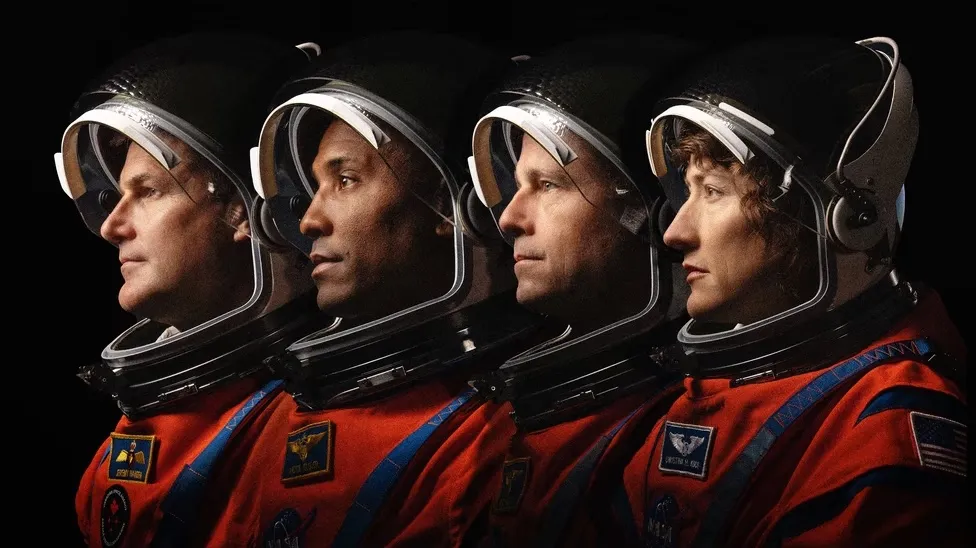
Four astronauts from NASA's Artemis II mission have returned to Earth after an exciting journey around the Moon, traveling farther than any human has before. During this mission, the crew lost contact with Earth for 40 minutes while passing behind the Moon. Upon regaining contact, astronaut Christina Koch expressed her joy at reconnecting with Earth.
Afterward, the spacecraft approached the lunar surface, where the crew witnessed a total solar eclipse as the Moon blocked its light. The Artemis II mission set a new record in human space travel, surpassing the distance previously recorded by the Apollo 13 mission in 1970.
Event Details
Canadian astronaut Jeremy Hansen expressed pride in this achievement, emphasizing that the crew honors the efforts and explorations of their predecessors in space. As the spacecraft neared the Moon, the crew began documenting what they saw through digital cameras, capturing images, sketching diagrams, and recording audio descriptions of their observations.
The spacecraft was not intended to land on the Moon but was orbiting its far side, which had never been seen by humans before. This marked the first time astronauts viewed parts of the far side's surface, including vast craters and volcanic plains.
Background & Context
The Artemis II mission is part of the Artemis program, which aims to return humans to the Moon, a project not witnessed by humanity for over 50 years. The program also seeks to establish the necessary infrastructure for future missions to Mars. Exploring the Moon is a vital step toward achieving these significant goals.
Historically, the Apollo missions were the most prominent in lunar exploration, with astronauts successfully landing on its surface. As technology advances, NASA today aims to achieve new milestones through missions like Artemis II.
Impact & Consequences
This mission serves as a crucial test for the Orion spacecraft, evaluating its ability to withstand harsh conditions during the journey. The performance of power and thermal systems was measured during periods without sunlight, which will aid in improving future spacecraft designs.
The success of this mission enhances the United States' standing in space exploration and encourages further investments in this sector. It also opens doors for new international partnerships in space.
Regional Significance
For the Arab world, this achievement represents an opportunity to enhance cooperation in space. There is growing interest among Arab countries in developing their own space programs, such as the United Arab Emirates, which launched the Hope Probe to Mars. These accomplishments can inspire Arab nations to boost their investments in science and technology.
In conclusion, the success of the Artemis II mission reflects ongoing progress in space exploration and encourages further innovations that can benefit all humanity.