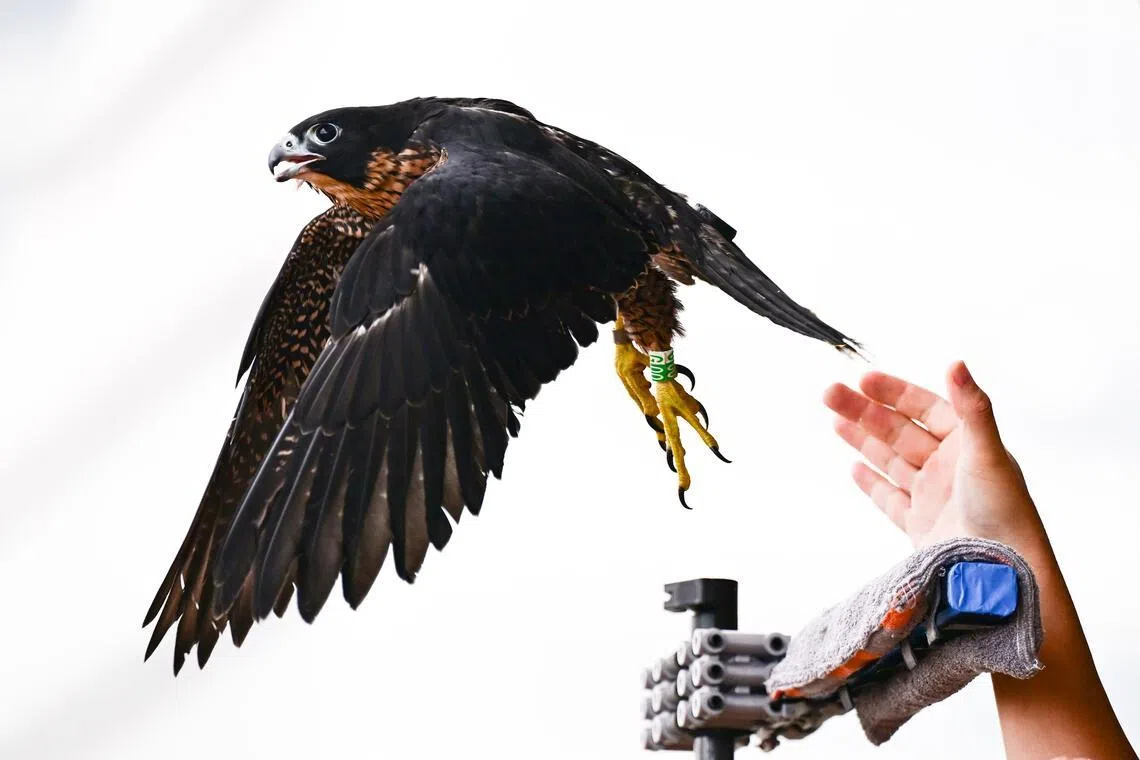
The falcon has returned to the sky following a detailed medical examination and the installation of a temporary Bluetooth tracking device. This device will enable researchers to monitor its movements and gather data on its behaviors in its natural habitat, leading to a better understanding of the lives of these remarkable birds.
Bird tracking is a modern technique used to comprehend their life patterns, as researchers aim to collect precise information about their movements, which assists in protecting endangered species. The tracking device was fitted to the falcon after confirming its health, reflecting the efforts made in wildlife conservation.
Details of the Tracking Process
The procedure took place at a specialized research center, where the falcon was carefully examined to ensure there were no injuries or health issues. After the examination, the falcon was equipped with the tracking device, allowing researchers to closely monitor its movements. This step is part of a larger project aimed at studying the behaviors of raptors in their natural environments.
The falcon is known for its incredible speed and hunting ability, making it one of the fastest birds in the world. Tracking this species helps in understanding how it interacts with its environment and how environmental changes affect it.
Background & Context
Historically, raptors like the falcon have been considered symbols of strength and freedom. However, many of these species face threats due to habitat loss and climate change. Therefore, conservation efforts have become an urgent necessity. Utilizing technologies such as tracking devices helps provide valuable data about these species, contributing to the development of effective conservation strategies.
These initiatives are part of global efforts to preserve biodiversity, with many countries and scientific institutions collaborating to protect endangered species. Understanding the behaviors of raptors can aid in improving protection and recovery strategies.
Impact & Consequences
This step is significant not only for the falcon but for all endangered species. By collecting and analyzing data, researchers can identify the factors affecting the survival of these species. This information can also be used to develop educational programs aimed at raising awareness about the importance of wildlife conservation.
Moreover, the success of these initiatives can encourage more countries to adopt similar strategies, leading to enhanced global efforts to protect biodiversity. Preserving endangered species is a collective responsibility that requires international cooperation.
Regional Significance
The return of the falcon to the sky is a hopeful sign for conservationists and wildlife enthusiasts alike. It highlights the importance of scientific research in understanding and protecting vulnerable species. As more data is collected, it will contribute to a broader understanding of ecological dynamics and the interdependence of species within their ecosystems.
In conclusion, the successful tracking of the falcon not only aids in its conservation but also serves as a model for similar efforts worldwide. The collaboration between researchers and conservationists is crucial for ensuring the survival of endangered species and maintaining ecological balance.