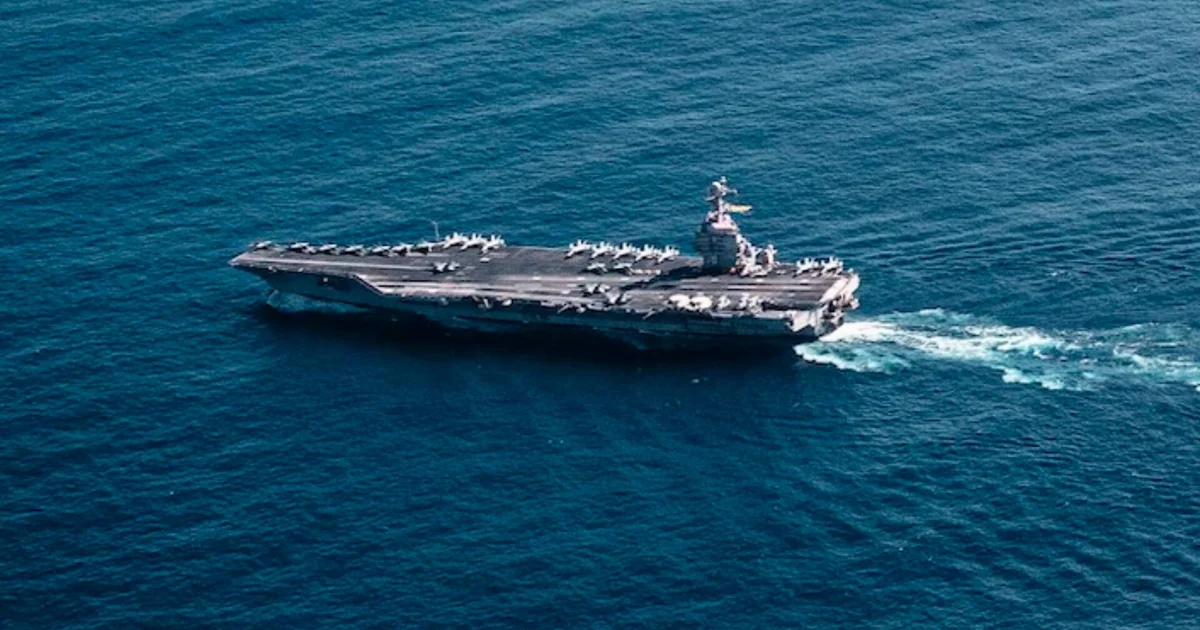
After a five-day hiatus, the American aircraft carrier USS Gerald Ford has returned to the operational theater in the Middle East, where tensions with Iran have escalated. This move is part of the United States strategy to enhance its military presence in the region, amid concerns over increasing Iranian activities.
The carrier, which is considered the largest in the world, carries a fleet of advanced fighter jets, enhancing the United States' ability to respond quickly in the event of any escalation. The return of the carrier comes after a period of anticipation, as it had been deployed to the Mediterranean Sea earlier this month.
Details of the Event
The USS Gerald Ford is part of a carrier strike group that includes other warships and has been deployed to bolster security in the region. During its hiatus, there were reports of increased Iranian military activities, including missile tests and naval exercises.
The United States has confirmed that this step aims to send a clear message to Tehran that any escalation in military activities will be met with a strong response. Cooperation with allies in the region, including Gulf Arab states, has also been strengthened to ensure security and stability.
Background & Context
Historically, relations between the United States and Iran have been marked by increasing tensions, especially after Washington's withdrawal from the Iranian nuclear agreement in 2018. Since then, the United States has imposed stringent economic sanctions on Iran, exacerbating the situation in the region.
In recent years, the region has witnessed an escalation in military activities by Iran, including its support for armed groups in Iraq, Syria, and Lebanon. This escalation has prompted the United States to enhance its military presence in the region, with the USS Gerald Ford being a key part of this strategy.
Impact & Consequences
The return of the American aircraft carrier to the region may lead to increased tensions between the United States and Iran, as Tehran may take escalatory steps in response to these movements. Additionally, this move could affect relations between the United States and regional countries, as some nations seek to balance their relationships with both Washington and Tehran.
On the other hand, these developments could lead to increased cooperation between the United States and its allies in the region, potentially contributing to enhanced regional security. However, military escalation could threaten stability in the area and exacerbate humanitarian conditions.
Regional Significance
The return of the American aircraft carrier to the region has significant implications for Arab countries, especially those sharing borders with Iran. These nations may feel heightened concern over Iranian activities, prompting them to bolster their military capabilities and cooperate more closely with the United States.
Moreover, the potential escalation between the United States and Iran could impact the economic conditions in the region, as tensions may lead to rising oil prices and increased risks to maritime trade.
In conclusion, the return of the USS Gerald Ford to the operational theater in the Middle East reflects the ongoing tensions between the United States and Iran and highlights the security challenges facing the region. Arab nations must be prepared to address these challenges and work towards enhancing security and stability in the area.