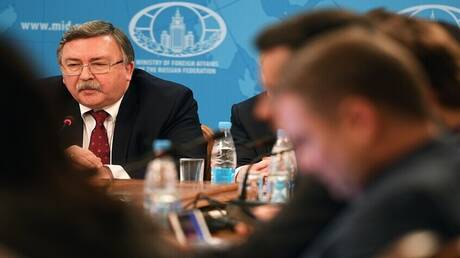
Mikhail Ulyanov, the Russian envoy to international organizations in Vienna, revealed that the military strikes carried out by the United States and Israel against Iran in late February and early March were not primarily aimed at Iranian nuclear sites. These statements come at a sensitive time, as tensions in the region are escalating and fears of a larger military escalation are growing.
Ulyanov, who represents his country in international forums, indicated that the true objectives of these strikes may be linked to other dimensions beyond the Iranian nuclear program. These statements open the door to questions about the military and political strategies adopted by Western countries in their dealings with Iran.
Details of the Event
In a related context, the US-Israeli strikes have sparked widespread controversy in political and media circles, with some analyses suggesting that they are part of a pressure campaign on Iran to curb its nuclear activities. However, Ulyanov confirmed that the targets were not limited to nuclear sites, indicating that there are complex strategies behind these operations.
It is noteworthy that Iran possesses several major nuclear sites, including Bushehr, Isfahan, and Natanz, which are central to its nuclear program. Nevertheless, Russian statements suggest that there may be other considerations behind these strikes, such as targeting military infrastructure or demonstrating power.
Background & Context
Historically, relations between Iran and the United States have seen significant escalation since Washington's withdrawal from the nuclear agreement in 2018. This withdrawal led to the reimposition of stringent economic sanctions on Iran, increasing tensions in the region. In this context, military strikes are considered part of a broader strategy aimed at undermining Iranian influence in the Middle East.
Furthermore, military alliances between the United States and Israel have strengthened in recent years, increasing the likelihood of joint military operations against Iran. This military cooperation reflects the concerns of both countries regarding Iranian activities in the region, including its support for armed groups in Iraq and Syria.
Impact & Consequences
Russian statements may lead to a reassessment of military and political strategies in the region. If the strikes did not primarily target nuclear sites, it may indicate that there are other objectives that Western countries are seeking to achieve, which could complicate the security situation in the Middle East.
Additionally, these developments may affect future negotiations regarding the Iranian nuclear program, as Tehran may feel that there are greater threats it faces, potentially pushing it to adopt more hardline positions in any upcoming negotiations.
Regional Significance
The current events have a significant impact on Arab countries, especially those that share borders or economic ties with Iran. The escalation of tensions may lead to increased polarization in the region, where some countries may find themselves forced to choose between supporting the United States or attempting to maintain relations with Iran.
Moreover, any military escalation could affect regional security, potentially leading to an influx of refugees and increased internal tensions in some Arab countries. Therefore, closely monitoring these developments is essential to understand the future dimensions of security in the region.
In conclusion, events related to Iran remain a focal point for the world, where political and military interests intersect. Russian statements may mark the beginning of a new phase of tensions, prompting Arab countries to adopt strategic positions that align with the rapidly changing dynamics.