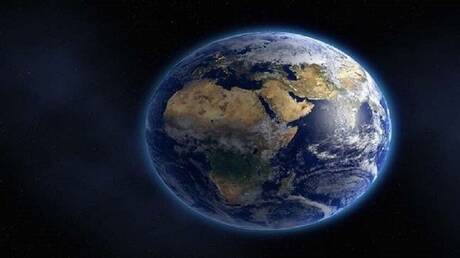
Scientists have uncovered new information regarding the origin of the material that formed Earth, with recent studies indicating that between 6% and 40% of this material may have come from the outer solar system. This material, which includes volatile components such as water, could have significant implications for our understanding of the formation and evolution of our planet.
These findings are part of ongoing efforts to comprehend how planets form within our solar system. Researchers believe that the materials that constituted Earth may have originated from distant regions, beyond Jupiter's orbit, adding a new dimension to planetary formation studies.
Details of the Findings
The recent studies involve advanced isotopic analysis techniques, enabling scientists to understand the chemical composition of the material that formed Earth. These analyses reveal the presence of certain elements and compounds that suggest a portion of the primordial materials that shaped our planet came from external sources.
These results are intriguing as they support previous hypotheses indicating that Earth was not solely formed from materials present in the vicinity of the Sun but also from materials that originated from far-off regions of the solar system.
Background & Context
Over the decades, there have been numerous theories regarding how Earth formed. Some scientists believe that Earth formed from the accumulation of dust and gases in the solar nebula, while other studies suggest that the materials that constituted Earth may have formed in distant areas before arriving at their current location.
These hypotheses require further research and study, as understanding the origin of Earth can aid in comprehending how other planets in the solar system formed, as well as understanding the conditions that led to the emergence of life on our planet.
Impact & Consequences
These discoveries are significant not only from a scientific perspective but also from a cultural and intellectual standpoint. They could influence how we understand our place in the universe and how life on Earth has evolved.
Moreover, these results may open new avenues for research in fields such as astronomy and planetary science, potentially leading to new discoveries about other planets in the solar system.
Regional Significance
For the Arab region, these discoveries enhance the importance of scientific research in the fields of space and natural sciences. These findings could inspire a new generation of scientists and researchers in the Arab world to engage in the fields of science and technology.
Understanding Earth's formation could also help foster scientific collaboration between Arab countries and others, contributing to the advancement of scientific knowledge in the region.
In conclusion, these discoveries underscore the importance of ongoing scientific research to understand our planet and our place in the universe. Understanding the origin and composition of Earth can open new horizons for comprehending life and the cosmos around us.