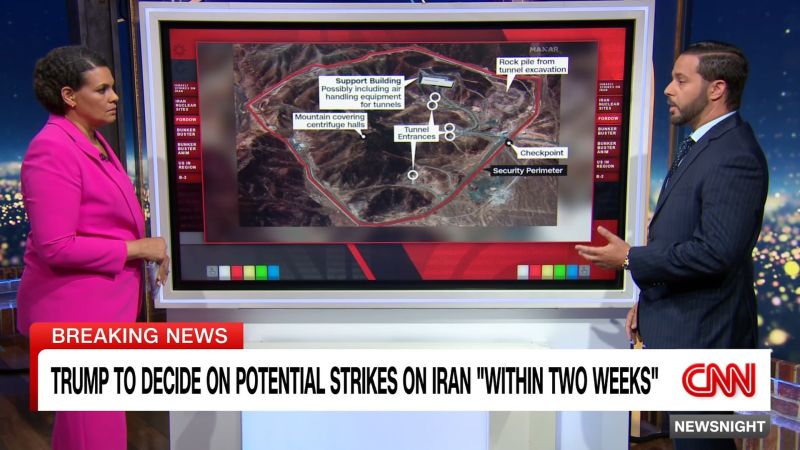
Robert Pape, a political science professor at the University of Chicago, asserts that military asset movements reflect U.S. President Donald Trump's intentions in the conflict with Iran more clearly than changing statements. These remarks come at a sensitive time as tensions between the U.S. and Iran escalate, raising international concerns about the potential for the conflict to reach unprecedented levels.
In light of the contradictory statements from the U.S. administration, Pape believes that monitoring the movements of military forces and equipment is the most accurate way to understand Trump's intentions. While public statements may be misleading, military movements reflect actual preparations on the ground.
Details of the Event
The region is witnessing rapid developments, as the United States has reinforced its military presence in the Arabian Gulf, raising questions about the future plans of the U.S. administration towards Iran. A carrier strike group and a number of warplanes have been deployed to the region, which is seen as a clear message to Tehran.
These movements come at a sensitive time, as relations between the U.S. and Iran are increasingly strained, especially following Washington's withdrawal from the Iranian nuclear deal in 2018. This step led to heightened tensions, as Iran began to exceed the limits set by the nuclear agreement, increasing fears of a military conflict.
Background & Context
Historically, U.S.-Iranian relations have been tense since the Islamic Revolution in 1979, with successive events escalating conflicts. Since then, the U.S. has taken several military steps against Iran, including imposing economic and military sanctions.
In recent years, the region has seen an increase in military activities, as Iran has supported armed groups in Iraq, Syria, and Lebanon, raising concerns among the U.S. and its allies in the region. This conflict is part of a broader struggle between regional and international powers.
Impact & Consequences
The movements of U.S. military assets in the region underscore the potential for escalating conflict between the U.S. and Iran, which could have serious ramifications for regional and international security. Should tensions escalate, oil prices and financial markets could be significantly affected, reflecting on the global economy.
Moreover, any military escalation could lead to severe humanitarian consequences, potentially causing mass displacement and increasing civilian suffering in the region. Therefore, the international community is called upon to take action to mitigate escalation and achieve peace.
Regional Significance
Arab countries neighboring Iran, such as Iraq and Saudi Arabia, find themselves in a sensitive position regarding any potential escalation. Any military conflict could destabilize these countries and increase sectarian tensions in the region.
Arab nations are also urged to enhance cooperation among themselves to address the security challenges that may arise from escalating tensions between the U.S. and Iran. Clear strategies must be in place to deal with any potential repercussions on national security.
The movements of U.S. military forces in the region reflect the intentions of the U.S. administration towards Iran, necessitating urgent steps from the international community to limit escalation and achieve stability in the region.