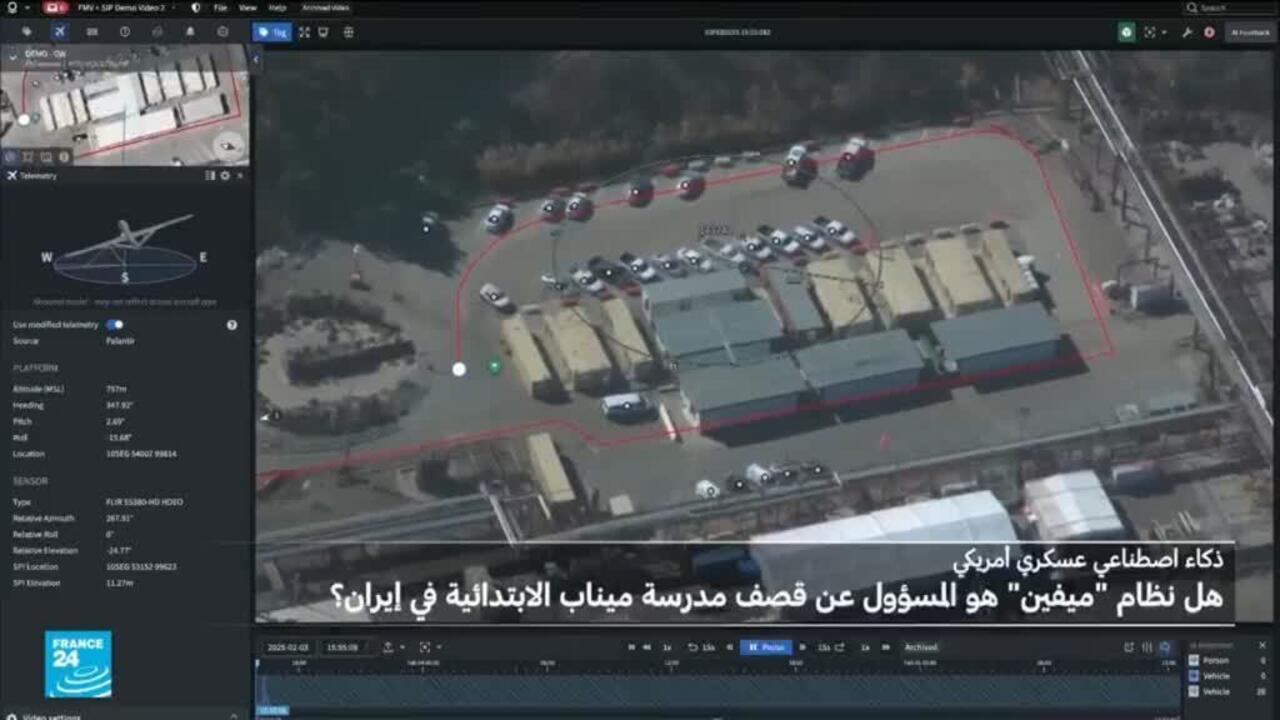
Reports indicate that the American AI system 'Miven' has been utilized by Iran to identify military targets since the onset of Israeli-American strikes on February 28. This information emerges at a sensitive time, as tensions in the region escalate and military pressures on Iran continue.
The Miven system is considered one of the latest artificial intelligence technologies developed in the United States, used for data analysis and precise target identification. Reports have shown that this system has contributed to directing airstrikes against specific targets, complicating the ongoing conflict in the region.
Details of the Incident
On February 28, Israeli-American strikes against Iran began, targeting sensitive military sites. During these operations, the Miven system was employed to accurately identify targets, leading to the bombing of Minab Primary School, which sparked strong reactions from the international community.
The school, which housed several students, was bombed while children were inside, resulting in injuries and significant damage. This incident reflects the increasing use of modern technology in military conflicts and raises questions about the ethics associated with the use of artificial intelligence in warfare.
Background & Context
Historically, Iran has experienced ongoing tensions with the United States and its allies, especially after Washington's withdrawal from the nuclear deal in 2018. Since then, military and economic pressures on Iran have intensified, prompting it to develop its military capabilities and utilize advanced technologies such as the Miven system.
These developments are part of a broader struggle between major powers in the region, as Iran seeks to enhance its defensive capabilities in the face of external threats. The use of artificial intelligence in warfare signifies a significant shift in how conflicts are managed and presents new challenges related to security and safety.
Impact & Consequences
The attacks carried out using the Miven system may lead to heightened tensions in the region, as Iran is likely to respond to these pressures in various ways. This escalation could affect regional security and increase instability in the Middle East.
Furthermore, the use of artificial intelligence in warfare raises ethical and legal issues, as many question the responsibility of the parties involved in attacks that result in civilian casualties. These concerns may lead to renewed calls for regulating the use of technology in armed conflicts.
Regional Significance
The impact of these events extends to Arab countries, where increased tensions between Iran and the United States could destabilize neighboring nations. Many Arab countries are already experiencing internal and external tensions, and the use of technologies like Miven may complicate these situations further.
Additionally, these events could affect the relationships between Arab countries and Iran, with some nations potentially adopting harsher stances toward Tehran amid rising tensions. At the same time, other countries may seek to enhance cooperation with Iran in certain areas, further complicating the regional landscape.
In conclusion, the use of the Miven system in military conflicts remains a contentious topic, raising numerous questions about the future of warfare and how technology impacts security and peace in the region.