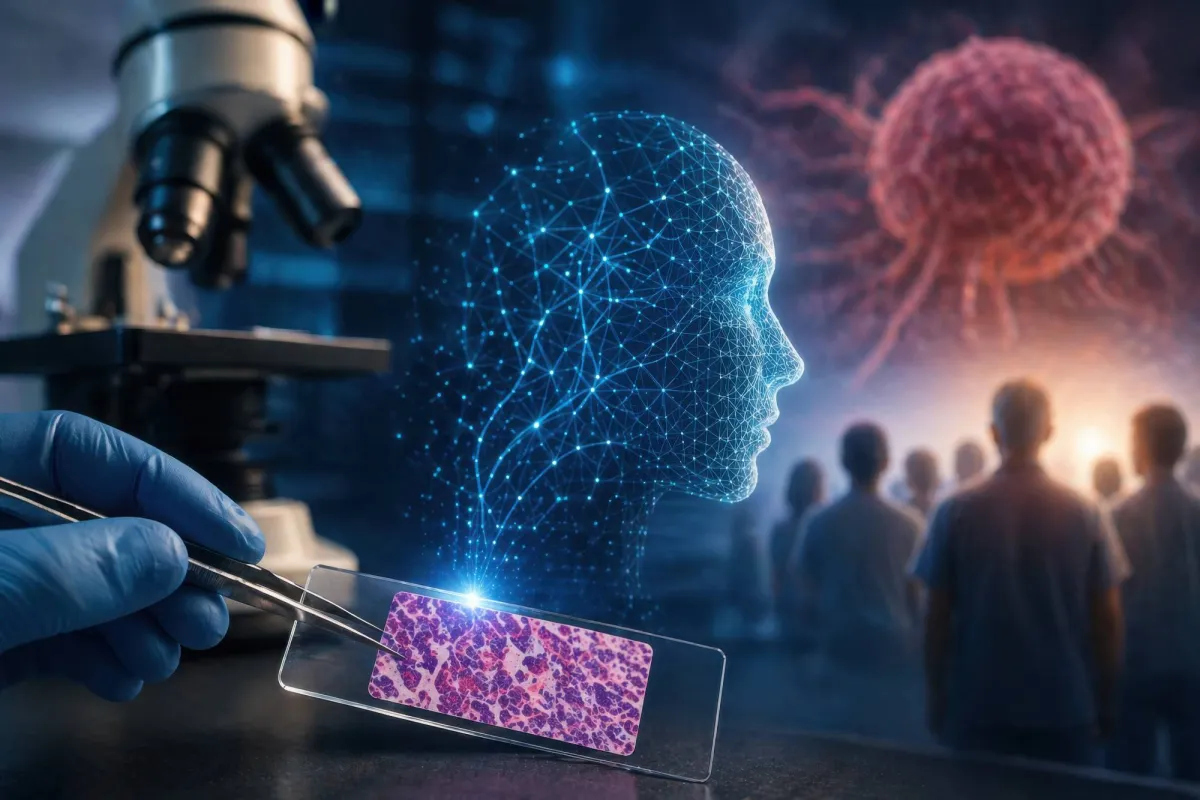
The American Association for Cancer Research (AACR 2026) conference held in Chicago revealed a qualitative shift in cancer treatment with the introduction of an advanced artificial intelligence model known as 'Path-IO'. This model redefines the role of tissue slides taken from tumor biopsies, transforming them into an effective tool for guiding treatment decisions instead of solely relying on molecular tests.
In recent years, immunotherapy has emerged as one of the most significant achievements in modern medicine against cancer, particularly in cases like lung cancer. However, the biggest challenge remains identifying which patients will benefit effectively from this treatment. Previously, doctors relied on biomarkers such as the 'PD-L1' protein, but these indicators often lacked the necessary precision for making critical decisions.
Event Details
During the scientific sessions of the conference, researcher Faisal Mahmoud from Harvard Medical School presented a demonstration of how the 'Path-IO' model can analyze tissue slides in an advanced manner. This model does not view cancer cells as separate entities; instead, it treats the tumor biopsy as an integrated biological environment, allowing it to understand the complex interactions between cancer cells and immune cells.
Utilizing deep learning techniques, 'Path-IO' can capture hidden patterns and relationships within the tumor's microenvironment, providing precise signals related to the immune system's ability to respond to treatment. In a study involving 797 lung cancer patients, the model was able to distinguish between patients likely to benefit from immunotherapy and those at risk of deteriorating health.
Background & Context
Historically, medicine has relied on the principle of 'trial and evaluation', where treatment is tested on the patient's body before being judged. However, with the advent of artificial intelligence, it is now possible to predict treatment responses before trials, fundamentally changing the relationship between doctor and treatment.
Recent research indicates that artificial intelligence can enhance diagnostic accuracy and reduce guesswork in medicine, thereby improving treatment effectiveness and decreasing costs associated with ineffective therapies.
Impact & Consequences
This model represents a genuine opportunity to reduce costs stemming from ineffective treatments, thereby enhancing the applications of precision medicine. In the Arab world, where reliance on immunotherapy is increasing, this model could help improve the efficiency of health resource utilization.
Attention is turning towards how this new technology will influence treatment strategies in the region, especially in light of major health transformations occurring in Arab countries, such as Saudi Arabia's Vision 2030.
Regional Significance
Amid the health challenges facing the region, the introduction of artificial intelligence in cancer treatment marks a step towards improving healthcare quality. This model could contribute to enhancing treatment effectiveness and reducing the financial burdens on patients.
In conclusion, this shift towards utilizing artificial intelligence in oncology represents a new starting point for a more precise and effective future in cancer treatment, opening new horizons for research and development in this field.