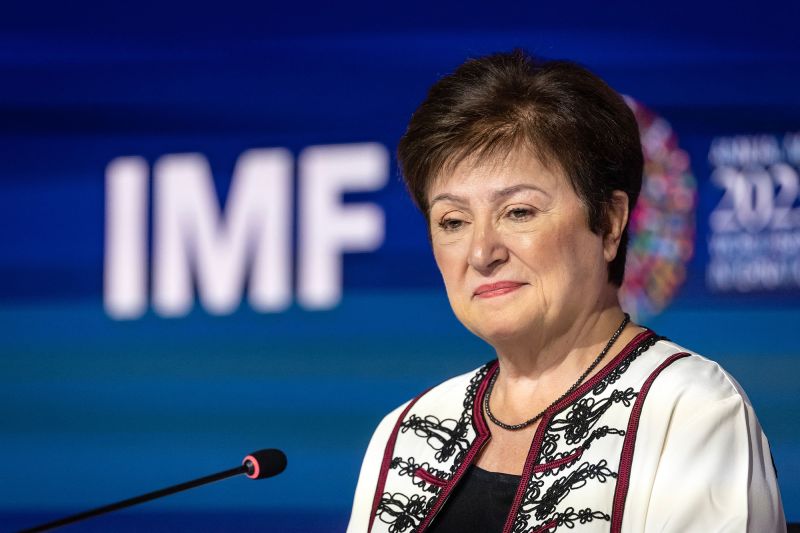
Kristalina Georgieva, the Managing Director of the International Monetary Fund (IMF), indicated that the ongoing war in the Middle East will result in rising inflation and a slowdown in global economic growth. This statement was made on Monday, where she confirmed that the current situation poses significant challenges to the global economy.
These remarks come ahead of the release of new global economic forecasts, which the IMF is set to publish next week. Georgieva explained that if it weren't for the ongoing conflict, the IMF would have raised its global growth forecasts, which currently stand at 3.3% for 2026 and 3.2% for 2027.
Details of the Situation
In her comments to Reuters, Georgieva affirmed that the current situation necessitates a reassessment of economic forecasts, stating, "If this war were not happening, we would have seen a slight increase in our growth expectations. Instead, all paths now lead to rising prices and slowing growth."
She clarified that even if the war ends quickly, recovery will be modest, leading to a downward adjustment in growth forecasts, while inflation expectations will see an increase. If the conflict continues for an extended period, the impact on both indicators will be more pronounced.
Background & Context
Historically, the region has witnessed numerous armed conflicts that have negatively impacted the global economy, directly affecting supply chains and food prices. The current situation is considered one of the most complex crises, especially with growing concerns about the war's impact on food security.
Georgieva confirmed that the IMF has received requests for financial assistance from several countries, although she did not disclose their names. She noted that the IMF could enhance some existing lending programs to meet the needs of these countries, reflecting the economic challenges they face.
Impact & Consequences
International financial institutions anticipate that political and military crises will lead to volatility in financial markets, affecting investments and economic growth. Additionally, rising prices may put pressure on households, negatively impacting domestic consumption.
In this context, Georgieva emphasized that there is currently no food crisis, but the situation could change if fertilizer supplies are affected. She mentioned that the IMF is in contact with the World Food Programme and the Food and Agriculture Organization to assess the war's impact on food security.
Regional Significance
The Arab countries are among the most affected regions by conflicts in the Middle East, where crises impact economic and social stability. If the war continues, Arab nations may face additional challenges in securing food and energy supplies.
In conclusion, the global economic situation remains in a state of anticipation, requiring a swift and effective response from the international community to address the challenges arising from armed conflicts.