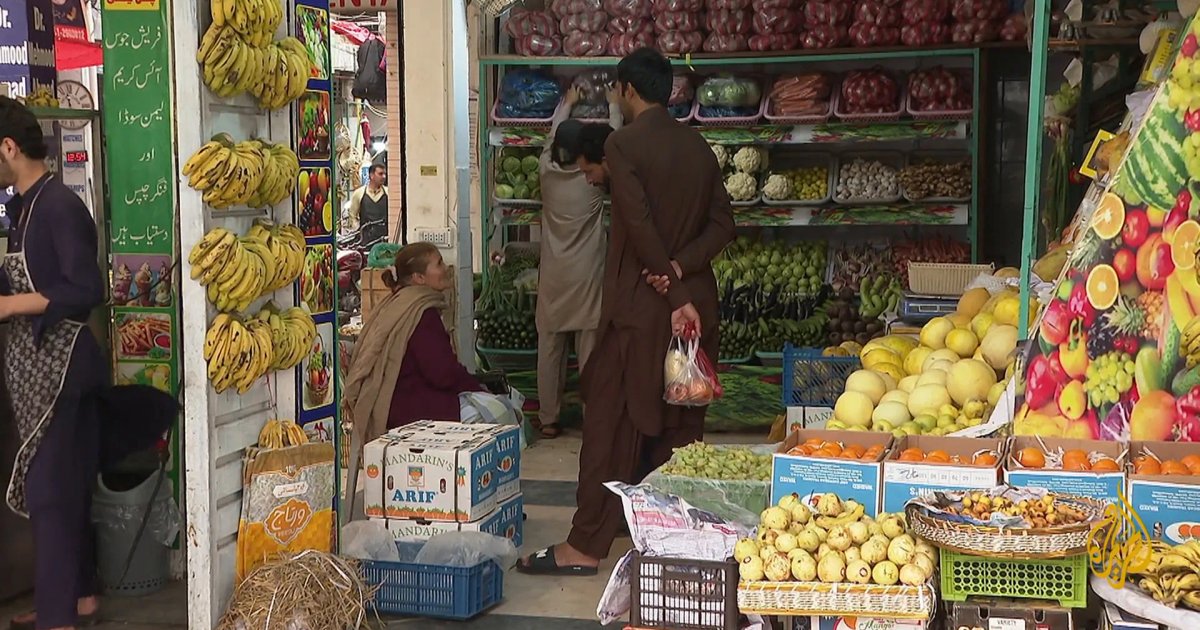
The economic repercussions of the ongoing war in the Middle East continue to unfold, with its effects becoming increasingly evident in Asian markets. Countries such as China, Japan, Pakistan, and Malaysia have witnessed a significant rise in the prices of food and consumer goods, negatively impacting the purchasing power of citizens.
In China, the central bank has warned of the possibility that structural inflation could turn into widespread inflation if the war in Iran persists. Shimaa Jouei, Al Jazeera's bureau chief in Beijing, confirmed that the central bank expects the global oil price to reach $120 per barrel, which would further exacerbate the economic situation.
Details of the Event
The People's Bank of China stated that it currently possesses the necessary tools to address structural inflation; however, if widespread inflation occurs, it will be challenging to manage with the existing tools. Shimaa noted that China has not yet resorted to its strategic oil reserves, but it may have to do so if the war on Iran continues. The crisis's repercussions also affect vital sectors such as steel, aviation, and shipping, with the Middle East accounting for approximately 42% of China's steel exports.
In Japan, energy markets are facing a significant crisis due to rising fuel prices and supply disruptions. The two major airlines announced an increase in fuel surcharges on international flights by between 70% and 90% starting in June. Al Jazeera's correspondent in Tokyo, Maha Matsumura, reported that the Tokyo Stock Exchange experienced sharp fluctuations, rising to record levels before declining following statements from US President Donald Trump regarding the continuation of the war in Iran.
Context and Background
Concerns are growing in Japan over a shortage of oil derivatives necessary for vital sectors such as health and agriculture, prompting the government to consider supplying the markets with more of its oil reserves in May. In Pakistan, the statistics office recorded a 0.3% increase in the inflation rate during March, with prices rising by 7.5% and expected to reach 8.5%, negatively affecting citizens' purchasing power.
Al Jazeera's bureau chief in Islamabad, Abdul Rahman Matar, pointed out that the rise in food and consumer goods prices due to increasing fuel prices and dwindling oil derivatives in Pakistan has worsened the economic situation.
Consequences and Impact
In Malaysia, the government has taken measures to rationalize fuel and food consumption, deciding to implement remote work for state employees and public sector companies to reduce reliance on transportation. Al Jazeera's bureau chief in Malaysia, Samir Alawi, noted that these measures aim to curb spending and enhance security, especially amid heightened alertness to prevent the smuggling of gasoline and diesel to neighboring countries like the Philippines and Thailand.
These developments illustrate that the war in the Middle East has far-reaching effects on the global economy, particularly impacting Asian countries due to their significant reliance on energy imports and essential goods.
Impact on the Arab Region
There are growing concerns that these economic crises in Asian countries could have negative repercussions on the Arab economy, especially given the increasing trade relations between Arab nations and Asian countries. Additionally, rising oil prices may impact the budgets of oil-importing Arab countries, increasing economic pressures.
In conclusion, the economic conditions in Asian countries remain under close observation, as the repercussions of the war in the Middle East are expected to continue affecting global markets, necessitating a swift and effective response from governments to address these challenges.