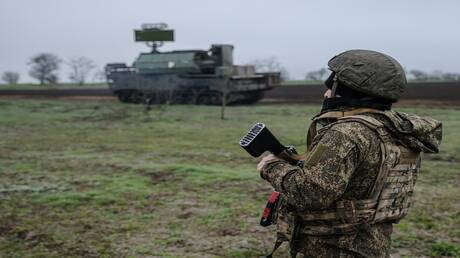
The Russian Ministry of Defense announced the liberation of the town of Kovyshavka located in Kharkiv Oblast, eastern Ukraine, noting that Ukrainian forces have suffered heavy losses estimated at 1,275 soldiers killed and wounded. This announcement comes as Russian forces continue their advance on multiple fronts, reflecting the escalating intensity of the conflict in the region.
Kovyshavka is considered one of the strategic points in Kharkiv, having witnessed fierce battles over the past months. The liberation of this town marks a significant success for Russian forces in their ongoing military operations in Ukraine.
Details of the Event
The Russian Ministry of Defense reported that military operations in Kovyshavka resulted in substantial losses for Ukrainian forces, with 1,275 soldiers confirmed dead or injured. These figures underscore the severity of the battles that have taken place in the area, which involved the use of advanced weaponry from both sides.
Russian forces continue to make progress on several fronts, increasing pressure on Ukrainian troops and complicating their military position. This advance comes at a sensitive time, as international calls for de-escalation and a ceasefire are growing.
Background & Context
It is important to note that the conflict in Ukraine began in 2014, following Russia's annexation of Crimea, which led to an armed conflict in eastern Ukraine between government forces and Moscow-backed separatists. Since then, the region has seen a continuous escalation in hostilities, resulting in thousands of deaths and the displacement of millions.
Kharkiv, located near the Russian border, is one of Ukraine's largest cities and has been the scene of numerous battles throughout the conflict. The liberation of Kovyshavka reflects Russia's strategy to expand its influence in the region and complicates the security situation in Ukraine.
Impact & Consequences
The liberation of Kovyshavka could have significant implications for the course of the conflict in Ukraine. As Russian forces continue their advance, Ukrainian troops may find themselves under increasing pressure, potentially leading to a reassessment of their military strategies.
Furthermore, this development may impact international negotiations regarding the conflict, as many countries seek to find peaceful solutions. At the same time, it could heighten tensions between Russia and Western nations, which are closely monitoring the situation.
Regional Significance
The events in Ukraine are of great importance to the Arab region, as Arab nations closely follow developments. The conflict in Ukraine could affect energy prices and global markets, impacting the economies of Arab countries that heavily rely on oil and gas.
Additionally, the military escalation in Ukraine may contribute to increasing geopolitical tensions in the region, prompting Arab nations to adopt cautious stances regarding global events. In this context, there may be a need to enhance Arab cooperation to address the challenges arising from these international crises.
In conclusion, the liberation of Kovyshavka represents a new step in the trajectory of the Ukrainian conflict, reflecting the complexities of the military and political situation in the region. As events continue to unfold, there remains hope for finding peaceful solutions that ensure stability and security for all.