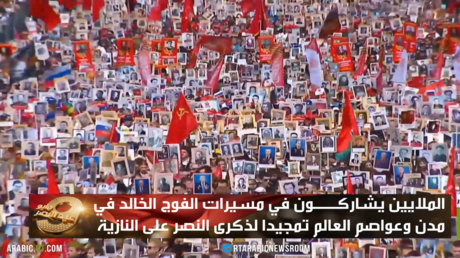
Today, Russia commemorates the 81st anniversary of its victory over Nazi Germany in the Great Patriotic War, organizing extensive official and popular events that reflect the importance of this historical milestone. The celebrations include parades and cultural events in various Russian cities, where citizens gather to honor the heroes who sacrificed their lives to defend the homeland.
This anniversary symbolizes national pride, with participation from high-ranking government officials alongside ordinary citizens carrying photos of their loved ones who fought in the war. Memorials are illuminated, and flowers are laid in tribute to the soldiers who fell in battle.
Event Details
This year's events feature a military parade in Red Square in Moscow, showcasing modern military equipment and soldiers representing the Russian armed forces. This parade serves as an opportunity to highlight the country's military strength while fostering national spirit among citizens.
Additionally, musical concerts and art exhibitions are organized in various cities, displaying artworks that address themes of war and victory. These activities reflect the deep appreciation the Russian people have for their military history and sacrifices.
Background & Context
The significance of this anniversary stems from the Great Patriotic War, which took place between 1941 and 1945, during which Russia faced Nazism in one of the bloodiest conflicts in history. The war resulted in enormous human losses, with millions of soldiers and civilians losing their lives, making the victory in this war a pivotal event in Russian history.
This war marked a turning point in European history, contributing to a shift in the balance of power in the world. The victory over Nazism was not merely a military triumph but also a victory for democratic ideals and freedom against authoritarian regimes.
Impact & Consequences
The effects of the Great Patriotic War continue to influence Russian politics and culture today. Annual celebrations reflect Russia's commitment to preserving the memory of the war and honoring the sacrifices of previous generations. This anniversary also strengthens the sense of national unity among citizens.
On the international stage, these events contribute to enhancing Russia's image as a strong nation capable of facing challenges, impacting international relations and bolstering its position in the global arena. The celebrations provide an opportunity for Russian leadership to reaffirm its stance on current geopolitical issues.
Regional Significance
The anniversary of the victory over Nazism holds significant implications for the Arab region, emphasizing the importance of unity and sacrifice in facing challenges. Arab countries can draw inspiration from this anniversary to enhance cooperation and solidarity among their peoples, especially in light of the political and economic crises they face.
Moreover, the Russian celebrations reflect the importance of history in shaping national identity, a lesson that can be beneficial for Arab nations in how they engage with their cultural and historical heritage.
In conclusion, the anniversary of the victory over Nazism remains a significant event in the collective memory of the Russian people, reflecting the national spirit and sacrifices made by ancestors for freedom. This commemoration is not merely a celebration of the past but a call to reflect on the future and build strong, cohesive societies.