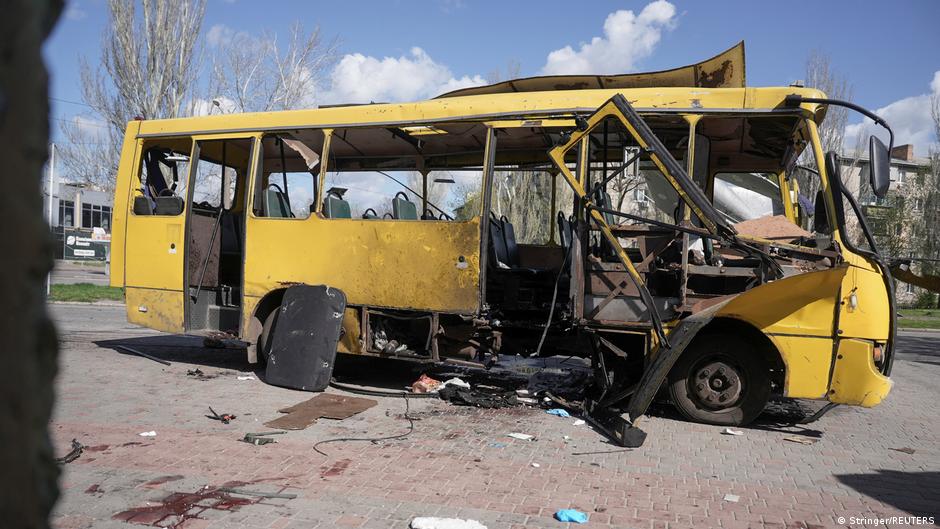
In a new escalation of the ongoing conflict between Russia and Ukraine, Russian attacks resulted in the deaths of nine individuals, including a child, in several Ukrainian regions on Tuesday. These assaults come at a sensitive time as Ukraine seeks to achieve a ceasefire during Orthodox Easter, which will begin this weekend.
According to officials, four people were killed in the southern city of Kherson, while four others died in the city of Nikopol due to a drone strike targeting a passenger bus. The governor of Kherson, Oleksandr Prokudin, described the Russian shelling as "hell," reflecting the extent of the destruction these attacks are causing to civilians.
Details of the Incident
The Russian attacks focused on civilian infrastructure, targeting residential areas and markets, leading to injuries among civilians. In Nikopol, which had a population of around 100,000 before the Russian invasion in 2022, a minibus was completely destroyed, resulting in the deaths of four individuals. Ukrainian President Volodymyr Zelensky noted that the attacks represent deliberate terrorism against civilians in Nikopol and other cities.
Simultaneously, Ukraine launched drone strikes on Russian-controlled areas and regions within Ukraine, resulting in the deaths of five civilians, including a 12-year-old child. These attacks are part of Ukraine's response to the Russian escalation, targeting vital Russian facilities.
Background & Context
Historically, Russian-Ukrainian relations have seen increasing tensions since 2014 when Russia annexed Crimea. Since then, armed conflicts in eastern Ukraine have escalated, leading to a significant humanitarian crisis. The full-scale Russian invasion of Ukraine in February 2022 complicated the situation further, as the fighting turned into a comprehensive conflict involving advanced weaponry from both sides.
Under these circumstances, Ukraine is striving to bolster its international position through calls for a ceasefire, especially during religious occasions such as Orthodox Easter. These calls come at a critical time as civilians suffer from the ongoing war's effects.
Impact & Consequences
These attacks underscore the rising violence in the region, complicating peace efforts. The military escalation may exacerbate humanitarian conditions, as many civilians face shortages of food and shelter. These events are expected to impact future negotiations between the two sides, potentially hardening their positions.
Moreover, the continuation of attacks could negatively affect international relations, as major countries closely monitor the situation. This may lead to increased pressure on Russia from the international community, which could influence its military and political strategies.
Regional Significance
The Arab region is indirectly affected by the repercussions of the war in Ukraine, as the conflict impacts energy and food prices. With rising oil prices due to the conflict, Arab countries may face new economic challenges. Additionally, the humanitarian crises resulting from the war could lead to increased refugee flows into neighboring countries, posing an additional challenge.
In conclusion, the situation in Ukraine remains tense, with growing fears of further escalation. The current situation requires a coordinated international response to ensure the protection of civilians and achieve sustainable peace in the region.