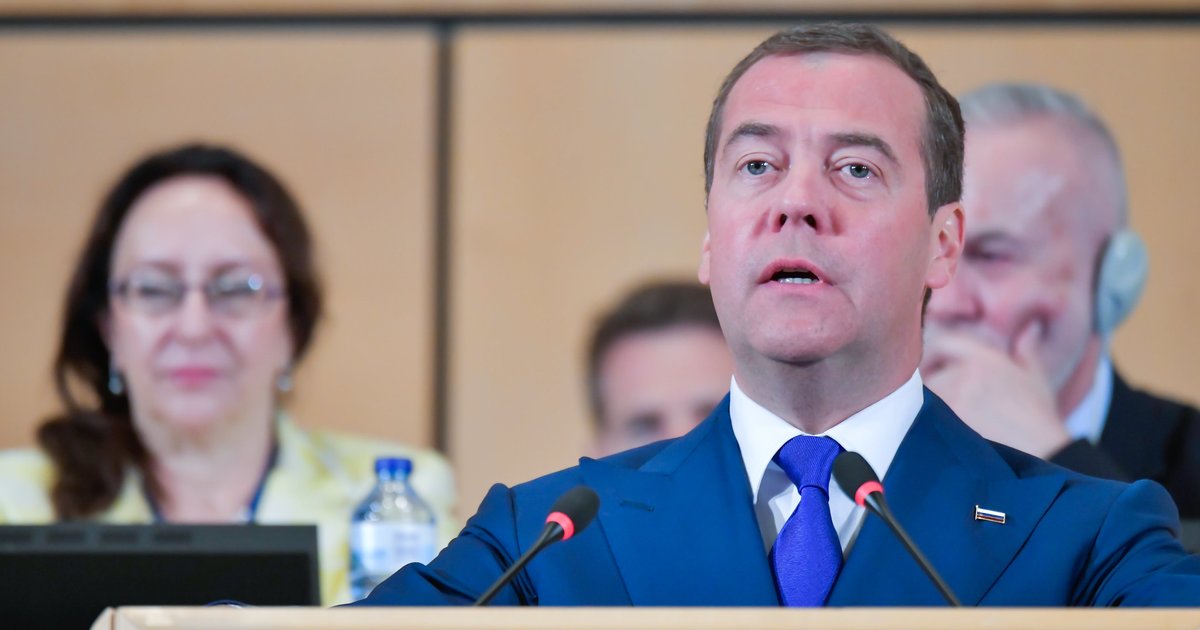
Russian Security Council Deputy Chairman Dmitry Medvedev has called for an end to Russia's tolerance regarding Ukraine's pursuit of joining the European Union. Medvedev asserted that this membership represents a direct threat to Russian national security, indicating that it is time to change Russia's strategy on this sensitive issue.
Medvedev's remarks came amid escalating tensions between Russia and Ukraine, particularly after Kyiv expressed its desire to strengthen ties with the West. This development has raised concerns in Moscow, which views this shift as a threat to its strategic interests in the region.
Details of the Statement
In his statements, Medvedev said, "Russia must abandon its tolerant stance towards Ukraine's bid to join the European Union." He explained that this membership could lead to enhanced military cooperation between Ukraine and Western countries, thereby increasing tensions in the region. He also noted that Russia needs to take more decisive steps to protect its interests.
These remarks come at a sensitive time, as Ukraine seeks greater support from European nations in facing the challenges it encounters. Several European countries have expressed their readiness to support Ukraine in its quest to join the EU, complicating the security situation in the region.
Background & Context
Historically, relations between Russia and Ukraine have been tense, especially following the annexation of Crimea in 2014. Since then, the region has witnessed an escalation in conflicts, with Russia supporting separatists in eastern Ukraine. In contrast, Ukraine aims to strengthen its ties with the West as part of its security strategy.
In recent years, Ukraine has intensified its efforts to join the European Union, viewing it as a vital step towards achieving economic and political stability. However, these efforts face strong opposition from Russia, which considers this membership a threat to its influence in the region.
Impact & Consequences
Medvedev's statements may escalate tensions between Russia and Ukraine, potentially affecting regional stability. If Ukraine continues to strengthen its ties with the EU, Russia may take more decisive actions, increasing the risk of military escalation.
Moreover, these statements could impact relations between Russia and European countries, potentially widening existing divisions. Should Russia continue to adopt a more hardline policy, it could exacerbate crises in the region and complicate peace efforts.
Regional Significance
The Arab region is indirectly affected by these developments, as any escalation in the conflict between Russia and Ukraine could impact energy prices and global markets. Arab countries, especially those reliant on oil exports, are sensitive to any changes in the global market.
Furthermore, Russia's relations with Arab countries may also be affected, as some Arab nations seek to enhance their ties with Russia in various fields. Therefore, any escalation in Russian-Ukrainian relations could reflect on these relationships.
In conclusion, Medvedev's statements reflect the increasing tensions in Russian-Ukrainian relations, warranting close monitoring by the international community. Under these circumstances, Arab countries must be aware of the potential implications for their economic and political interests.