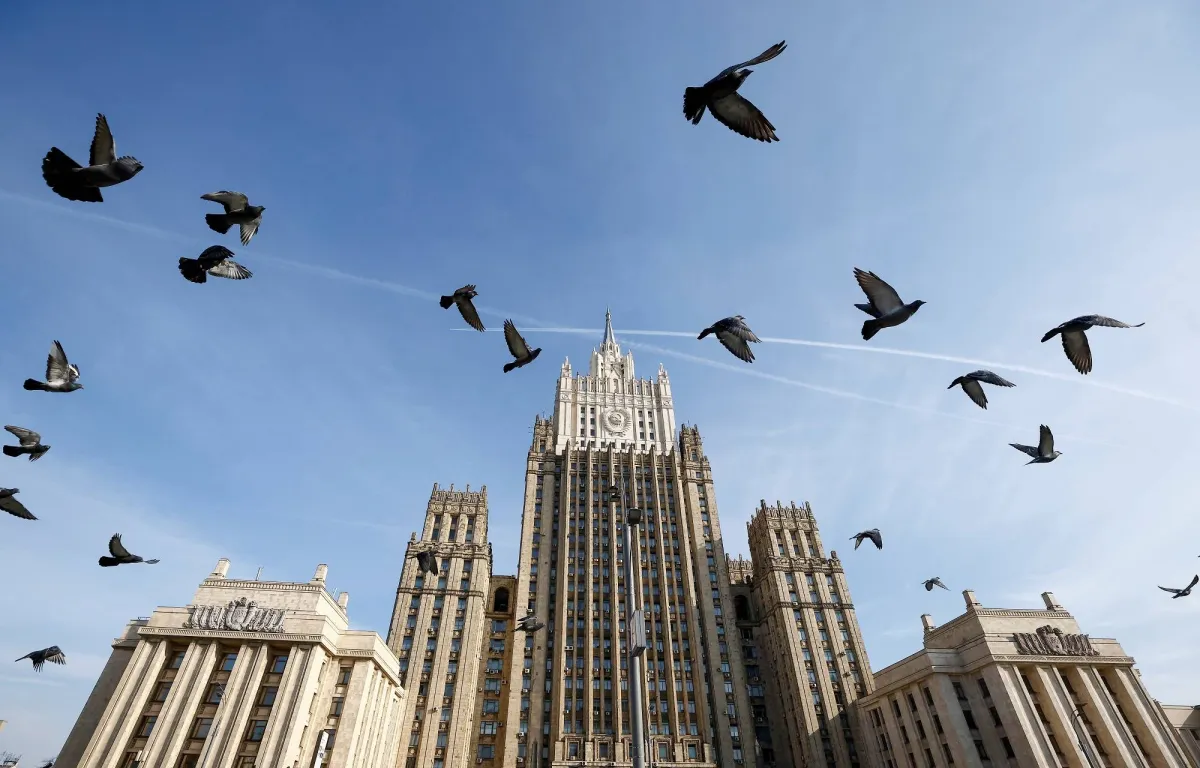
Russia announced on Monday the expulsion of a British diplomat, Jans van Rensburg, due to his attempts to acquire sensitive information related to Russian national security. The Russian Federal Security Service (FSB) confirmed that the decision was made after it was revealed that the diplomat was operating under the cover of the British embassy in Moscow.
According to a statement from the FSB's public relations center, van Rensburg was stripped of his accreditation and ordered to leave Russia within two weeks. The center explained that the diplomat provided false information when applying for entry into the country, which constitutes a violation of Russian law.
Details of the Incident
The FSB revealed the existence of undisclosed British intelligence activities, indicating that van Rensburg was involved in espionage activities that threaten the country's security. The center emphasized that these activities represent a blatant violation of Russian sovereignty, prompting the authorities to take this decisive action.
This move comes at a sensitive time in Russia-Britain relations, which have been increasingly strained due to a range of issues, including the conflict in Ukraine and mutual accusations of espionage.
Background & Context
Historically, relations between Russia and Britain have been characterized by tension, especially following events such as the poisoning of former Russian agent Sergei Skripal in 2018, which led to the expulsion of several diplomats from both countries. These incidents have heightened tensions, making any diplomatic moves subject to careful scrutiny.
Intelligence activities are part of the ongoing struggle between major powers, with each state seeking to protect its national interests. In this context, Russia's decision to expel the British diplomat serves as a preventive measure against what it perceives as threats to its national security.
Impact & Consequences
This step is expected to affect diplomatic relations between Russia and Britain, with the possibility of reciprocal actions from Britain. Additionally, this incident may exacerbate tensions between Russia and Western countries, especially given the current international circumstances.
Moreover, this decision could bolster Russia's efforts to combat espionage, which may reflect on its dealings with other nations. This incident may also raise concerns among other countries that could be vulnerable to similar activities.
Regional Significance
The relations between Russia and Western countries are of significant importance to the Arab region, as Russia plays a crucial role in regional conflicts, such as the dispute in Syria. The escalation of tensions between Russia and Britain may impact Russia's stance in the Middle East, which could affect peace efforts and reconstruction in the region.
At the same time, Arab countries should closely monitor these developments, as they may influence their political and economic strategies in dealing with major powers.
The decision to expel the British diplomat represents a new step in a series of events reflecting the increasing tension between Russia and Western countries. This move is expected to have far-reaching implications for international relations, warranting particular attention from Arab nations.