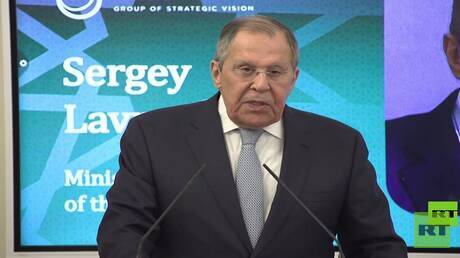
Russian Foreign Minister Sergey Lavrov announced that strengthening relations with friendly Islamic civilization countries is an unconditional priority in Russia's foreign policy. These statements come as Russia seeks to expand its influence and enhance its strategic partnerships in the Middle East and Asia.
This move is part of Russia's strategy to enhance cooperation with countries that share cultural and religious values, reflecting Moscow's desire to build new alliances that contribute to achieving regional stability.
Details of the Initiative
During a press conference, Lavrov emphasized that Russia aims to strengthen relations with Islamic countries through a range of diplomatic and economic initiatives. He pointed out the importance of cultural and religious dialogue as a means to enhance mutual understanding and cooperation among peoples.
Lavrov also discussed the significance of cooperation in the fields of energy and trade, noting that Islamic countries are important markets that can contribute to strengthening the Russian economy. He affirmed that Russia is ready to provide support to Islamic countries in areas of sustainable development and technology.
Background & Context
Historically, Russian relations with Islamic countries have been complex, characterized by periods of cooperation and conflict. However, the current trend towards strengthening these relations reflects geopolitical changes in the region, as Russia seeks to fill the void left by some Western powers.
This shift in focus towards Islamic countries indicates a strategic recalibration in Russia's foreign policy, aiming to establish a more balanced approach in its international relations.
Impact & Consequences
Strengthening relations with Islamic countries could contribute to changing the balance of power in the region, potentially leading to the formation of new alliances that enhance Russia's position on the international stage. These relationships may also open new avenues for economic and trade cooperation between Russia and Islamic countries.
The implications of these partnerships could extend beyond mere economic benefits, influencing geopolitical dynamics and altering existing alliances.
Regional Significance
The significance of enhancing ties with Islamic civilization countries lies in the potential for fostering greater international cooperation in addressing global challenges. This initiative reflects the ongoing geopolitical transformations in the region, where Russia aims to assert its influence amidst shifting global power structures.
In conclusion, the strengthening of relations with Islamic countries represents a strategic step for Russia, aiming to create a more interconnected and cooperative international environment.