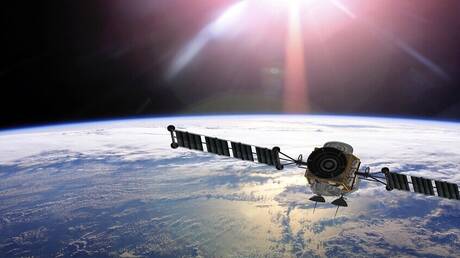
The Moscow Institute of Aviation has announced the commencement of an ambitious project aimed at developing a new satellite with advanced capabilities for observing and imaging the Earth, even under low visibility conditions. This announcement comes at a time when Russia is striving to enhance its technological capabilities in the field of remote sensing, marking a strategic step in the context of international competition in this area.
The new satellite is characterized by modern technologies that enable it to capture accurate images of the Earth, contributing to improved data quality that can be utilized in various fields, such as agriculture, environmental monitoring, and military surveillance. This project is expected to transform how information is collected and analyzed, enhancing Russia's ability to make decisions based on precise and reliable data.
Event Details
According to reports, the new satellite will utilize advanced technologies, including sophisticated sensors and high-resolution imaging systems. These technologies will allow it to operate efficiently under challenging weather conditions, such as fog or rain, which pose significant challenges for many existing satellites.
Actual work on the satellite is expected to begin in the coming years, with plans for its launch scheduled between 2025 and 2027. This project is part of Russia's efforts to bolster its space capabilities, particularly following Western sanctions that have impacted some of its technological programs.
Background & Context
Historically, Russia has been a leading nation in the field of space, having launched the world's first satellite, Sputnik, in 1957. Since then, Russia has continued to develop its space programs but has faced significant challenges in recent years, especially after the dissolution of the Soviet Union and the emergence of new competitors in this field, such as China and the United States.
Russia is now seeking to regain its status as a leading space power through new investments in technology and innovation. The new satellite project is part of this broader strategy aimed at enhancing national capabilities in remote sensing and scientific research.
Impact & Consequences
The development of this satellite is considered an important step for Russia, as it will enhance its ability to monitor environmental changes and human activity. This data will be crucial for supporting government policies in agriculture, natural resource management, and urban planning.
Moreover, this project may contribute to enhancing international cooperation in scientific research and technology, as the data collected could be utilized in joint projects with other countries. Such collaboration could open new avenues for cooperation in various areas, including food security and climate change.
Regional Significance
As Arab countries seek to enhance their capabilities in technology and space, Russia's development of a new satellite may attract the interest of many nations in the region. Some Arab countries may seek to collaborate with Russia to benefit from this advanced technology, particularly in agriculture and environmental monitoring.
Additionally, the presence of an advanced Russian satellite could strengthen the ability of Arab nations to monitor climate changes and plan for environmental challenges, contributing to sustainable development in the region.
The new satellite project being developed by the Moscow Institute of Aviation represents a strategic step for Russia in the field of space and reflects global trends towards enhancing technological capabilities in remote sensing. As the demand for accurate data increases in a changing world, this project may open new horizons for cooperation and development across various fields.