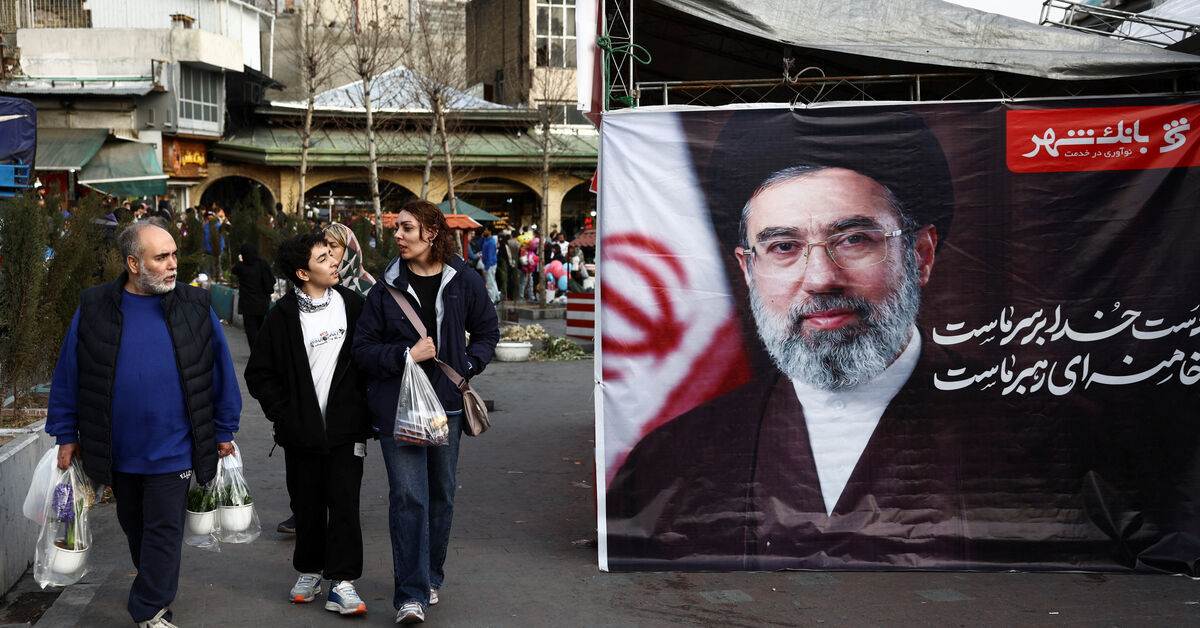
The Russian ambassador to Iran has confirmed that the Supreme Leader of the country, Mohammad Khamenei, is present in Iran but is avoiding public appearances for reasons that are described as 'understandable.' These statements come at a sensitive time following the death of his father, Ayatollah Ali Khamenei, during the war launched by Israel and the United States against Iran over a month ago.
It is believed that Mohammad Khamenei, who took over leadership after his father's death, may have sustained injuries during those events, which could explain his reluctance to appear in public. These developments raise questions about the future of Iranian leadership under the current circumstances.
Details of the Situation
The Russian ambassador spoke about the current situation of the Iranian leader in statements reported by the media, noting that his absence from public view is not surprising given the dramatic events that Iran has recently experienced. Mohammad Khamenei is considered a pivotal figure in the Iranian system, and his ascension to leadership comes at a time when the country faces significant internal and external challenges.
It is noteworthy that Mohammad Khamenei was seen as his father's successor and was appointed to his position following the death of Ayatollah Ali Khamenei, who played a significant role in shaping Iranian policy over the past decades. However, the current circumstances place him in a difficult position, as he must navigate the aftermath of war and international pressures.
Context and Background
Historically, Iran has witnessed numerous political and military crises, but the recent war with Israel and the United States represents a significant turning point in the country’s history. Since the Islamic Revolution in 1979, Iran has been under strong leadership, but recent events may lead to changes in political dynamics.
Moreover, the death of Ayatollah Ali Khamenei is considered a shocking event, as he was viewed as a symbol of power and influence in Iran. This sudden change in leadership raises questions about the stability of the regime and its ability to face future challenges.
Consequences and Impact
These events are expected to have a significant impact on Iranian politics, potentially leading to internal divisions or even power struggles. Additionally, Mohammad Khamenei's absence from public view may weaken his position as a leader, opening the door for other competitors within the system.
On the international front, these developments could affect Iran's relations with major powers, particularly with the United States and Israel. The stability of Iranian leadership is vital for many countries in the region, as any changes in power could lead to a reassessment of regional policies.
Impact on the Arab Region
Iran is considered a key player in regional politics, and any changes in its leadership could affect relations with Arab countries. For instance, instability in Iran may increase tensions in areas such as Iraq and Syria, where Iran plays an important role in supporting certain factions.
Ultimately, attention remains focused on Iran, as current events may determine the future of the country and its influence on the entire region. The stability of Iranian leadership will have far-reaching implications for both regional and international politics.