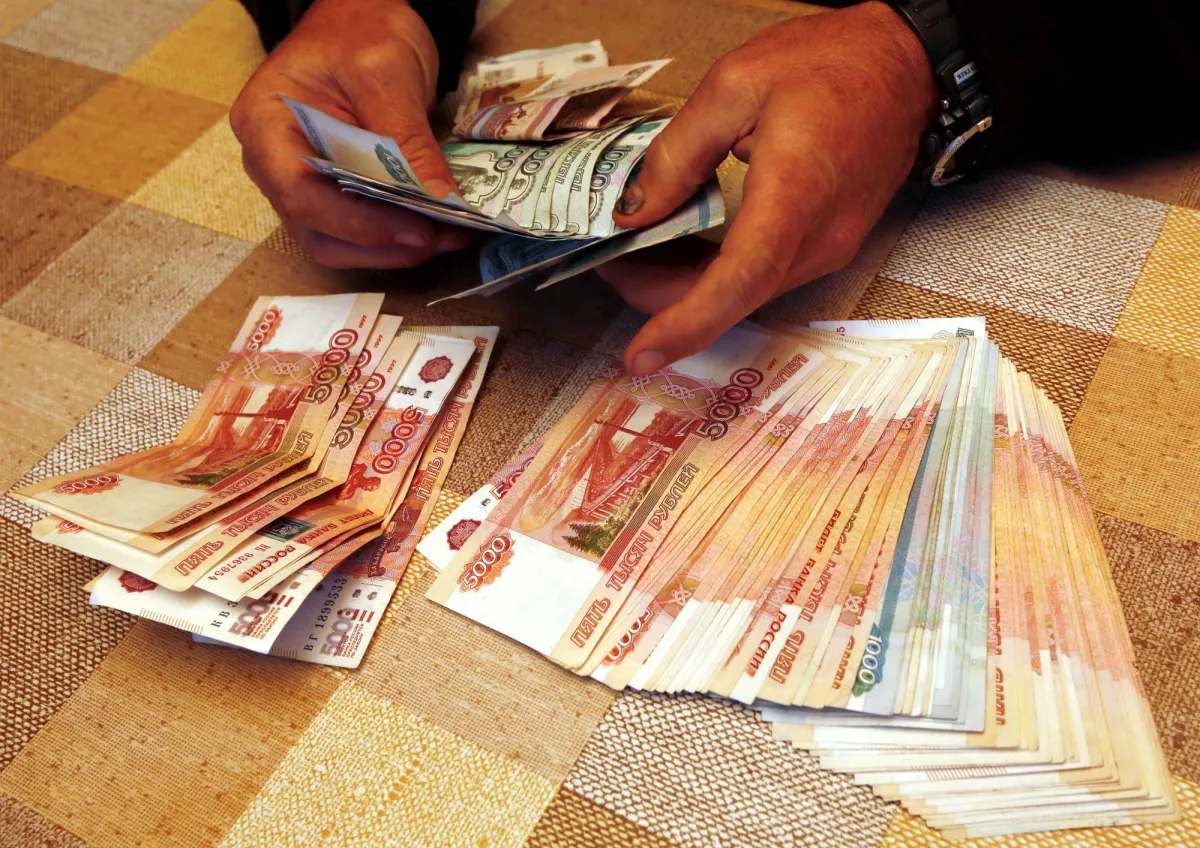
The Russian ruble has jumped to its strongest level in more than three years, driven by a widening trade balance and high interest rates, imposing additional burdens on the country's budget as the Russian war against Ukraine enters its fifth year.
The Russian currency has risen by more than one-fifth against the dollar and euro since March 19, coinciding with U.S. President Donald Trump's extension of the waiver on sanctions imposed on Russian oil, amidst the global energy crisis triggered by the U.S.-Israeli war in Iran, according to a report by the British newspaper 'Financial Times'. While this scenario has boosted oil export revenues, the resulting increase in the value of the ruble has weakened the competitiveness of non-oil exports, as sanctions and economic stagnation have limited the flow of cheap imports to alleviate inflationary pressures.
Event Details
In this context, Alexander Butafin, an analyst at the investment brokerage firm 'Finam' in Moscow, noted that the Russian economy primarily relies on exports, and thus, the excessive recovery of the local currency is more harmful than beneficial. Meanwhile, an executive at one of Russia's largest banks described the current rise of the ruble as an 'actual tax on exporters'.
The ruble is currently trading at around 71 rubles per dollar, compared to 115 rubles at the beginning of January 2025, marking gains of over 60% compared to its lowest level last year. This prompted Russian President Vladimir Putin to describe the 'strong ruble' during an industrial conference this month as one of the 'sad' issues facing the national economy.
Context and Background
Energy exports contribute about one-fifth of total revenues for the Russian budget, and while these revenues have been supported by the repercussions of the Iran war, the strength of the currency has hit non-oil exports that are vital to the economy, such as iron, steel, fertilizers, and wheat.
Masha Blikova, an analyst at 'Fast Markets Agrikenss' in Ukraine, confirmed that current exchange rates are 'killing' Russian grain trade, as exporters struggle to set prices that ensure profitability without losing global competitiveness.
Consequences and Impact
This upward 'rally' of the currency since the beginning of last year is primarily attributed to trade imbalances; Russia sells more goods abroad than its sluggish economy imports, while channels for capital outflows such as profit distributions and financial 'SWIFT' transfers remain closed.
In contrast, the Russian central bank maintains the key interest rate at 14.5% to control annual inflation, which stood at 5.6% in April, despite both figures being lower than last year when interest rates were 21% and inflation was 10%.
Impact on the Arab Region
On another note, Russian Economy Minister Maxim Reshetnikov acknowledged last month that the ruble will remain stronger than many would prefer in the coming years, considering it a significant challenge added to the labor shortage crisis. Alexander Shokhin, head of Russia's largest business lobbying group, warned that the strength of the currency, logistical constraints, and insurance sanctions are pressuring exports, raising concerns among the business sector about the government's potential move to raise corporate taxes to compensate for the expected shortfall in export revenues in the budget.
Despite these pressures, Sofia Donets, an economist at 'T-Investments' in Moscow, believes that current risks to public finances remain manageable, as this year's budget was built on the assumption of selling Russian oil at $59 per barrel, where the increase in oil export volume compensated for the decline in revenues denominated in rubles.
However, data indicates a 40% drop in energy revenues in the first four months of this year compared to the same period last year, while analysts at the Moscow-based (CMASF) economic research center warned that the ruble poses a significant risk that could deprive the state treasury of revenues ranging from 1.6 to 1.7 trillion rubles (equivalent to $22.5 to $24 billion) by the end of this year.
Analysts have ruled out Moscow resorting to unconventional tools to deliberately weaken the currency, as seasoned currency market expert Sergey Romanchuk confirmed that the central bank still adheres to a policy of 'flexible and free exchange rates' to help the economy adapt to external shocks, emphasizing that any change in this approach would only occur if the ruble reached 'extremely high' levels.