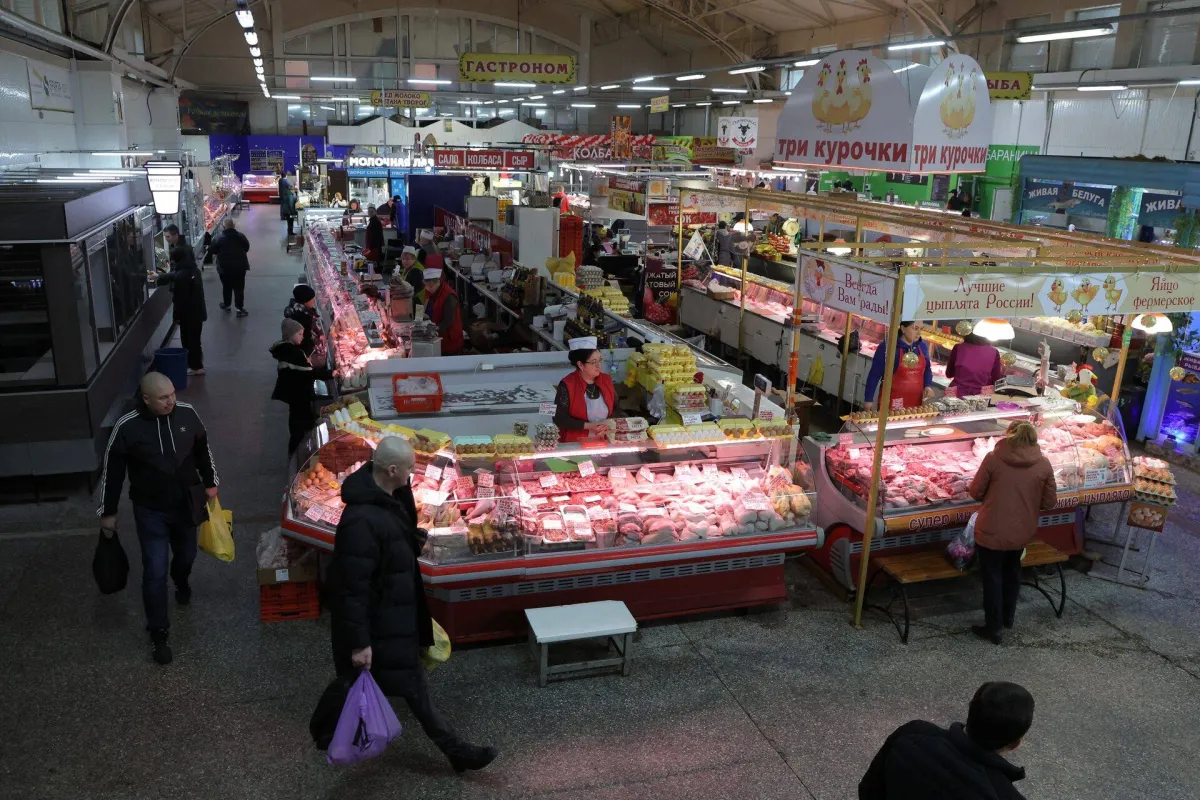
A recent survey revealed a decline in the services sector activity in Russia during March 2023, with the business index dropping to 49.5 points, compared to 51.3 points in February. This indicates contraction for the first time in six months. The drop is attributed to a decrease in demand and a halt in the growth of new orders overall.
Reports indicate that new business remained largely unchanged after four months of expansion, with some companies attributing this decline to reduced purchasing power among customers, increased uncertainty, and job losses linked to regional conflicts.
Details of the Event
Employment in the services sector declined for the second consecutive month, recording the fastest rate of decline since January 2023. Companies reduced their workforce amid cost-cutting pressures and weak sales. In contrast, price pressures eased compared to the high levels recorded in January, which were driven by an increase in value-added tax.
Input cost inflation also slowed for the second consecutive month, although it remained at elevated levels, among the fastest since early 2025. Meanwhile, selling price inflation fell to its lowest level in three months. Despite this, backlogs of work increased for the sixth consecutive month, albeit at a slower pace, as companies expressed greater optimism about production levels over the next twelve months.
Background & Context
This contraction comes at a time when Russia is facing significant economic challenges, impacted by Western sanctions due to ongoing conflicts. These sanctions have affected citizens' purchasing power, leading to reduced demand across various sectors, including services.
Additionally, the geopolitical situation in the region, including ongoing conflicts in the Middle East, increases uncertainty, negatively affecting investments and economic growth in Russia.
Impact & Consequences
The decline in the services sector could have negative repercussions on the Russian economy as a whole, as this sector is one of the key drivers of growth. Contraction in this sector may lead to increased unemployment rates and reduced investments, exacerbating the difficult economic conditions the country is facing.
Moreover, this contraction could impact trade relations with other countries, as investor confidence in the Russian economy may wane, leading to further challenges in the future.
Regional Significance
The decline of the services sector in Russia could affect economic relations with Arab countries, especially given the mutual dependence in energy and trade sectors. Any downturn in the Russian economy could reflect on oil and gas prices, impacting the economies of oil-producing Arab nations.
Furthermore, uncertainty in global markets may increase, affecting Arab investments in Russia and heightening challenges to economic cooperation between the two sides.
In conclusion, the contraction of the Russian services sector signals significant economic challenges facing the country, necessitating new strategies to address these conditions and achieve stability and growth in the future.