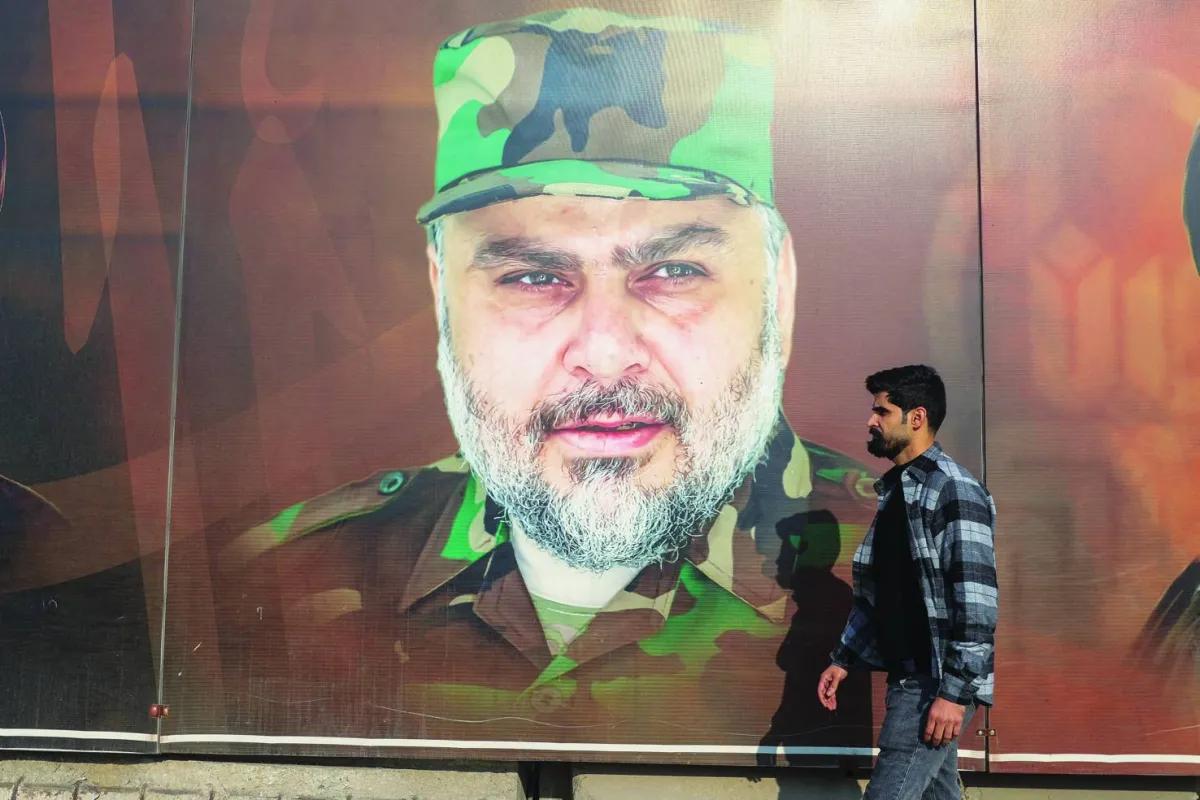
On Wednesday, Muqtada al-Sadr, the leader of the Sadrist movement, announced his decision to detach his military wing, 'Saraya al-Salam', from the movement and integrate its members into the Iraqi state. This step is part of the Iraqi government's efforts to consolidate weapons under state control and regulate the activities of armed factions within the country.
Al-Sadr had previously made similar decisions in 2017 and 2020, but his latest stance coincides with the formation of a new government facing regional and international pressures to disarm armed factions. Observers consider al-Sadr's decision particularly significant, as it involves handing over 'Saraya al-Salam' members to the new Prime Minister, Ali al-Zaydi.
Details of the Announcement
In a press statement, al-Sadr emphasized the necessity of separating 'Saraya al-Salam' from the movement, indicating that its members should join the state under the supervision of the general authority responsible for military formations. He also called for transforming the civilian entities affiliated with the brigade into 'the steadfast structure', while stressing that there should be no bases, weapons, uniforms, or titles associated with it. He expressed gratitude to the military formations for their previous efforts.
'Saraya al-Salam' is part of the Popular Mobilization Forces (PMF), undertaking security tasks in several areas, most notably in the city of Samarra. Al-Sadr urged the remaining factions within the PMF to detach from party and sectarian orders and to hand over their weapons to the state, noting that he had provided similar advice in the past.
Background & Context
The current Iraqi government is striving to implement a program aimed at consolidating weapons under state control, which is included in the ministerial platform. This comes alongside discussions within the 'Coordination Framework' regarding mechanisms for organizing and handing over weapons. Some armed factions have shown relative flexibility regarding this issue, while others, such as 'Nujaba Movement' and 'Hezbollah Brigades', refuse to comply with disarmament demands.
Reports indicate that five armed factions have agreed to consolidate their weapons under government institutions, but the details of the implementation process remain unclear. At the same time, al-Sadr's decision faces significant challenges, as many armed factions rely on their weapons to ensure their political and financial influence.
Impact & Consequences
Al-Sadr's decision is viewed as a step towards enhancing internal stability in Iraq, with Prime Minister Ali al-Zaydi welcoming the move and stating that it represents an important path for consolidating weapons under state control. Al-Zaydi called on all armed factions to operate under the umbrella of the state and its official institutions, asserting that the state is the sole authority entitled to bear arms and enforce the law.
However, the implementation of this decision remains in doubt, as some observers point out that armed factions may find it difficult to relinquish their weapons. Former MP Sajad Salem confirmed that factions depend on their weapons to maintain their influence, making it challenging to effectively implement al-Sadr's decision.
Regional Significance
Al-Sadr's decision represents a significant shift in the Iraqi political landscape and may impact security conditions in the region. If the Iraqi government succeeds in consolidating weapons under state control, it could contribute to enhancing stability in Iraq, which would positively reflect on neighboring countries.
Conversely, a failure by the government to implement this decision could exacerbate security conditions and increase tensions between armed factions and the state. Therefore, this step requires close monitoring by the international community, especially amid regional and international pressures on Iraq.