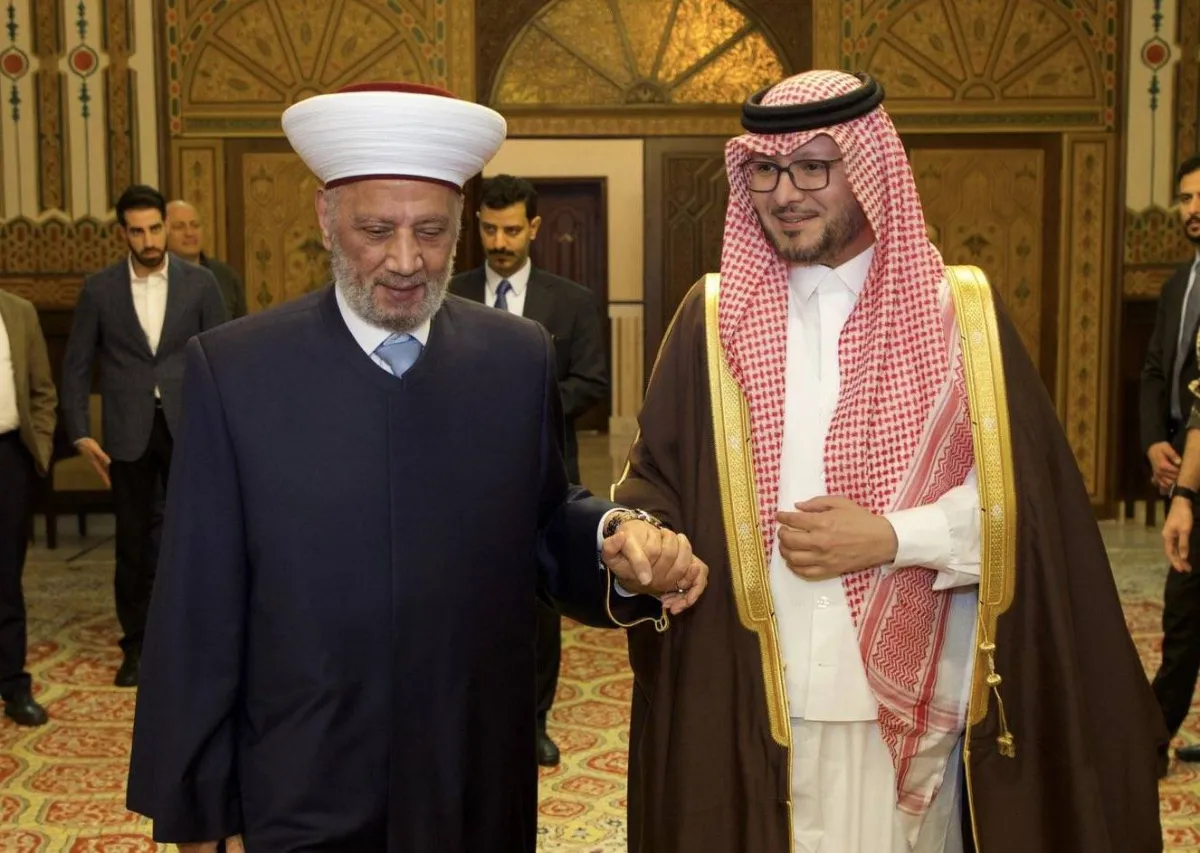
Saudi Ambassador to Lebanon, Walid Bukhari, affirmed that adherence to the "Taif Agreement" is the fundamental entry point for any resolution in Lebanon, alongside the necessity of enhancing civil peace and prioritizing wisdom and reason in addressing challenges.
Bukhari made these statements during his visit to the Grand Mufti of the Republic, Sheikh Abdul Latif Deryan, who expressed his reliance on the Kingdom's role in helping the country emerge from its crises. He also met with Ali Al-Khatib, Deputy Chairman of the Supreme Islamic Shiite Council, and Sheikh Sami Abi Al-Muna, the Druze spiritual leader.
Details of the Event
The ambassador began his remarks by stating, "Lebanon is the land of wisdom; does wisdom have a deadline?" He emphasized the importance of prioritizing wisdom and reason in confronting challenges and crises to fortify civil peace. He praised Mufti Deryan's positions and his unifying national role, appreciating the decisions made by the Supreme Islamic Sharia Council for the benefit of Muslims and Lebanese.
During the meeting, Bukhari reiterated his country's commitment to the unity of the Lebanese people in facing the challenges they are experiencing, noting that the Kingdom is making diplomatic efforts to assist Lebanon in its plight and is always standing by the Lebanese state and its institutions to reach solutions that contribute to enhancing security, stability, and prosperity.
Background & Context
These statements come at a time when Lebanon is facing multiple crises, including economic, political, and social challenges. Recent events have highlighted the importance of dialogue and understanding among various Lebanese parties to achieve stability.
On another note, Mufti Deryan expressed his great appreciation for the role that Saudi Arabia plays in the region, stressing that rebuilding the state is the only way to save Lebanon. He emphasized the necessity of adhering to the "Taif Agreement" and strengthening the unity of the Lebanese.
Impact & Consequences
The Saudi ambassador's statements serve as a call for all Lebanese parties to work together to achieve stability. Strengthening civil peace requires joint efforts from all political and social factions in Lebanon.
Moreover, reaffirming the "Taif Agreement" as a fundamental reference can contribute to rebuilding trust among Lebanese and enhance the chances of reaching effective political solutions.
Regional Significance
Saudi Arabia's positions towards Lebanon are part of its broader strategy in the region, where it seeks to promote stability in neighboring countries. Saudi support for Lebanon reflects its commitment to assisting Arab nations in overcoming the crises they face.
In conclusion, the importance of dialogue and understanding among various Lebanese parties emerges as a pathway to achieving stability, reflecting the urgent need for cooperation among all political and social factions in Lebanon.