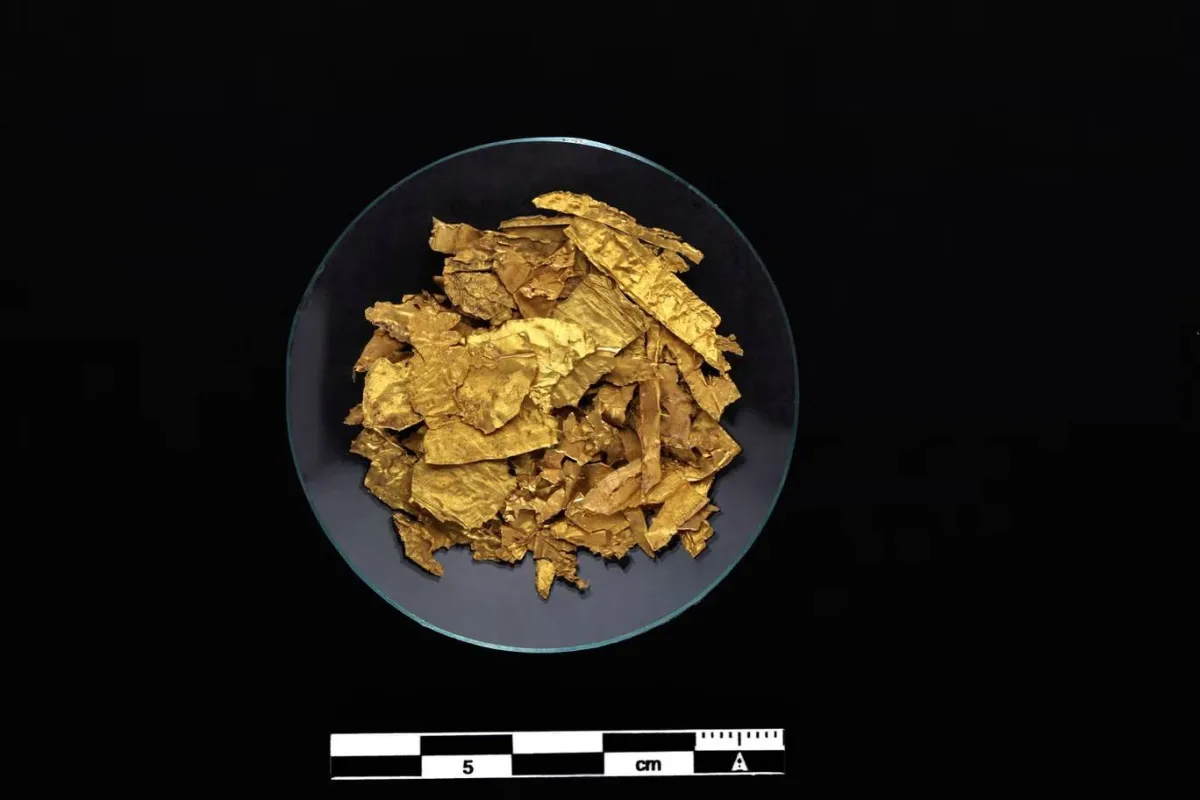
Scientists have accidentally produced small amounts of gold while simulating the state of the universe after the Big Bang. This discovery echoes the ancient dream of alchemists to turn lead into gold. The experiment, conducted by a team of researchers in the "ALICE" experiment at the Large Hadron Collider in Switzerland, highlights the fundamental difference between lead and gold atoms, with the former containing three additional protons.
Historically, the dream of turning lead into gold has haunted alchemists throughout the ages, but modern science has confirmed that this is impossible through traditional chemical reactions. However, modern knowledge suggests that it could be achieved through complex nuclear reactions.
Details of the Experiment
During the experiment, lead atoms were collided at ultra-high speeds, resulting in the production of small amounts of gold. This scientific achievement explains how nuclear reactions can transform one element into another, as the vibrations caused by the electric field between the nuclei can release protons, potentially converting a lead nucleus into gold.
The scientists used special detection devices called calorimeters to measure the protons that were stripped from the lead nuclei. The results showed that collisions of lead nuclei produce about 89,000 gold nuclei per second, along with other elements such as thallium and mercury.
Background & Context
This experiment is part of ongoing research in the field of nuclear physics, aimed at gaining a deeper understanding of the universe and its interactions. The concept of turning metals into gold dates back to the Middle Ages, where it was seen as a symbol of wealth and magical ability. With the advancement of science, it has become clear that this idea was far from reality, yet modern experiments may revive this dream in unconventional ways.
The "ALICE" experiment is not the first of its kind, as many similar experiments have been conducted in the past, but this experiment is distinguished by the actual production of gold, opening new horizons in understanding nuclear interactions.
Impact & Consequences
This achievement could have significant implications across multiple fields, including industry and technology. If scientists can develop effective methods to convert lead into gold, it could revolutionize the metal industry and change the way natural resources are utilized.
Moreover, this research may pave the way for new applications in energy and environmental fields, where nuclear reactions could be used to produce rare elements or even in the treatment of nuclear waste.
Regional Significance
In the Arab region, these discoveries could impact metal industries and the economy. If these technologies are applied, they could enhance Arab countries' ability to better exploit their mineral resources, contributing to sustainable development.
In conclusion, this scientific achievement represents an important step towards a deeper understanding of the universe and revives an ancient dream that has long haunted humanity. As research in this field continues, we may witness further discoveries that change our concepts of elements and materials.