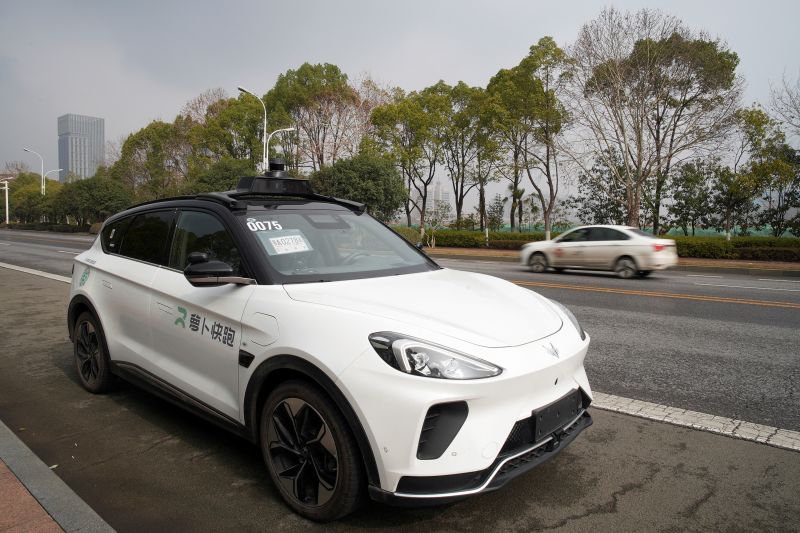
A fleet of self-driving taxis owned by the Chinese company Baidu experienced a technical failure in Wuhan, resulting in their halt of operations and leaving passengers stranded. The incident occurred on Tuesday evening, as police received repeated reports of Apollo Go vehicles stopped in the middle of the road, unable to move.
According to initial data reported by the police, the cause of the failure was a "system malfunction," though the number of affected vehicles was not specified. Videos on social media showed passengers trying to contact customer service from inside their stopped vehicles while other cars passed by.
Details of the Incident
The Apollo Go service from Baidu is one of the leading self-driving taxi services in China, having begun offering paid services in Beijing in 2021 and operating in specific areas of several cities. Reports indicate that the service has seen a significant increase in the number of rides, providing 3.4 million self-driving rides in the last quarter of 2025, an increase of over 200% compared to the same period the previous year.
It is noteworthy that Baidu operates a fleet of over 500 self-driving cars in Wuhan, reflecting the rapid expansion the company is experiencing in this field. However, the recent incident raises questions about the reliability of this technology and the readiness of companies to handle such malfunctions.
Background & Context
China is considered a leader in the development of self-driving car technology, with the Chinese government aiming to promote innovation in this area. Many major companies, including Baidu, have invested in developing autonomous driving systems, leading to the emergence of new services in the market. However, incidents like the one in Wuhan highlight the challenges facing this emerging industry.
Despite technological advancements, there are concerns that reliance on self-driving cars may lead to public safety issues. Previous incidents have shown that the technology still requires significant improvements to ensure the safety of passengers and road users.
Impact & Consequences
Incidents like this can affect consumer confidence in self-driving taxi services, potentially leading to a decline in demand for these services. Companies providing these services may face increased pressure to improve their systems and provide greater safety assurances. At the same time, such incidents may lead to increased government oversight of the self-driving car industry, which could impact the speed of technology development.
Furthermore, technical incidents may affect companies' plans to expand into foreign markets, as Baidu seeks to broaden its presence outside China through partnerships with popular ride-hailing apps like Lyft and Uber. Therefore, building trust in the technology will be crucial for the success of these plans.
Regional Significance
Self-driving car technology is an area of interest for many Arab countries, as some governments seek to invest in technological innovation. With the increasing reliance on technology in transportation, incidents like the one in Wuhan may serve as an important lesson for Arab countries looking to adopt this technology. These countries must consider the importance of developing reliable and safe systems before introducing self-driving cars into their markets.
In conclusion, self-driving car technology remains a promising field, but technical incidents like the one witnessed in Wuhan remind us of the importance of focusing on safety and reliability in the development of this technology.